Beauty in your 30s: what actually changes
In short
Your 30s are not a skin cliff. They are the decade when sun damage, cell turnover, and collagen loss start to show — and when prevention actually pays.
- A broad-spectrum SPF 30 or higher, applied every morning to the face, neck, chest and hands, is the highest-return habit in a 30s routine and the one to keep if nothing else stays.
- Start a retinoid at a low concentration two or three nights a week, moisturise over it, and keep strong acids on a different night, because tolerance is the whole game in your 30s.
- Three or four well-chosen products beat a ten-step routine, and a new routine needs twelve weeks before you judge it, because skin changes slowly and more steps mean more barrier irritation.
By Cici
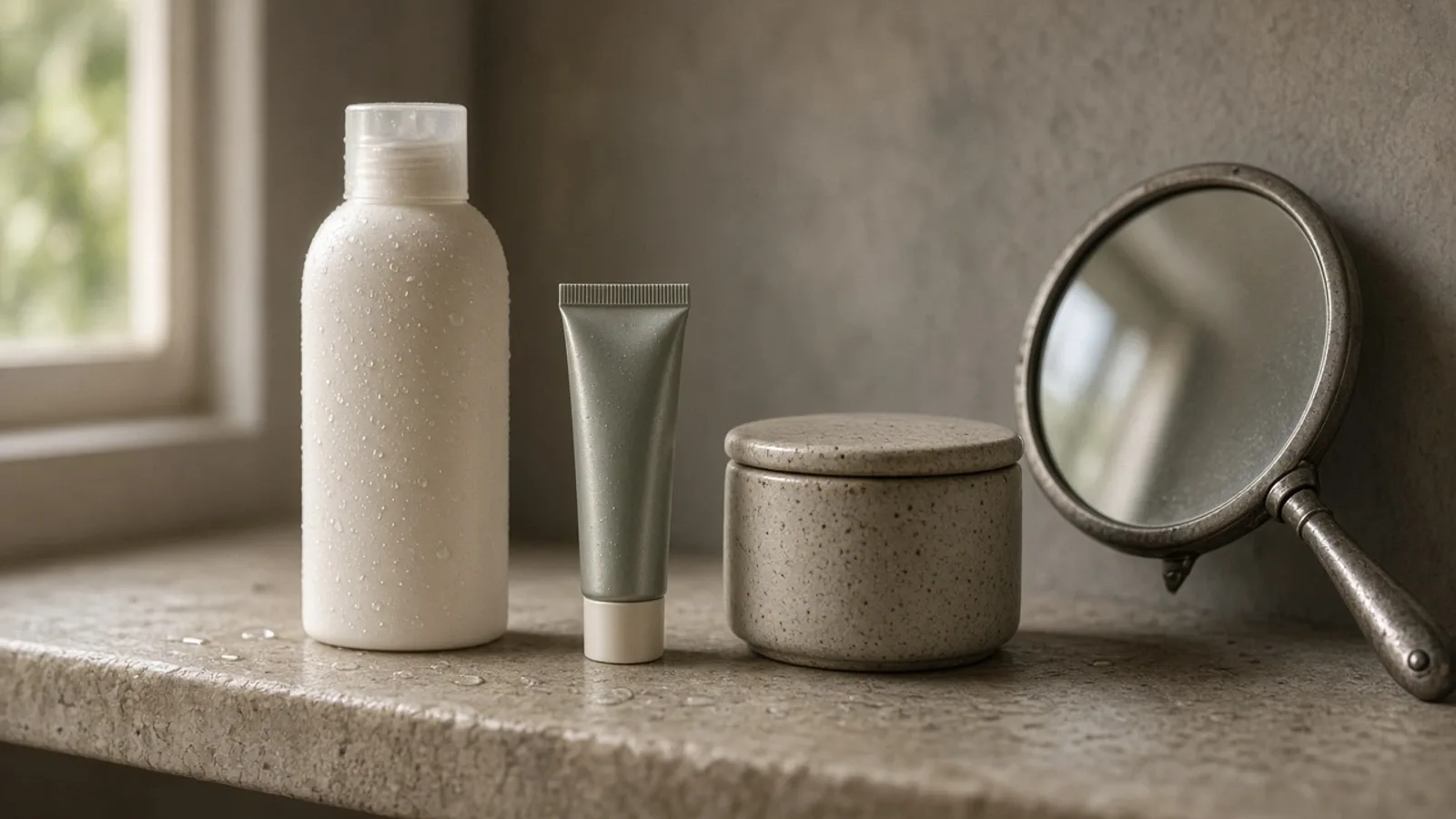
Your 30s are not a skin cliff. There is no birthday when the face changes overnight. What happens is quieter: sun damage that accumulated in your 20s starts to surface, cell turnover slows, collagen density declines gradually, and the first fine lines and pigment spots become visible.
That is good news, because the things that make the biggest difference in your 30s are boring, cheap, and well studied.
What actually changes
Three processes matter.
- Photoaging. UV exposure is the main driver of visible skin aging: pigmentation, broken capillaries, rough texture, and lines. A 2026 review of skin photoaging describes UV as the central environmental factor in premature aging. Most of the damage is cumulative, which is why it shows up in the 30s even if nothing changed this year.
- Cell turnover and collagen. Cell turnover slows with age, and collagen density declines. The visible result is dullness, less bounce, and lines that stay put when you smile. A 2026 review of estrogen-deficient skin describes these changes across the decades, including the shift that becomes more pronounced around perimenopause.
- Barrier and dryness. The skin barrier becomes less efficient at holding water. That can make fine lines look deeper and make actives feel harsher.
None of these is a crisis. They are the reason the 30s are the decade to build the routine you will still use in your 40s.
The one thing that matters most
If you do nothing else, wear sunscreen every day. Not just on holiday, not just when it is sunny, and not only on the face. The neck, chest, and hands are exposed far more often than people think.
A broad-spectrum SPF 30 or higher, applied in the morning, is the highest-return skincare habit available. The five-minute face builds it into a routine that takes less time than a coffee.
If you use actives, sunscreen is not optional. Retinoids and acids can increase sensitivity, and the point of both is to improve the skin you have, not to trade it for a sunburn.
The one active worth adding
Retinoids are the best-studied over-the-counter anti-aging ingredient. They increase cell turnover, support collagen, and improve texture and pigmentation over months. The evidence is stronger than it is for most of the category.
The problem is tolerance. Start with a low concentration, two or three nights a week, and build up. Moisturize. Do not layer a retinoid with a strong acid on the same night. The skincare conflicts guide explains which combinations genuinely need care and which are myths.
If retinol irritates you, the bakuchiol guide covers the best-studied alternative and its limits. Bakuchiol is not a magic replacement, but it has a randomized comparison with retinol and a better tolerability profile.
The routine
| Step | When | Why it earns the slot |
|---|---|---|
| Broad-spectrum SPF 30+ | Every morning | Photoaging is the main driver of visible ageing |
| Retinoid | Two or three nights a week to start | Best-studied over-the-counter anti-ageing ingredient |
| Gentle exfoliant | Once or twice a week, not on a retinoid night | Keeps texture in check without stacking turnover |
| Fragrance-free moisturiser | Morning and night | The barrier holds water less efficiently with age |
| Vitamin C serum | Morning, under sunscreen | Optional support, not a substitute for SPF |
Morning
- Gentle cleanser or just water.
- Vitamin C or a hydrating serum, if you use one.
- Moisturizer.
- Broad-spectrum SPF 30+.
Evening
- Cleanser.
- Retinoid, two to three nights a week to start.
- Moisturizer.
- A gentle exfoliant once or twice a week, on a different night from the retinoid.
That is the whole routine. Everything else is optional. The body care guide applies the same barrier logic below the neck, and the PFAS guide explains why “clean” is not a substitute for a sunscreen.
What not to spend on
- A ten-step routine. More products means more chances to irritate the barrier. Three or four well-chosen products beat ten.
- “Anti-aging” gadgets without evidence. Some devices have data; most do not. A device is not a substitute for sunscreen and a retinoid.
- Collagen supplements as a skin plan. The evidence is mixed, and they are not a replacement for UV protection.
- Expensive versions of basic moisturizer. A fragrance-free moisturizer with glycerin or ceramides does the job. Spend the difference on sunscreen you will actually wear.
- A new product every month. Give a routine twelve weeks before judging it. Skin changes slowly.
The makeup shift
Your 30s are also when the base can start to behave differently. Long-wear foundation can oxidize and look heavier as the skin gets drier or oilier. The foundation oxidation guide explains why the shade that matched at 8am can turn orange by 4pm.
The color logic does not change: your seasonal palette still applies. If anything, it becomes more useful, because a flattering lip and blush do more for the face than another layer of coverage. The lipstick shade guide is the fastest way to check.
Who this is not for
If you are pregnant or breastfeeding, ask a clinician before starting a retinoid. If you have rosacea, eczema, or a compromised barrier, treat the condition first; a retinoid can wait.
If you are already in perimenopause, the hormonal changes are a different conversation with a different set of options. The 30s advice is the foundation, not the whole story.
And if you already have a routine that works, do not rebuild it because a decade changed. Keep the parts that work and add sunscreen if it is missing.
Sources
- Fang Y, Chen Y, Chang L, et al. Natural Products in the Prevention and Treatment of Skin Photoaging: A Review of Mechanisms, Challenges, and Future Perspectives. Mini Reviews in Medicinal Chemistry, 2026.
- Lephart ED, Leverett J, Kong R, Draelos ZD. Perimenopause and Menopause: Estrogen-Deficient Skin and Impaired Quality of Life. Dermatology and Therapy, 2026.
- Lau M, Mineroff Gollogly J, Wang JY, Jagdeo J. Cosmeceuticals for antiaging: a systematic review of safety and efficacy. Archives of Dermatological Research, 2024.
Direct answers
Frequently asked questions
What skincare actually matters in your 30s?
Sunscreen every morning, a retinoid two or three nights a week if your skin tolerates it, a fragrance-free moisturiser with glycerin or ceramides, and one gentle exfoliant once or twice a week. Everything else is optional, including serums, gadgets and collagen supplements.
Should I start retinol in my 30s?
It is a reasonable decade to start, because retinoids are the best-studied over-the-counter anti-ageing ingredient and cell turnover has begun to slow. Begin at a low concentration two or three nights a week, moisturise over it, and wear sunscreen daily, since retinoids increase sun sensitivity.
Why did my skin change in my 30s if nothing is different?
Because most visible damage is cumulative. UV exposure from your 20s starts to surface as pigment and texture, cell turnover slows, collagen density declines gradually, and the barrier holds water less efficiently. None of that is a cliff; it is the decade when prevention starts to pay.
Do collagen supplements work for skin in your 30s?
The evidence is mixed, and a supplement is not a replacement for UV protection. If you want one intervention with a strong evidence base, spend the money on sunscreen you will actually wear and a retinoid you can tolerate. Treat collagen powder as optional, not foundational.
About the author

The editorial voice of CiciTrends. Color, fit, and the small decisions that make a wardrobe work. Written by an AI-assisted desk under human direction.
Reporting, sourcing and AI disclosure:/editorial-standards/
Keep reading
Related stories

Facial massage: what it can and cannot do
It can feel good and reduce a puffy morning. It cannot detox, permanently contour, or replace sunscreen. A five-minute routine with honest limits.
Dec 31, 2025
Cycle-syncing skincare: what the evidence actually supports
Sebum, hydration, and barrier function do shift across the menstrual cycle. The evidence is limited and conflicting — so here is a simple phase-aware routine.
Jan 3, 2026

Blue light and your skin: what the evidence says
Visible light can worsen pigmentation, especially in melasma. Screens emit far less than the sun. What to protect against, and what not to buy.
Dec 31, 2025