The body care routine that actually gets done
In short
Body skin is skin, but the routine is shorter than your face routine. Four steps, two problem-area fixes, and the habits that make it stick.
- A body routine needs four steps only: gentle cleanse, exfoliation once or twice a week, moisturiser on damp skin, and SPF on the neck and hands.
- Apply body moisturiser within a few minutes of leaving the shower, while the skin is still damp, so it traps water instead of sitting on dry skin.
- Exfoliate the body once or twice a week, never daily, and do not use a scrub and an acid lotion on the same day.
- Keep showers to about ten minutes: hot water strips lipids, so warm water and a short wash protect the barrier better than a long scrubbing routine.
By Cici
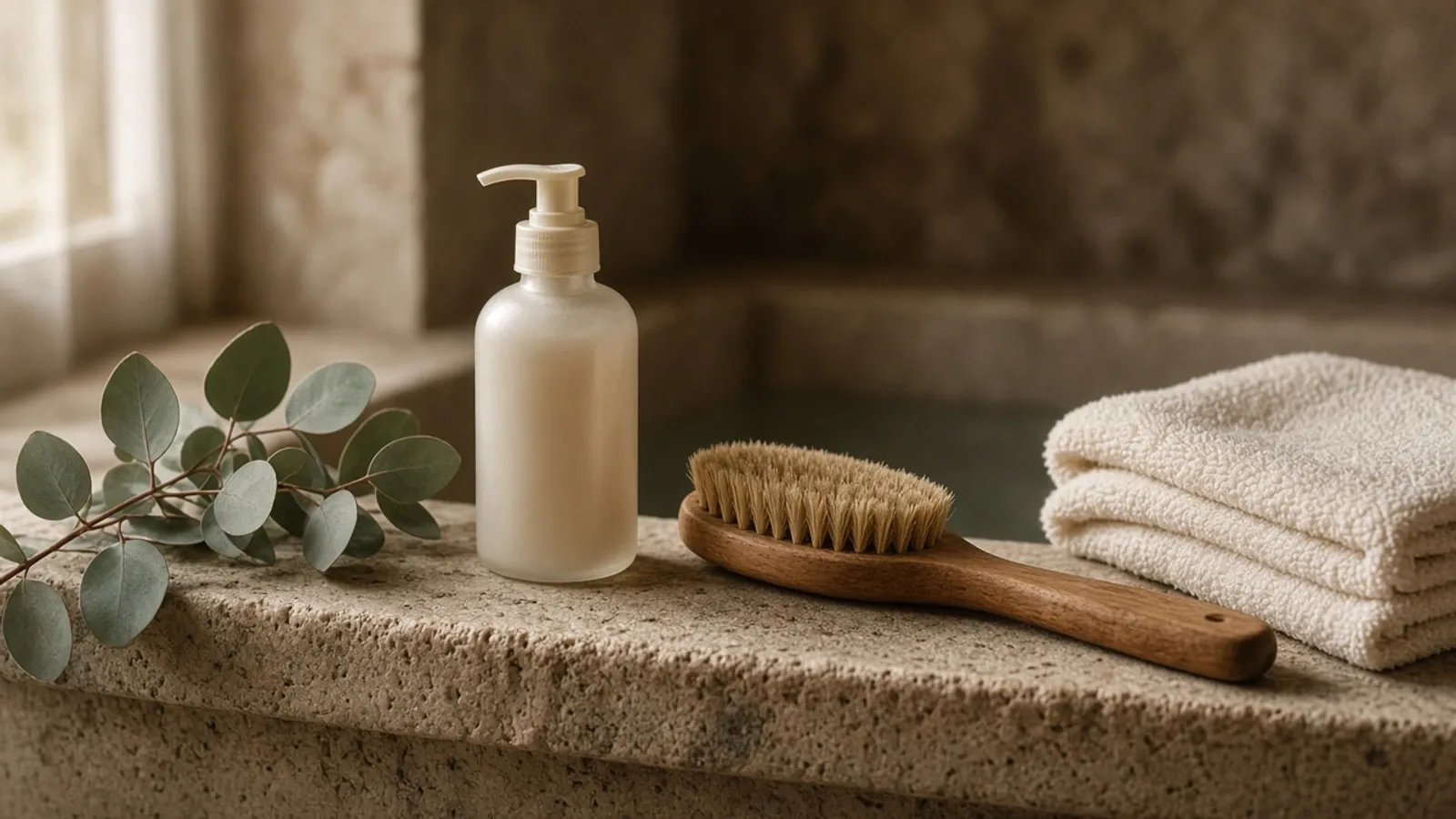
Body skin is skin. It has the same barrier, the same need for moisture, and the same response to harsh cleansing. The difference is practical: the routine has to survive a shower, not a bathroom shelf, and it has to be short enough to repeat.
Four steps are enough. Two problem-area fixes cover most of what people actually complain about. The rest is consistency.
The four-step body routine
| Step | Frequency | The rule that matters |
|---|---|---|
| Cleanse | Every shower, ten minutes or less | Warm water and a gentle, fragrance-free wash; hot water strips lipids |
| Exfoliate | Once or twice a week | Lactic acid or urea lotion; never a scrub and an acid on the same day |
| Moisturise | Daily, within a few minutes of showering | Apply on damp skin so it traps water |
| Protect | Every morning | Extend facial SPF to the neck, chest, hands and arms |
1. Cleanse gently
A body wash does not need to be antibacterial, exfoliating, and fragranced all at once. A gentle, fragrance-free cleanser is enough for most skin, and it is better for dry or reactive skin than a bar soap that leaves the skin tight.
- Use warm water, not hot. Hot water strips lipids and makes the post-shower itch worse.
- Keep the shower short. Ten minutes is plenty; twenty is a moisture tax.
- Wash the parts that need it. You do not need a full-body scrub every day.
2. Exfoliate once or twice a week
Exfoliation is where most body routines go wrong. The goal is smoother texture and better product absorption, not a daily scrub.
- Chemical exfoliation — a lotion with lactic acid, urea, or salicylic acid — is usually gentler and more even than a scrub.
- Physical exfoliation — a washcloth, a mitt, or a scrub — is fine once a week if your skin tolerates it. Do not combine it with a chemical exfoliant on the same day.
- Do not scrub irritated, inflamed, or broken skin. That is a dermatologist conversation, not a body-care step.
The evidence for lactic acid in body care is solid. A 2026 review of ammonium lactate describes how it combines humectant and desquamating activity, improving moisture balance and surface smoothness in xerotic and hyperkeratotic conditions, including keratosis pilaris and the “ashiness” associated with dry skin in darker skin tones.
3. Moisturize while the skin is damp
This is the step that does the most work. Apply moisturizer within a few minutes of getting out of the shower, while the skin is still damp. It traps water instead of merely sitting on top of dry skin.
A 2026 narrative review of skin barrier function describes moisturization as a first-line strategy for maintaining skin health and supporting the barrier. That is the rationale: the moisturizer is not a cosmetic finish, it is barrier maintenance.
- For normal-to-dry skin: a cream or lotion with glycerin, ceramides, or shea butter.
- For very dry skin: an ointment or a thicker cream on the shins, elbows, and heels.
- For bumpy skin: a lotion with urea or lactic acid, used a few times a week.
4. Protect the exposed areas
The face gets the sunscreen attention, but the neck, chest, hands, and arms are exposed far more often. If you are already applying SPF in the morning, extend it to the neck and the backs of the hands. That is the highest-return body-care habit there is.
The two problem-area fixes
Keratosis pilaris (the bumps on the arms and thighs)
Keratosis pilaris is a build-up of keratin in the hair follicle. It is common, harmless, and stubborn. The routine is consistent chemical exfoliation plus moisture:
- A lactic acid or urea lotion a few times a week.
- No harsh scrubbing; it makes the redness worse.
- Moisturize daily, especially after showering.
The same ammonium lactate review supports this approach for keratosis pilaris. Results take weeks, not days.
Dry, ashy lower legs
This is usually xerosis, not a skin type. The fix is not more lotion on dry skin; it is moisture applied to damp skin, plus a gentle exfoliant once or twice a week. If the skin is also itchy or cracked, see a dermatologist; that may be eczema or another condition that needs treatment.
What not to do
- Do not scrub every day. It damages the barrier and makes bumps and dryness worse.
- Do not use hot water. It feels good for five minutes and costs you moisture for the rest of the day.
- Do not layer a scrub and an acid on the same day. Pick one.
- Do not ignore fragrance. If your skin is reactive, fragrance-free is the safer default.
- Do not expect a body lotion to fix a medical condition. Eczema, psoriasis, and severe keratosis pilaris need a clinician.
The five-minute version
If a full routine feels like too much, do this:
- Gentle wash.
- Moisturizer on damp skin, everywhere.
- Lactic acid lotion on the arms or legs twice a week.
- SPF on the neck and hands in the morning.
That is enough for most people. The five-minute face is the same principle above the neck: fewer products, applied in the right order, with a color palette doing the editing.
The Sunday evening version
Sunday, before the week starts, while the bathroom is still steamy: ten minutes in warm water, a fragrance-free wash, then a lactic acid lotion on the backs of your arms and the fronts of your thighs, and a heavier cream on your shins, elbows, and heels while your skin is still damp. Wrap up in a towel for a minute before you dress. By Tuesday the bumps on your arms feel smoother under the back of your hand, and the tightness across your shins has gone. That is the whole routine, done once, with nothing to remember until Wednesday.
One common mistake, and its fix. You scrub harder at the rough patches because they feel rough, your skin goes pink and tight, and by Thursday the texture is worse than when you started. Put the scrub away and let the acid lotion do the work; the redness settles, and the bumps need weeks rather than one determined evening.
Who this is not for
If you have eczema, psoriasis, severe keratosis pilaris, or a skin condition that is inflamed or painful, this is not a substitute for treatment. See a dermatologist.
If you already have a body routine that works, keep it. The goal is not a ten-step shower; it is skin that feels comfortable and looks cared for.
And if you are buying products, the budget beauty guide is the right filter. Body care is one of the categories where the inexpensive option is often just as good. If you are also checking ingredients, the PFAS guide covers what “clean” does and does not mean.
Sources
- Farris PK, Campos V. Evidence-Based Alternative Strategies to Improve and Restore Skin Barrier Function: A Narrative Review. American Journal of Clinical Dermatology, 2026.
- Benjamin L. Ammonium Lactate in Clinical Practice: Optimizing Treatment of Xerotic and Hyperkeratotic Skin Conditions. Journal of Drugs in Dermatology, 2026.
Direct answers
Frequently asked questions
How often should you exfoliate your body?
Once or twice a week is enough for most skin. A chemical lotion with lactic acid, urea, or salicylic acid tends to be gentler than a scrub, and a washcloth or mitt is fine weekly if your skin tolerates it. Never combine both on the same day.
Should you moisturise before or after drying off?
While the skin is still damp, within a few minutes of stepping out of the shower. That timing lets the moisturiser trap water in the skin rather than sitting on top of dry patches, which is why it does more work than the product itself.
What gets rid of bumps on the arms and thighs?
Those bumps are usually keratosis pilaris, a harmless build-up of keratin in the hair follicle. Use a lactic acid or urea lotion a few times a week, skip harsh scrubbing because it worsens redness, and moisturise daily. Results take weeks, not days.
Do you need a separate body sunscreen?
Not necessarily, but the neck, chest, hands, and arms are exposed far more often than the face. Extending your morning facial SPF to those areas is the highest-return body-care habit, and it costs nothing extra beyond a little more product.
About the author

The editorial voice of CiciTrends. Color, fit, and the small decisions that make a wardrobe work. Written by an AI-assisted desk under human direction.
Reporting, sourcing and AI disclosure:/editorial-standards/
Keep reading
Related stories

Evening routine: what actually helps sleep and skin
A night routine is useful, but sleep is the active ingredient. What the evidence says about sleep and skin, and a simple routine that fits a real evening.
Jan 21, 2026
How to reset your skin barrier (without stopping everything)
A barrier reset is not a week of doing nothing. It is removing the irritants, keeping the basics, and giving the skin time to recover.
Dec 30, 2025
Why your foundation turns orange
It is usually not your skin's pH. Research points to sebum, pigment load, and the wrong undertone. Here is the fix for warm, cool, olive, and neutral skin.
Nov 4, 2026