Cycle-syncing skincare: what the evidence actually supports
In short
Sebum, hydration, and barrier function do shift across the menstrual cycle. The evidence is limited and conflicting — so here is a simple phase-aware routine.
- Keep one gentle baseline through all four phases and cap the changes at two: a salicylic acid toner a few nights a week, plus a spot treatment for a luteal breakout.
- Do not start a new active in the luteal phase, days 15 to 28: if it irritates the skin, you will blame the product rather than the timing.
- Treat only the spot with benzoyl peroxide or salicylic acid instead of the whole face, and skip physical scrubs on inflamed skin, which make acne worse.
By Cici
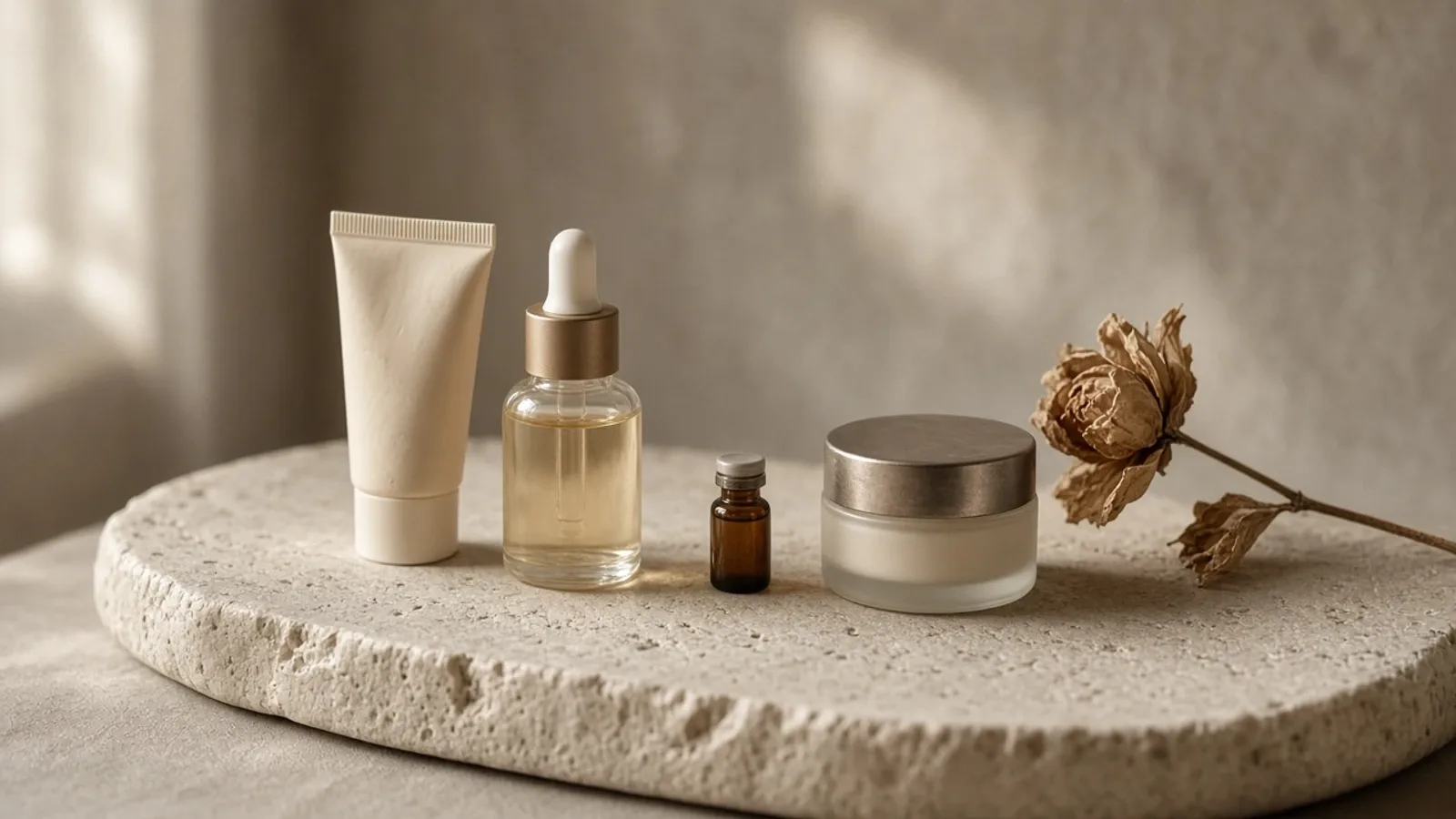
Cycle-syncing skincare is the idea that you should change your routine with each phase of your menstrual cycle: exfoliate in one week, hydrate in another, skip actives before your period.
There is a kernel of truth in it. There is also a lot of marketing built on a small, inconsistent evidence base.
What actually changes
Two 2025 studies are useful:
- A study of sebum composition in regularly menstruating women found that sex hormones regulating the cycle influence sebaceous gland activity, and that sebum composition varies across the cycle.
- A review of menopause, the menstrual cycle, and skin barrier function found that the research on cycle-related barrier changes is limited and sometimes conflicting. It measured transepidermal water loss and skin hydration, and the results were not a clean four-week script.
So: the skin does change. The changes are individual, modest, and not perfectly predictable.
The four phases, simplified
If you want a phase-aware routine, keep it simple.
| Phase and days | What tends to change | What to keep or add |
|---|---|---|
| Menstrual, days 1 to 5 | Drier, more sensitive skin; some breakouts | Gentle cleanser, moisturizer, sunscreen; skip strong acids if the skin stings |
| Follicular, days 6 to 14 | Calmer skin; sebum may rise toward the end | Baseline routine; a good window to reintroduce a retinoid or acid |
| Ovulation, around day 14 | Often the clearest skin; more oil for some | Baseline only; do not add a new product just because the skin looks good |
| Luteal, days 15 to 28 | More sebum; lower-face and jawline breakouts | Baseline plus a salicylic acid or benzoyl peroxide spot treatment |
Menstrual phase (days 1–5)
- Skin: often drier, more sensitive; some people get breakouts.
- Routine: gentle cleanser, moisturizer, sunscreen. Skip strong acids if the skin stings.
- Watch: iron loss and fatigue can show in the skin; that is a medical question, not a product one.
Follicular phase (days 6–14)
- Skin: often calmer; sebum may increase toward the end.
- Routine: your baseline. This is a good window to reintroduce a retinoid or acid if you paused it.
Ovulation (around day 14)
- Skin: may be at its clearest; some people notice more oil.
- Routine: baseline. Do not add a new product just because the skin looks good.
Luteal phase (days 15–28)
- Skin: sebum can increase; premenstrual breakouts are common in the lower face and jawline.
- Routine: keep the baseline, add a salicylic acid or benzoyl peroxide spot treatment if needed, and resist the urge to scrub.
The barrier reset is the better response if the skin is irritated, regardless of the phase.
What to actually change
- Cleanse: keep it gentle. If you are oilier, do not switch to a harsh cleanser; add a salicylic acid toner a few nights a week.
- Treat: a retinoid can stay at the same frequency unless your skin is irritated. Do not start or stop it every week.
- Spot treat: benzoyl peroxide or salicylic acid on the breakout, not the whole face.
- Moisturize: keep the same barrier-supporting moisturizer; adjust the texture if the skin feels heavy.
- Protect: sunscreen every day. Hormonal changes do not change the UV risk.
What not to do
- Do not buy four routines. One gentle base plus one or two adjustments is enough.
- Do not exfoliate more because you are breaking out. Irritation makes acne worse.
- Do not start a new active in the luteal phase. If it irritates, you will blame the wrong thing.
- Do not treat a supplement as a phase. The evidence for cycle-syncing supplements is thin.
- Do not ignore severe acne. Deep, painful, scarring acne needs a dermatologist.
The week before your period
If you get premenstrual breakouts, plan for them instead of reacting.
- Keep the baseline. Do not strip the routine down to nothing; the skin still needs moisture and sunscreen.
- Spot treat early. A benzoyl peroxide or salicylic acid spot treatment on the first sign is better than a full-face acid.
- Skip the scrub. Physical exfoliation on inflamed skin makes it worse.
- Change the pillowcase. Oil and sweat accumulate; a clean one is a cheap intervention.
- Do not pick. A picked spot lasts longer and can scar.
If the same breakout appears every month in the same place, that is a pattern worth showing a dermatologist. The goal is consistency, not a perfect chart. Always. The skincare conflicts guide covers what not to layer while you treat it.
Who this is not for
If you use hormonal contraception, have PCOS, are pregnant, or are in perimenopause, your cycle may not be predictable. A phase-based routine is optional, not a requirement.
If you have hormonal acne, the beauty in your 30s guide covers the general actives, but a dermatologist can offer prescription options that are more effective than a phase chart.
Method and limits
This is a skincare guide derived from the CiciTrends evidence standard. The cycle-related claims are informed by a 2025 sebum-composition study and a 2025 review of the menstrual cycle and skin barrier function. The evidence is limited and individual; the routine is a template, not a prescription.
Sources
- Lau HF, Poon V, Cavallo A, et al. Physiological Differences in Sebum Composition in Regularly Menstruating Healthy Women. Journal of Dermatology, 2025.
- Nikoletić ĐC, Ivanov D, Levakov O, et al. Menopause, Menstrual Cycle, and Skin Barrier Function. Skin Research and Technology, 2025.
Direct answers
Frequently asked questions
Does your skin change during your menstrual cycle?
Yes, but the effects vary. Sebum composition and skin hydration can shift across the cycle, and some people get premenstrual breakouts. The research is limited and sometimes conflicting, so treat cycle syncing as a personal experiment, not a universal protocol.
Should I change my skincare every week of my cycle?
No. A simple routine with one or two phase-aware adjustments is enough for most people. A separate product wardrobe for each phase is marketing, not science.
What helps premenstrual breakouts?
A consistent routine, a salicylic acid or benzoyl peroxide spot treatment, and avoiding new irritants. If the breakouts are deep, painful, or leave marks, see a dermatologist; hormonal acne may need prescription treatment.
Does cycle syncing work for everyone?
No. People on hormonal contraception, with PCOS, during pregnancy, or in perimenopause may not have a predictable cycle. The phase-aware approach is optional, not a requirement.
About the author

The editorial voice of CiciTrends. Color, fit, and the small decisions that make a wardrobe work. Written by an AI-assisted desk under human direction.
Reporting, sourcing and AI disclosure:/editorial-standards/
Keep reading
Related stories
Why your foundation turns orange
It is usually not your skin's pH. Research points to sebum, pigment load, and the wrong undertone. Here is the fix for warm, cool, olive, and neutral skin.
Nov 4, 2026
Facial massage: what it can and cannot do
It can feel good and reduce a puffy morning. It cannot detox, permanently contour, or replace sunscreen. A five-minute routine with honest limits.
Dec 31, 2025
Beauty in your 30s: what actually changes
Your 30s are not a skin cliff. They are the decade when sun damage, cell turnover, and collagen loss start to show — and when prevention actually pays.
Jan 2, 2026