Blue light and your skin: what the evidence says
In short
Visible light can worsen pigmentation, especially in melasma. Screens emit far less than the sun. What to protect against, and what not to buy.
- Visible light from 400 to 500 nanometres can worsen melasma and post-inflammatory hyperpigmentation, and people with darker skin phototypes are disproportionately affected.
- Use a tinted sunscreen with iron oxides if you have melasma: the tint helps block visible light in a way a clear chemical formula may not, and it is not cosmetic.
- The screen dose is far lower than sunlight, so the skin-aging claim is weak; keep the phone away 30 to 60 minutes before bed for the sleep effect that is real.
By Cici
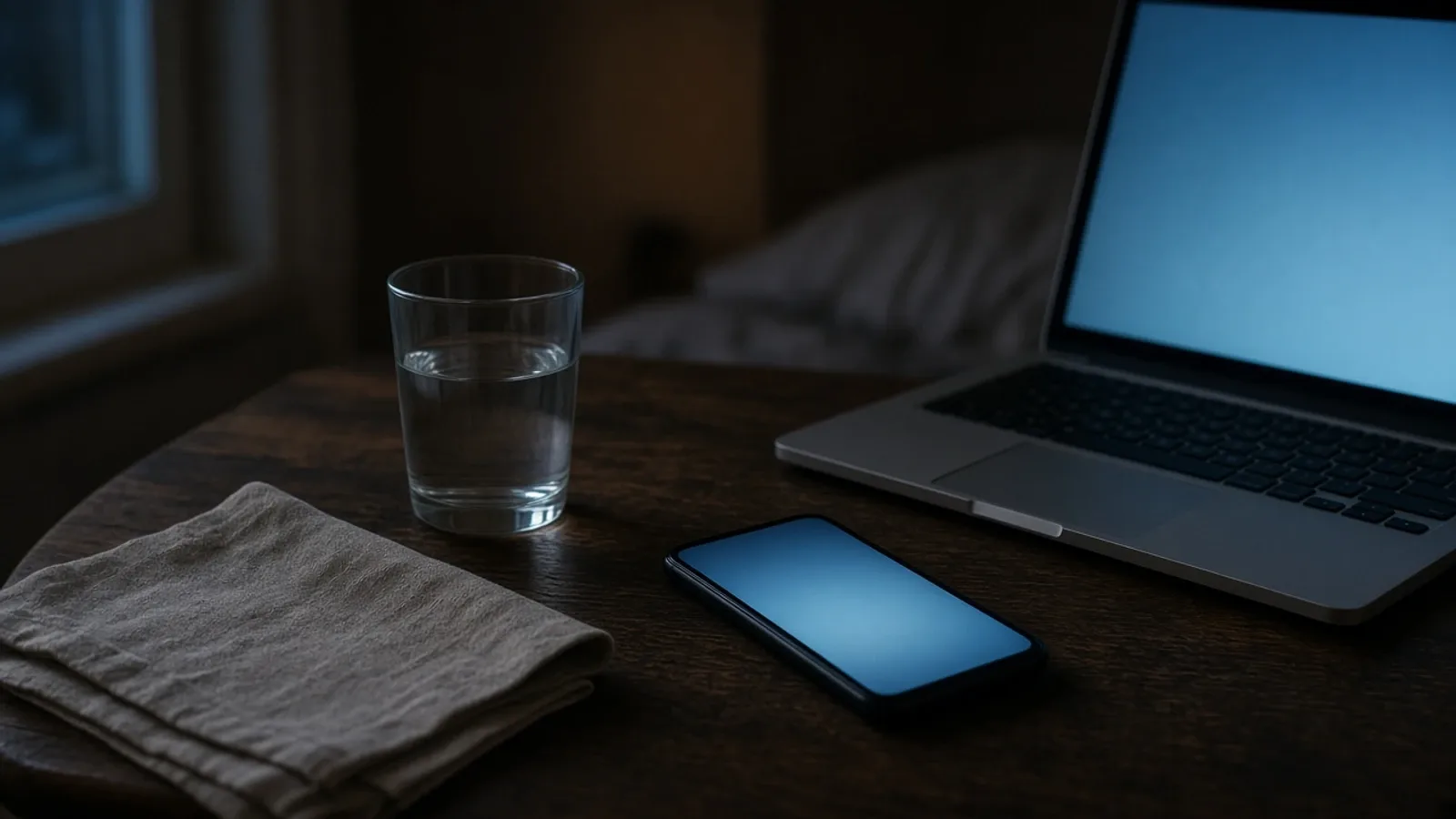
Blue light is the beauty industry’s favorite new villain: screens cause wrinkles, blue-light serum fixes it, blue-light masks reverse it.
The evidence is more specific. Visible light can worsen pigmentation. The sun is still the main driver. Your laptop is not a tanning bed.
What blue light is
Blue light is the high-energy part of the visible spectrum, roughly 400–500 nanometers. It is naturally present in sunlight, and screens emit it too.
Unlike UV, visible light reaches the dermis. That does not automatically mean it causes the same damage as UV; the dose and the biological response are different.
What the evidence shows
A 2026 review, “Beyond UV: Visible Light and Pigmentation,” describes visible light — particularly high-energy visible light — as a significant but underappreciated driver of pigmentation disorders, especially melasma and post-inflammatory hyperpigmentation. It notes that people with darker skin phototypes are disproportionately affected.
The mechanism involves more than melanocyte hyperactivity: visible light can act through opsin-3 and inflammatory signaling. A 2026 review of hyperpigmentation disorders also describes visible light as a factor in melasma and other pigmentation conditions.
That is the strongest case for visible-light protection: pigmentation, not a sudden collapse of collagen from screen time.
Screens versus the sun
The dose matters. Sunlight delivers far more visible light than a phone or laptop at normal viewing distance. The evidence that screen-level blue light causes premature aging is weak, and the “screen face” narrative often borrows from studies of much higher doses.
That does not mean screens are innocent. They affect sleep, posture, and eye strain. But the skin-aging claim is overstated.
What to do
| Protection | What it blocks | Best for |
|---|---|---|
| Tinted sunscreen with iron oxides | UV and some visible light | Melasma and post-inflammatory hyperpigmentation |
| Clear broad-spectrum sunscreen | UV | Everyday protection without a tint |
| Wide-brim hat and shade | Direct sun and heat | Flare days and long outdoor stretches |
| Makeup with SPF | Partial UV only | A supplement, never a replacement |
| Blue-light serum | No measured visible-light block | Nothing the evidence supports |
- Wear broad-spectrum sunscreen every day. UV is still the main driver of visible skin aging.
- Use a tinted sunscreen with iron oxides if you have melasma or post-inflammatory hyperpigmentation. The tint helps block visible light; a clear chemical sunscreen may not.
- Add a hat and shade for direct sun. This matters more than a blue-light serum.
- Treat pigmentation with a clinician if it is persistent. The beauty in your 30s guide covers the general actives.
- Protect sleep. Put the phone away 30–60 minutes before bed; the circadian effect is real even if the skin effect is small.
The barrier reset is the right move if your skin is irritated by a new “blue-light” product.
What this looks like on a Tuesday
You are at a desk from nine to six with a window at your back and a phone in your hand at eleven at night. The window matters more than the phone. If you want one habit that covers the whole visible-light story, put the tinted sunscreen on before you sit down, keep a wide-brim hat by the door for the walk home, and leave the phone charging in the hall after ten. Three moves, none of them a purchase. If your cheeks feel hot by mid-afternoon, that is heat and light arriving together, and a few minutes in the shade does more for the flush than another layer of anything.
What not to buy
- Blue-light serums. There is no strong evidence that a topical product blocks visible light in a meaningful way.
- Blue-light face masks. Consumer devices are not well studied for skin aging.
- “Anti-blue-light” makeup without broad-spectrum SPF. Sunscreen first.
- A new routine for screen time. The basics already cover it.
If you have melasma
Melasma is the condition where visible light matters most, and the practical advice is more specific than “wear sunscreen.”
- Choose a tinted sunscreen with iron oxides. The tint is not cosmetic; iron oxides help block visible light. A clear formula may leave more visible light reaching the skin.
- Apply enough. Most people use a fraction of the tested amount. Two finger-lengths for the face and neck is a reasonable guide.
- Reapply. Every two hours in direct sun, and after sweating or swimming.
- Treat heat as a trigger. Melasma is not only a UV problem; heat and visible light can worsen it. A hat and shade are part of the plan.
- Do not rely on makeup SPF. A tinted foundation with SPF is a supplement, not a replacement for a dedicated sunscreen.
- See a dermatologist. Prescription topicals and procedures can help; a blue-light serum will not.
If you have post-inflammatory hyperpigmentation, the same logic applies: protect the area, treat the inflammation, and give it time. That is the whole visible-light plan, and it works.
Who this is not for
If you have melasma, post-inflammatory hyperpigmentation, or a pigmentation disorder, visible-light protection is worth discussing with a dermatologist. The general advice applies, but the treatment plan may not.
If you are worried about sleep, treat it as a sleep problem. The evening routine guide covers the practical version.
Method and limits
This is an evidence guide derived from the CiciTrends standard. The pigmentation claims are informed by 2026 reviews of visible light and hyperpigmentation. The screen-dose comparison is a general statement, not a measurement of your device; the sun remains the dominant exposure.
Sources
- Ip E, Passeron T, Rodrigues M. Beyond UV: Visible Light and Pigmentation. Photodermatology, Photoimmunology & Photomedicine, 2026.
- Taylor S, Desai SR, Frey C, Elbuluk N, Grimes PE, Alexis A. Fundamentals of Hyperpigmentation Disorders: Causes, Concerns, and Treatment Strategies, Particularly in Skin of Color Patients. Journal of Drugs in Dermatology, 2026.
Direct answers
Frequently asked questions
Does blue light from screens damage skin?
The dose from screens is much lower than from the sun, and the evidence that screen-level blue light causes premature aging is weak. Visible light, including blue, can worsen pigmentation, especially in melasma and post-inflammatory hyperpigmentation.
What is the best protection against visible light?
A broad-spectrum sunscreen with iron oxides, which tints the formula and helps block visible light. A hat and shade matter too. A dedicated blue-light serum is not a substitute.
Do I need a blue-light face mask or serum?
No. There is no strong evidence that consumer blue-light devices or serums improve skin. Sunscreen, a retinoid if you use one, and moisturizer are better investments.
Can blue light affect sleep?
Yes. Blue light can affect the circadian system, which is why screen use close to bed can delay sleep. That is a sleep issue, not a skin-aging issue, but it matters for how you look and feel.
About the author

The editorial voice of CiciTrends. Color, fit, and the small decisions that make a wardrobe work. Written by an AI-assisted desk under human direction.
Reporting, sourcing and AI disclosure:/editorial-standards/
Keep reading
Related stories
PFAS in clean beauty: what actually changed in 2026
France banned PFAS in cosmetics. The FDA found 51 PFAS in 1,744 products and could not confirm most were safe. Here is what changed, and what 'clean' still does not mean.
Nov 4, 2026
The Sephora Holiday Sale Is a Restock, Not a Haul
A discount does not make an untested product a good buy. How to spend the Sephora Holiday Savings Event on repurchases and gift sets, and what to skip.
Nov 6, 2026
Beyond retinol: what bakuchiol can and cannot do
One randomized trial found bakuchiol comparable to retinol for photoageing, with less irritation. Here is what the evidence supports, and what it does not.
Dec 31, 2025