Hair gloss vs glaze vs toner: what each one actually does
In short
The three treatments are sold as interchangeable. They are not. Here is what each one deposits, how long it lasts, and which one your hair actually needs.
- A gloss deposits tone and shine without lift and holds for roughly four to six weeks; a glaze is the sheerer topcoat that fades in one to two washes or a few weeks.
- Use a toner when the unwanted tone is yellow, orange or brassy, and expect four to eight weeks of wear; a gloss cannot neutralize pigment and a glaze carries too little.
- Divide the price by how long the result lasts: a $20 glaze every two weeks costs more per month than a $90 salon gloss every six weeks.
By Cici
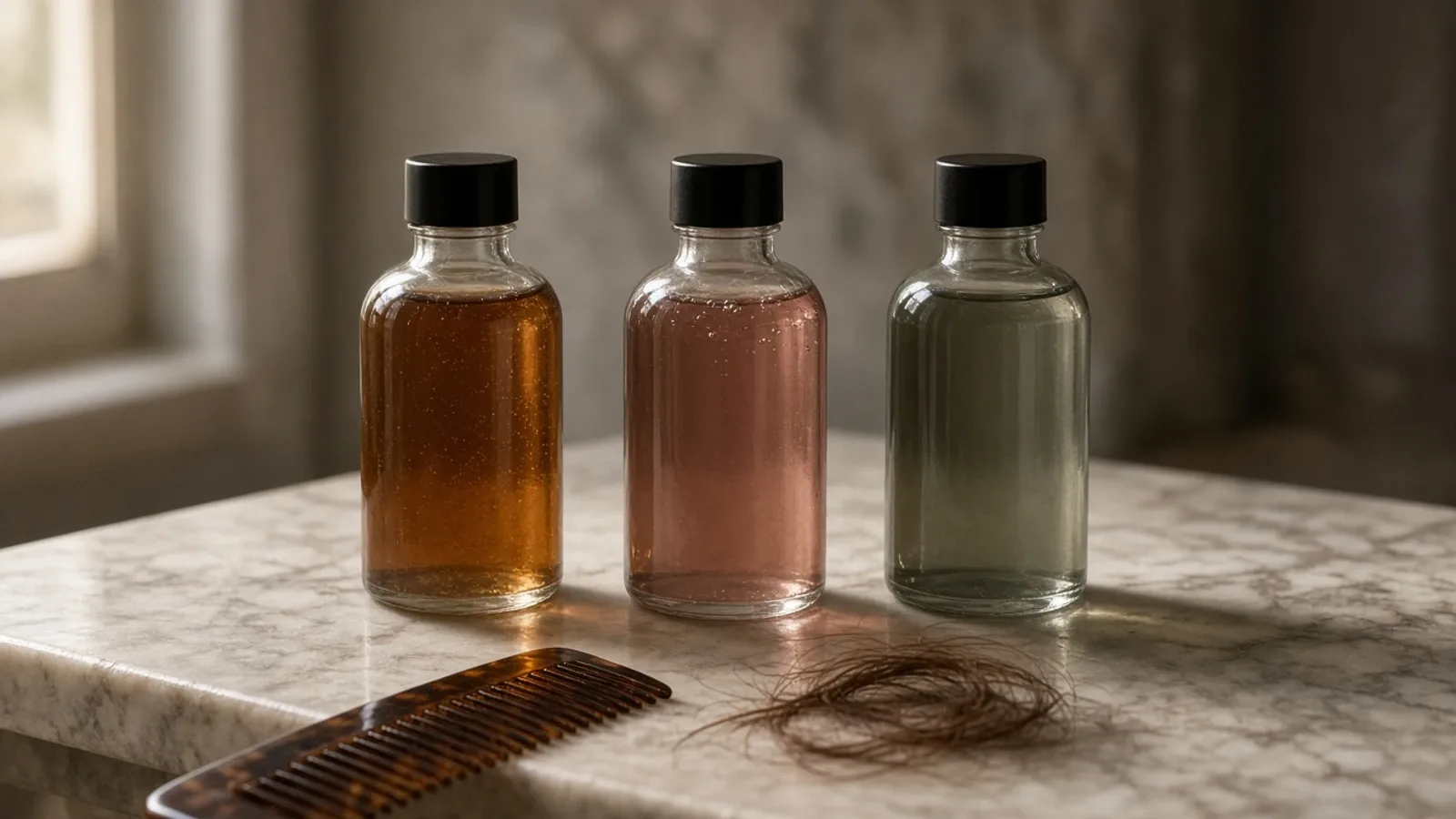
The salon menu uses three words as if they were interchangeable: gloss, glaze, toner. They are not. They deposit different amounts of pigment, last for different lengths of time, and solve different problems. Some of them lift the hair; most do not.
The confusion is not entirely your fault. Brands use “gloss” and “glaze” for products that are chemically similar, and “toner” for services that range from a five-minute acidic rinse to a demi-permanent color with developer. The useful question is not what the service is called. It is what is being put on your hair, and what it is meant to do.
The short answer
| Treatment | What it does | Lifts color? | Typical life | Best for |
|---|---|---|---|---|
| Gloss | Deposits tone and adds shine; acidic, demi-permanent | No | 4–6 weeks | Dull color, faded ends, extra depth |
| Glaze | Sheer topcoat of color and shine; low pigment | No | 1–2 washes to a few weeks | A temporary tone boost, at-home refresh |
| Toner | Fine-tunes or neutralizes tone after lightening | Usually no; a low-volume demi can lift slightly | 4–8 weeks | Brassiness, yellow, orange, or unwanted warmth |
If you want shine and depth, you want a gloss or a glaze. If you want to change the tone of lightened hair, you want a toner. If you want gray coverage or a lighter base, you want a demi-permanent or permanent color, not a toner.
The three variables that actually matter
Every one of these services is a combination of three things:
- Pigment load. How much color is being deposited. A clear gloss has almost none; a toner has enough to neutralize a specific unwanted tone; a demi-permanent color has more.
- Lift. Whether the formula can lighten the hair. Most toners and glosses cannot; a demi-permanent toner with a low-volume developer can lift slightly. Permanent color is a different category.
- Acidity and finish. Acidic glosses sit at a lower pH, which helps the cuticle lie flatter and reflect more light. That is where the “glass hair” effect comes from. It is a surface and tone result, not a repair.
Once you know those three, the names stop mattering. You can ask any colorist: Is this depositing only, or is there lift? How much pigment? How long will it last?
Gloss: tone plus shine, no lift
A gloss is a demi-permanent, often acidic, color service. It deposits tone and adds shine, and it does not lighten the hair. Wella describes its SHINEFINITY as a “zero-damage, zero-lift, acidic color glaze” that works in 5–20 minutes; the brand positions it as a shine and tone refresh rather than a color change.
A gloss is the right service when:
- Your color is fine but flat, and you want it to reflect more light.
- Your ends have faded and you want them to blend back into the mid-lengths.
- You want a subtle shift — warmer, cooler, richer — without committing to a new base.
- You are maintaining a salon color and want to stretch the time between full appointments.
It is not the right service when you need to cover gray, go lighter, or correct a badly banded bleach job. A gloss sits on top. It cannot fix what is underneath.
Glaze: the sheer version
A glaze is a translucent topcoat. It carries less pigment than a gloss, and it is often designed for at-home use between salon visits. Some glazes are clear shine treatments; others carry a small amount of tone.
The trade-off is longevity. A glaze typically fades in a few washes, while a salon gloss can hold for several weeks. That makes a glaze useful for a one-off event, a seasonal shift, or a low-commitment refresh. It is not the tool for persistent brassiness.
If a brand calls its product a “demi-permanent glaze,” read the instructions: it may behave more like a gloss than like a two-week topcoat. The name is marketing; the developer and pigment load are the facts.
Toner: the color corrector
A toner is a semi- or demi-permanent formula used to perfect a color result. It does not lift in most cases; it deposits the tone that neutralizes what you do not want. Wella’s own guide describes toners as “a gentle way to refresh and personalize” color, used to take bleached strands from yellow to ash blonde or caramel bronde.
A toner is the right service when:
- Your blonde or highlighted hair has gone yellow or brassy.
- Your lightened ends are warmer than the rest of your hair.
- You want to shift a color slightly cooler or warmer without changing its depth.
- You have just had highlights and need the final shade refined.
It is not a shine treatment, and it is not a gray-coverage service. It also cannot make dark hair blonde. If the hair has not been lifted to the right level, no toner will produce the shade on the reference photo.
Wella recommends toning every 4–8 weeks for most clients, depending on wash frequency and how quickly the color fades. A toner is generally gentler than permanent color, but “gentle” is not the same as “zero damage.” If your hair is already compromised, the conversation should be about condition first.
What each one costs
Prices vary by city and salon, but the ranges are useful for budgeting:
- At-home glaze: roughly $15–$40, and it lasts a few washes.
- Salon gloss: roughly $50–$150, depending on the salon and whether a blow-dry is included.
- Salon toner: roughly $50–$120, often added to a highlight or balayage service.
The cheapest option is not always the lowest cost per month. A $20 glaze every two weeks costs more than a $90 gloss every six weeks. The same cost-per-wear logic applies to hair: divide the price by how long the result actually lasts.
Which one do you need?
Use this decision path:
- Is the problem shine or tone? Dull but the color is right → gloss or glaze. The color is wrong → toner.
- Is the unwanted tone yellow, orange, or warm? Toner. A glaze will not carry enough pigment to neutralize it.
- Do you want to cover gray or go lighter? Neither a gloss nor a toner. Ask for a demi-permanent or permanent color.
- Is the hair damaged or porous? An acidic gloss can make it look smoother, but it is not a repair treatment. Address condition first; if the concern is thinning or the scalp, start with the scalp-first approach.
- Is this a one-off event? A glaze is the low-commitment choice. A gloss is the better choice if you want it to last a month.
Match the tone to your coloring
Toner is where color analysis becomes practical. The wrong toner can make the same hair color look expensive on one woman and harsh on another.
- Warm seasons (springs and autumns) generally do better with golden, honey, copper, and caramel tones. A cool ash toner can make the skin look gray.
- Cool seasons (summers and winters) generally do better with ash, pearl, and cool brown tones. A warm golden toner can make the skin look yellow.
- High-contrast seasons (bright spring, bright winter, deep winter) can carry a stronger tone shift. Soft seasons need a subtler one.
If you are unsure, the free color analysis quiz gives you a starting point, and the lipstick shade guide uses the same warm-versus-cool logic on a cheaper test.
What not to do
- Do not use a toner to fix a bad bleach job. If the lift is uneven, the toner will be uneven too.
- Do not gloss over damage. Shine reflects condition. A gloss can improve the surface temporarily, but it will not repair the cuticle.
- Do not expect a glaze to cover gray. It is a topcoat, not a color service.
- Do not chase an ash tone on dark hair without lifting. The result will be muddy, not cool.
- Do not book a “toner” without asking what developer, if any, is being used. That is the difference between a five-minute refresh and a color service.
Who this is not for
If you have never colored your hair and you like your natural tone, you do not need any of these. If you have a sensitive scalp or a history of reactions, patch-test and tell your colorist. If you are trying to go from dark brown to platinum, the answer is a lightening plan, not a toner.
And if your salon uses the words interchangeably, ask the three questions above. A good colorist will answer them without defensiveness.
Sources
- Wella Professionals, Does Toner Damage Hair? — toner types, lift, longevity, and aftercare.
- Wella Professionals, SHINEFINITY — zero-lift acidic glaze, 5–20 minute service.
- Wella Professionals, What Is Demi-Permanent Hair Color? — demi-permanent color and developer.
Direct answers
Frequently asked questions
Should I get a gloss or a toner if my blonde is brassy?
Brassiness is a tone problem, so a toner is the right service. It deposits the shade that neutralizes yellow or orange without lifting the hair, and most clients need it every four to eight weeks. A gloss adds shine and depth but will not carry enough pigment to cool the warmth.
How long does a hair gloss last compared with a glaze?
A salon gloss usually holds four to six weeks, while a glaze fades after one to two washes or a few weeks at most. That gap is why a glaze suits a one-off event and a gloss suits maintenance between full colour appointments.
Can a toner cover grey hair or make dark hair blonde?
No. A toner fine-tunes an existing shade, so it cannot cover grey or lift dark hair to blonde. If you want grey coverage or a lighter base, ask for a demi-permanent or permanent colour instead, and be clear that the toner is not doing that work.
What should I ask a colourist before booking a toner?
Ask whether the formula is depositing only or contains lift, how much pigment it carries, and how long the result is expected to last. Those three questions separate a five-minute acidic refresh from a genuine colour service with developer.
About the author

The editorial voice of CiciTrends. Color, fit, and the small decisions that make a wardrobe work. Written by an AI-assisted desk under human direction.
Reporting, sourcing and AI disclosure:/editorial-standards/
Keep reading
Related stories
Why your foundation goes cakey in winter (the texture fix)
Your base is not the problem and your shade has not changed. Why foundation goes cakey in winter, plus the texture and quantity fix that costs nothing.
Nov 8, 2026
Touch is not a serum: what skin hunger can and cannot fix
Affectionate touch is linked to wellbeing, and pleasant touch has its own nerve pathway. A beauty ritual is nice — it is not a substitute for connection.
Jan 3, 2026
Lipstick by color season: the shades that work
Most lipstick advice fails because it ignores undertone and contrast. A practical map of the 12 seasons, the reds, the nudes, and how to test in daylight.
Jan 7, 2026