The skincare ingredients that actually conflict
In short
Most 'never mix' lists confuse irritation with chemistry. Here are the pairs that genuinely conflict, the myths worth dropping, and how to layer actives without fear.
- Separate retinol and strong acids by night, or use the acid in the morning and the retinoid at night, because together they raise the risk of redness, peeling and barrier damage.
- Use one exfoliant two or three times a week rather than stacking an AHA, a BHA and a scrub, and give the skin a night off between them.
- Introduce one new active at a time and give it two weeks before adding another, since most active-related irritation is a dose and frequency problem rather than a chemical one.
By Cici
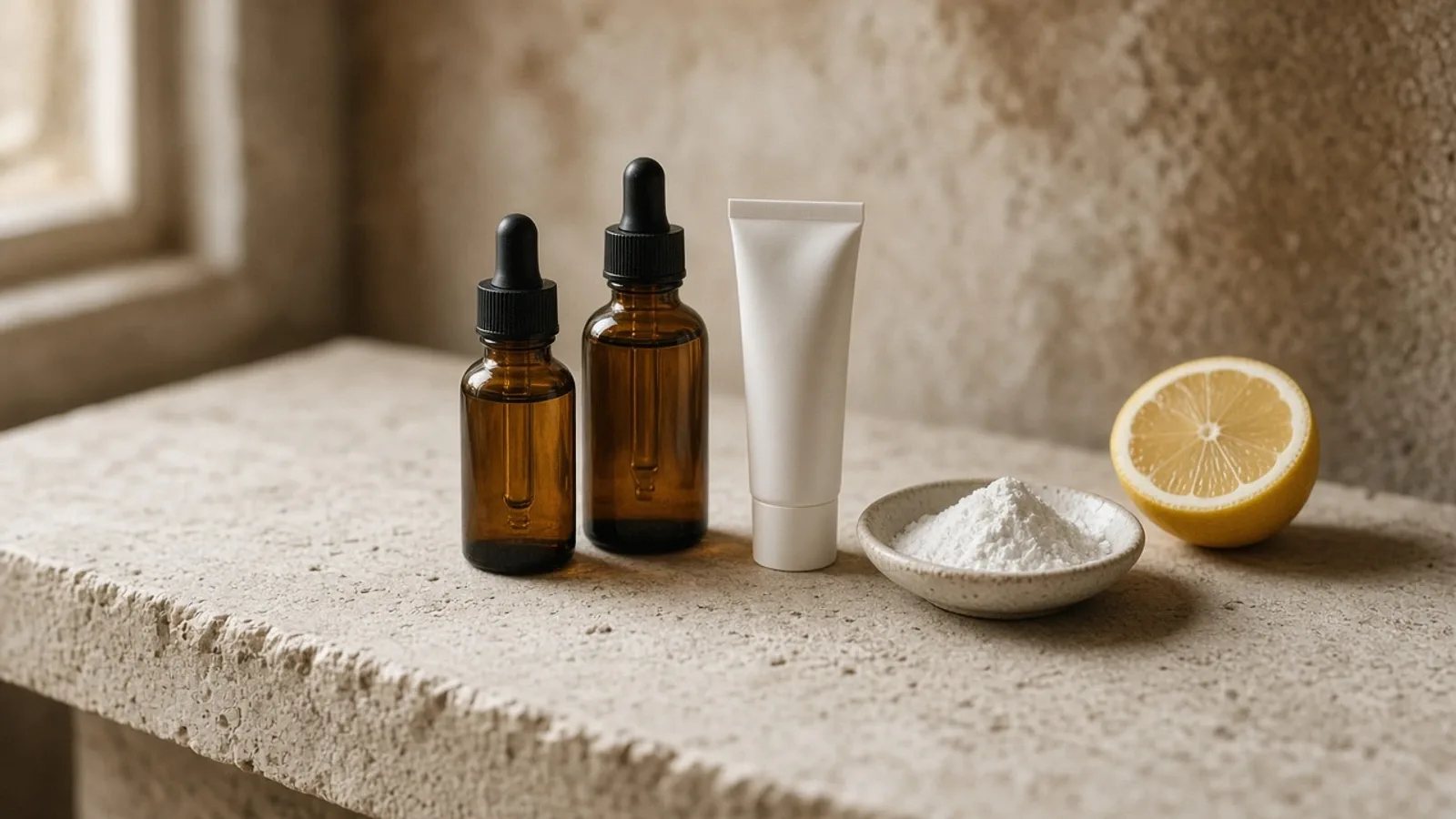
Most “never mix these” skincare lists are built on a single idea: two acids cancel each other out. The reality is less dramatic and more useful. Some combinations genuinely conflict, but the conflict is usually irritation, not a chemical explosion. Others are repeated myths that keep women from using products that work well together.
The useful question is not “can I mix these?” It is “what problem am I trying to avoid?” There are three different problems, and they have different answers.
The three problems behind a “conflict”
- Irritation. Two actives that both increase cell turnover or exfoliate can overwhelm the barrier when used together. This is the most common real issue. It is about dose and frequency, not a chemical incompatibility.
- Stability. Some ingredients are only stable in a narrow pH range. Ascorbic acid is the classic example: it is unstable in water and needs a low pH to remain effective, which is why formulators use derivatives and stabilization strategies. A review in Current Medicinal Chemistry describes the stability problem and the derivative strategies used to work around it.
- Degradation. One ingredient can break down another. Benzoyl peroxide and some retinoids are the best-known example. This is a real formulation issue, which is why some prescription products pair adapalene with benzoyl peroxide in a stabilized formula, while others tell you to separate them.
Once you separate those three, most of the scary lists collapse into a smaller set of sensible rules.
Pairs that genuinely need care
| Combination | Risk | How to separate them |
|---|---|---|
| Retinol and AHA or BHA | Irritation from stacked cell turnover | Alternate nights, or acid in the morning |
| Retinol and benzoyl peroxide | Degradation of the retinoid | Different times of day |
| Vitamin C and strong acids | Stinging plus a destabilised vitamin C formula | Vitamin C in the morning, acid at night |
| AHA, BHA and a physical scrub | Barrier injury from three exfoliants at once | Pick one, two or three times a week |
Retinol and strong acids (AHAs/BHAs)
Both increase turnover and can irritate. Together, they raise the risk of redness, peeling, and barrier damage, especially for beginners or sensitive skin.
This does not mean you can never use both. It means you should not layer a strong acid and a retinoid in the same routine on the same night. Alternate nights, or use the acid in the morning and the retinoid at night, and build tolerance slowly.
Retinol and benzoyl peroxide
Benzoyl peroxide can degrade some retinoids, which is why many routines separate them or use a stabilized prescription combination. If you are using an over-the-counter retinol and a benzoyl peroxide product, use them at different times of day and watch for irritation.
Vitamin C and strong acids
Ascorbic acid is already acidic and can sting. Layering it with an AHA or BHA increases the chance of irritation and can destabilize a fragile vitamin C formula. This is a “separate them” case, not a “they cancel each other” case. Use vitamin C in the morning and the acid at night, or alternate days.
Multiple exfoliants at once
An AHA, a BHA, and a physical scrub in the same routine is not a triple threat. It is a barrier injury waiting to happen. Pick one exfoliant, use it two or three times a week, and give the skin a night off.
Pairs that are mostly myth
Niacinamide and vitamin C
The idea that these two cancel each other comes from laboratory conditions that do not match a cosmetic formula. At normal cosmetic pH and concentrations, they can be used together. Paula’s Choice has a useful explainer on the origin of the myth. If your skin tolerates both, there is no reason to separate them.
Vitamin C and sunscreen
This one is backwards. Vitamin C is an antioxidant; sunscreen is UV protection. Using vitamin C in the morning under sunscreen is a reasonable combination, not a conflict. The sunscreen is doing the blocking; the vitamin C is supporting the skin.
Retinol and moisturizer
Moisturizer does not “dilute” retinol in a way that makes it useless. It can reduce irritation, which is often the point. The “sandwich” method, moisturizer, retinol, moisturizer, is a legitimate way to build tolerance.
Hyaluronic acid and anything
Hyaluronic acid is a humectant. It plays well with almost everything. The only real issue is applying it to dry skin in a dry climate without sealing it with an occlusive, which can make it feel tight rather than hydrating.
How to layer actives without fear
- Introduce one new product at a time. Give it two weeks before adding another active.
- Patch test. Use it on the jaw or inner arm for a few days before the full face.
- Separate by time, not by fear. Morning vitamin C, night retinoid, alternate-night acids is a workable default for many routines.
- Moisturize and use sunscreen. Most active-related irritation is a barrier problem. Moisturizer and SPF do more than any “buffering” trick.
- Respect prescriptions. If a dermatologist has given you a routine, follow it. This article is for over-the-counter layering, not for overriding a prescription.
If your foundation is part of the routine, the oxidation guide explains why long-wear base products behave differently over the day. If you are also auditing the products themselves, the PFAS guide covers what “clean” does and does not mean, and the budget beauty guide shows where spending more actually matters.
Who this is not for
If you have a damaged barrier, active eczema, rosacea, or a prescription routine, this is not a green light to experiment. A dermatologist is the right person to assess it. The general rules here are for healthy skin and over-the-counter products.
If you already have a routine that works, do not rebuild it because a list told you two ingredients are enemies. The best routine is the one you can follow and tolerate.
Sources
- Vasques LI, Vendruscolo CW, Leonardi GR. Topical Application of Ascorbic Acid and its Derivatives: A Review Considering Clinical Trials. Current Medicinal Chemistry, 2023.
- Enescu CD, Bedford LM, Potts G, Fahs F. A review of topical vitamin C derivatives and their efficacy. Journal of Cosmetic Dermatology, 2022.
- Paula’s Choice, Can niacinamide and vitamin C be used together?
- Everyday Health, Skin care ingredient combinations that don’t mix
Direct answers
Frequently asked questions
Can I use vitamin C and retinol together?
Yes, if you separate them by time. Vitamin C in the morning under sunscreen and a retinoid at night is a workable default, and vitamin C is not the ingredient that conflicts with retinol. The pair to watch is a strong acid and a retinoid on the same night.
Do niacinamide and vitamin C cancel each other out?
No. The claim comes from laboratory conditions that do not match a cosmetic formula, and at normal cosmetic pH and concentration the two can be used together. If your skin tolerates both, there is no reason to buy two separate routines or to alternate them.
Can I use benzoyl peroxide with retinol?
Benzoyl peroxide can degrade some retinoids, so use them at different times of day rather than in the same layer. Some prescription products pair adapalene with benzoyl peroxide in a stabilised formula, which is a formulation decision rather than something to copy at home.
How often should I exfoliate if I also use retinol?
Choose one exfoliant and use it two or three times a week, on nights when you are not applying the retinoid. Alternating nights is the simplest way to keep both in the routine without stacking cell-turnover ingredients on a barrier that is still adjusting.
Filed under
About the author

The editorial voice of CiciTrends. Color, fit, and the small decisions that make a wardrobe work. Written by an AI-assisted desk under human direction.
Reporting, sourcing and AI disclosure:/editorial-standards/
Keep reading
Related stories

The low-maintenance hair routine that actually works
A ten-minute morning is a haircut, a wash schedule, and three products — not a shelf of serums. The routine, the order, and what to stop doing.
Jan 9, 2026
The Sephora Holiday Sale Is a Restock, Not a Haul
A discount does not make an untested product a good buy. How to spend the Sephora Holiday Savings Event on repurchases and gift sets, and what to skip.
Nov 6, 2026
PFAS in clean beauty: what actually changed in 2026
France banned PFAS in cosmetics. The FDA found 51 PFAS in 1,744 products and could not confirm most were safe. Here is what changed, and what 'clean' still does not mean.
Nov 4, 2026