Why your foundation turns orange
In short
It is usually not your skin's pH. Research points to sebum, pigment load, and the wrong undertone. Here is the fix for warm, cool, olive, and neutral skin.
- Oxidation on a liquid base is mostly sebum, not skin pH: over a 12-hour day, rising oil makes the film darker and yellower, and the shift always runs warm.
- Match one notch cooler than looks right: oxidation pushes every shade warmer, so a neutral start lands neutral at 4pm while a warm start lands orange.
- Stripe three shades along the jaw, wait a full 20 minutes, then check in daylight and in the car before buying anything off the counter.
- Choose a high pigment load over extra powder: opaque formulas hold their colour as the film turns translucent, and sheer watery bases are the first to go orange.
By Cici
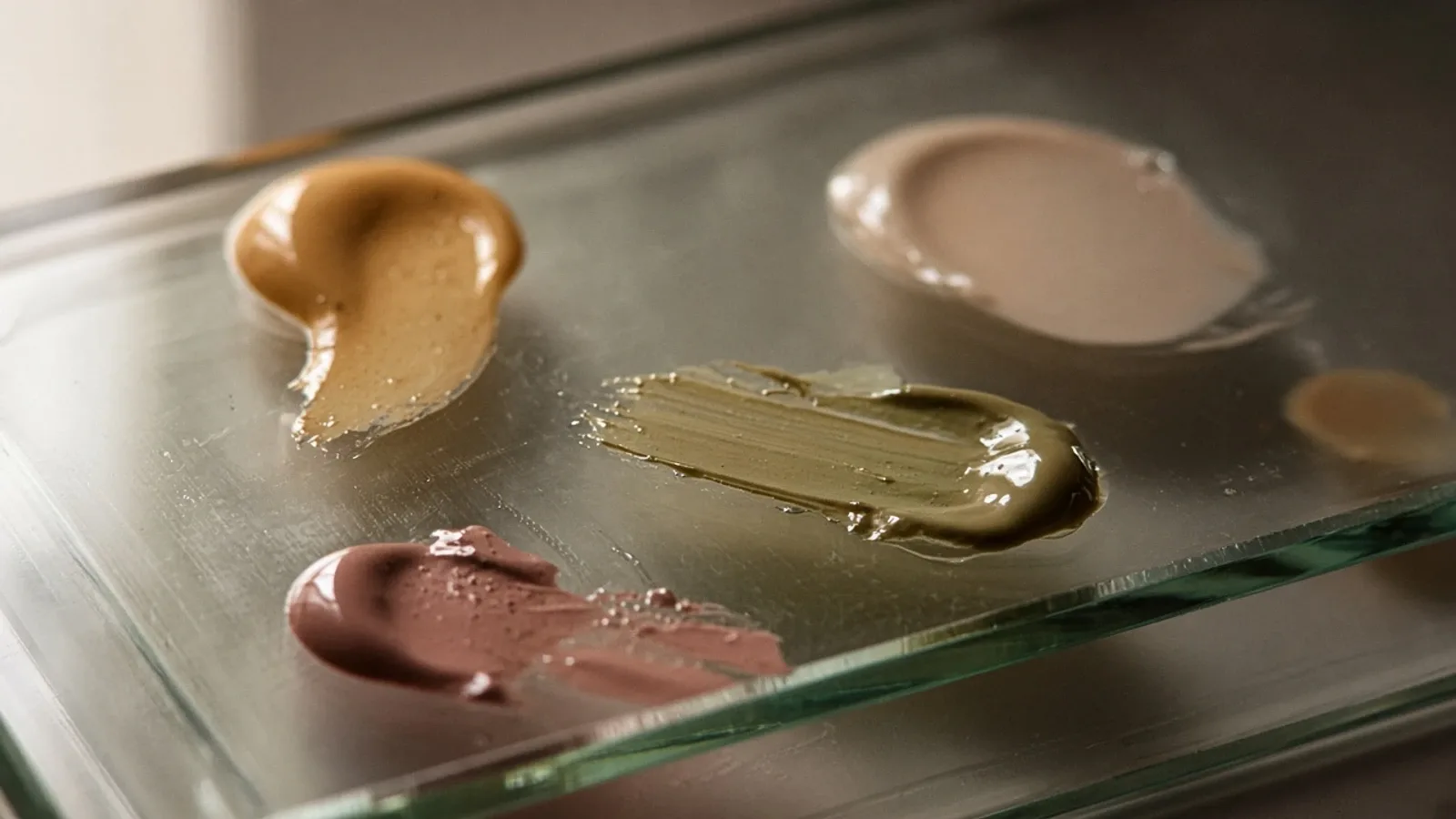
By four in the afternoon, the foundation that matched at eight in the morning has gone peach, then orange. The internet calls it oxidation and blames your skin’s pH, your sweat, or the fact that you did not buy the right setting spray.
The research is more specific, and more useful. The main driver is sebum. The second is the pigment load of the formula. The third is the shade you chose in the first place. Fix those three and the four o’clock face mostly stops happening.
What “oxidation” is actually doing
There are three separate processes, and they get lumped under one word:
- Sebum mixing with the film. As oil comes through the base, the film becomes more transparent. Less pigment sits between your skin and the light, so the shade reads darker and deeper. A study published by the Society of Cosmetic Chemists found sebum was the biggest contributing factor to liquid foundation darkening, with sweat and light having less impact. A 2024 study in the International Journal of Cosmetic Science measured the same effect and linked darkening to increased transmissivity as pigment concentration dropped.
- Oil oxidation. The oils in the formula, and the squalene in your own sebum, oxidize. Squalene is especially reactive under UV light; a 2009 study found it peroxidizes faster than other skin surface lipids. Oxidized oil shifts color and can make the film look duller and more yellow.
- Light and heat. They accelerate both of the above. This is why the same foundation behaves differently in July than in January.
A 2026 study in the Journal of Cosmetic Dermatology adds a useful detail: over a 12-hour day, increasing sebum reduced skin brightness and increased perceived yellowness, especially in oily skin. That is the orange you are seeing in the mirror. It is not a moral failing of your skin. It is chemistry.
Why orange, specifically
Most foundations are built from a blend of iron oxides (yellow, red, black) and titanium dioxide. As the film darkens and becomes more translucent, the warm, yellow part of that blend becomes more visible.
If the base was already too warm for you, it goes orange. If it was too cool or pink, it goes peach, then orange, as the yellow underneath shows through. The direction is always warm; the speed depends on your sebum and the formula.
That is why “my foundation oxidizes” is usually a shade-matching problem wearing a chemistry costume. The formula is doing what formulas do. The shade was wrong for the light you are standing in at 4pm.
The fix by undertone
| Undertone | What goes orange | Choose instead | How to test |
|---|---|---|---|
| Warm | Pink, rosy, or cool-neutral bases | Yellow, golden, or peach-based shades | Stripe on the jaw, wait 20 minutes, check in daylight |
| Cool | Golden, yellow, or warm-neutral bases | Rosy, neutral, or blue-red-based shades | Check the neck, not the hand; hands are warmer |
| Olive | Orange, peach, or high-yellow bases | Neutral-olive, green-grey, or muted neutral | Look for a shade that disappears, not one that “warms you up” |
| Neutral | Anything saturated or too warm | True neutral with a slight yellow or beige base | Test one shade warmer and one cooler, then split the difference |
The pattern is simple: match the base note to your undertone, then go one notch less warm than you think you need. Oxidation pushes everything warmer. If you start neutral, you land neutral at 4pm. If you start warm, you land orange.
If you are not sure of your undertone, the free color analysis quiz narrows it down in about three minutes. The lipstick shade guide uses the same logic for color, and it is a faster test than foundation because you can see the result immediately.
The formula fixes that actually work
You cannot stop your skin from producing sebum. You can choose a formula that handles it better.
- Higher pigment load, not more powder. A more opaque foundation keeps its color as the film becomes translucent. Sheer, watery bases are the first to go orange.
- Oil-fixing powders. The 2024 study found that replacing pigments with oil-fixing ability reduced sebum-induced darkening. Look for silica, or formulas that describe themselves as oil-controlling rather than “radiant.”
- Pigments that disperse well in sebum. The same study found that pigments with high sebum dispersibility were less affected. This is a formulation detail you cannot read off the front of the bottle, which is why testing matters more than claims.
- A matte or satin finish for oily skin. Dewy formulas use more emollients and reflect more light; they tend to show the shift sooner.
- A silica-based primer on the T-zone. It absorbs oil before it reaches the foundation. It is a delay, not a cure, but a useful one.
What does not work: setting spray as a fix. It can reset the surface for an hour, but it does not change the pigment-sebum interaction. Nor does a “pH-balancing” toner; the evidence for that as an oxidation fix is thin, and the studies above point at sebum and pigment, not skin pH.
The application fixes that cost nothing
- Wait five to ten minutes after skincare. Occlusive moisturizers and sunscreen need to set. Foundation applied on top of a wet film mixes with it and can separate.
- Blot before you apply. A blotting paper on the T-zone removes surface oil that would otherwise dilute the base.
- Do not go a shade lighter to “brighten.” A too-light shade looks ashy at 8am and darker by 4pm, because the contrast with your neck does the opposite of what you wanted.
- Set only where you need it. Powder the T-zone and leave the cheeks. Powder everywhere can make the finish flatter without stopping the shift.
- Test at the right time. Match at 4pm, not at the counter under warm lights. Wear the sample for a full day before you commit.
If you are rebuilding a base routine, the budget beauty guide covers which categories are worth spending on, and the ingredients not to mix is the guardrail for the actives underneath.
Who this is not for
If your skin is dry, sebum is not the main driver. Your foundation may be shifting because of light, the formula’s oils, or a shade that was too warm to begin with. The undertone fix still applies; the oil-control advice does not.
If you love a dewy finish and it behaves on your skin, keep it. The goal is not matte. It is a base that still looks like your face at the end of the day.
And if you have rosacea or reactive skin, patch-test anything new. The advice here is about color behavior, not a treatment for a skin condition.
How to choose a foundation in ten minutes
- Pick three shades: one you think is right, one cooler, one warmer.
- Stripe them along the jaw and blend the edges.
- Wait twenty minutes. This is the minimum time for the formula to settle and start shifting.
- Check in daylight, then in the car. Car light is unforgiving and honest.
- Match the neck, not the hand.
- Buy from a retailer with returns, and wear it for a full day before you decide.
The best foundation is not the one that matches in the store. It is the one that still matches at four in the afternoon, in the light you actually live in.
Sources
- Huang H, Wang Y, Zhang J, Wu N, Zeng L. Study on the factors affecting the darkening of liquid foundations. Society of Cosmetic Chemists.
- Investigating the impact of sebum secretion on liquid makeup foundation darkening and its solution. International Journal of Cosmetic Science, 2024.
- Shi S, Ruan L, Lua BL. The impact of sebum and pore size on consumer perceptions of skin yellowness among young Chinese consumers. Journal of Cosmetic Dermatology, 2026.
- Ryu A, Arakane K, Koide C, Arai H, Nagano T. Squalene as a target molecule in skin hyperpigmentation caused by singlet oxygen. Biological and Pharmaceutical Bulletin, 2009.
Direct answers
Frequently asked questions
Why does my foundation turn orange by the afternoon?
Sebum, mostly. As oil comes through the base the film turns more translucent, so less pigment sits between your skin and the light and the shade reads darker and warmer. Over a twelve-hour day that shows up as peach at first and orange by four o'clock.
How can I tell if a foundation will oxidise before I buy it?
Stripe three shades along your jaw, one cooler and one warmer than the shade you think you need, blend the edges and wait twenty minutes. Then look at the strips in daylight and again in the car, because car light shows the warm shift faster than shop lighting.
Does setting spray stop foundation from turning orange?
Not really. It can reset the surface for about an hour, but it does nothing to the pigment and sebum interaction underneath, which is what drives the colour shift. A silica primer on the T-zone and a formula with a higher pigment load do more for the same money.
What shade suits olive skin that keeps going orange?
Look for neutral-olive, green-grey or muted neutral bases and test that the shade disappears into the jaw rather than warming it up. High-yellow and peach shades are the usual culprits, because the warm part of the pigment blend becomes more visible as the film darkens.
About the author

The editorial voice of CiciTrends. Color, fit, and the small decisions that make a wardrobe work. Written by an AI-assisted desk under human direction.
Reporting, sourcing and AI disclosure:/editorial-standards/
Keep reading
Related stories
PFAS in clean beauty: what actually changed in 2026
France banned PFAS in cosmetics. The FDA found 51 PFAS in 1,744 products and could not confirm most were safe. Here is what changed, and what 'clean' still does not mean.
Nov 4, 2026
The Sephora Holiday Sale Is a Restock, Not a Haul
A discount does not make an untested product a good buy. How to spend the Sephora Holiday Savings Event on repurchases and gift sets, and what to skip.
Nov 6, 2026
How to reset your skin barrier (without stopping everything)
A barrier reset is not a week of doing nothing. It is removing the irritants, keeping the basics, and giving the skin time to recover.
Dec 30, 2025