Facial massage: what it can and cannot do
In short
It can feel good and reduce a puffy morning. It cannot detox, permanently contour, or replace sunscreen. A five-minute routine with honest limits.
- Five minutes of gentle upward strokes can reduce morning puffiness briefly; it cannot move bone or fat, so any contouring is temporary fluid movement.
- Keep pressure light: the face is not a knot in a shoulder, and dragging or pressing hard can cause broken capillaries and irritation rather than a lift.
- Stop at five minutes, work upward from the collarbone to the jaw, and skip massage on active acne, broken skin, rosacea or recent fillers.
By Cici
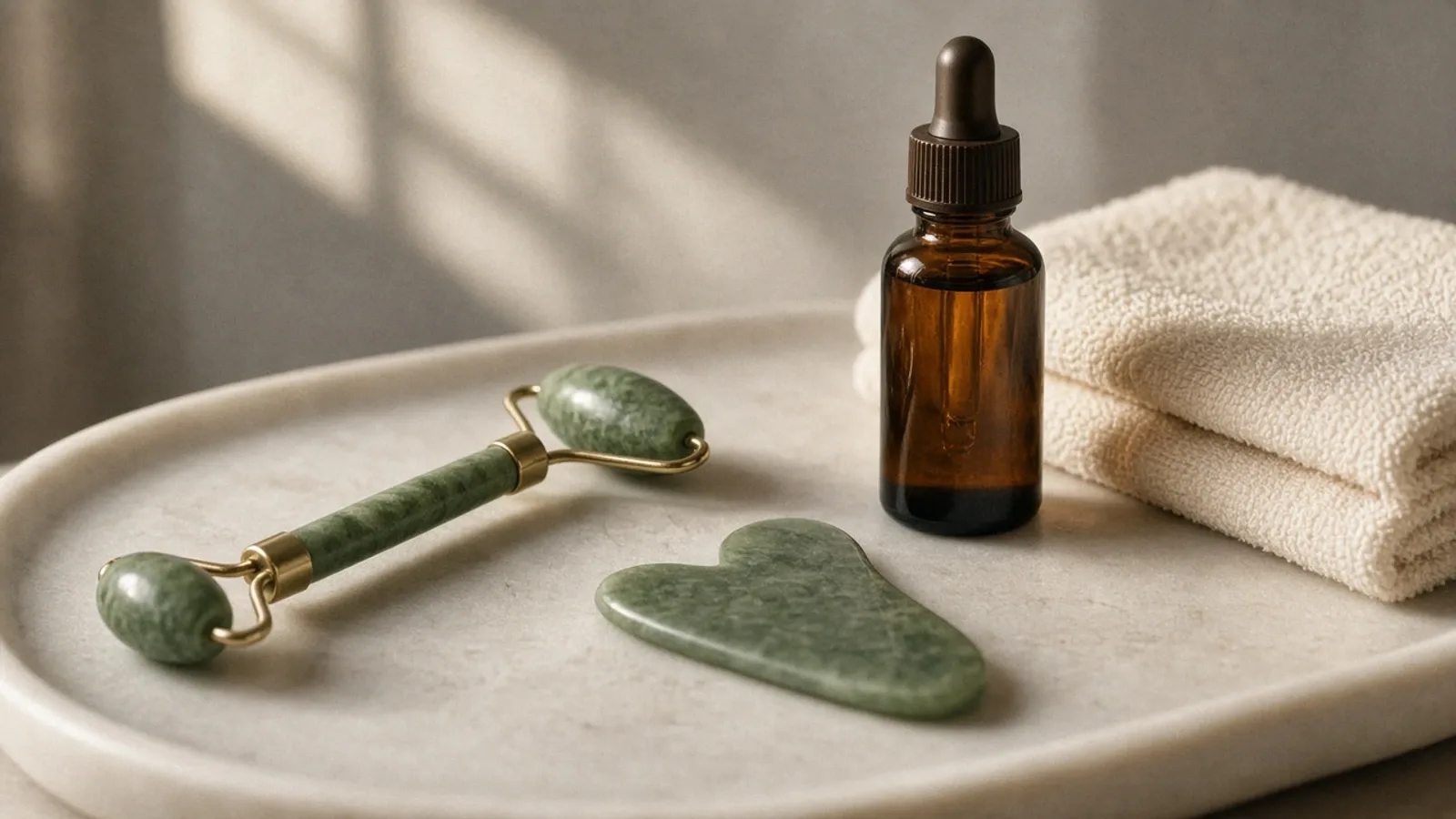
Facial massage is sold as a way to “drain toxins,” “sculpt” the jawline, and get a facelift without the needle. The first claim is wrong, the second is temporary at best, and the third is marketing.
What it can do is more modest and still worth having: it feels good, it can reduce a puffy morning, and it is a pleasant way to apply skincare. That is enough.
| Claim | What holds up | Sensible use |
|---|---|---|
| Drains toxins | Nothing: the liver and kidneys clear waste | Skip it and treat the claim as marketing |
| De-puffs the face | A brief reduction in morning fluid | Five gentle minutes, stroking upward from the collarbone |
| Sculpts the jawline | Temporary fluid movement only | Expect an evening effect, not a lift |
| Helps product spread | Yes, oil or moisturiser glides more evenly | Apply after cleansing and before makeup |
| Fixes acne or rosacea | No, and friction can trigger a flare | Leave the area alone |
What the lymph system actually does
The lymphatic system moves fluid, supports immune function, and helps clear waste from tissues. It is not a sewer of “toxins” waiting to be pushed out by a jade roller. It also does not need manual drainage to work; it moves on its own.
Lymphatic drainage is a real technique used in medical contexts, especially after surgery. A 2026 systematic review of manual lymphatic drainage after cosmetic plastic surgery found the evidence on its effectiveness inconsistent, which is a useful reminder that “drainage” is not a universal cure. Facial massage is not the same intervention, and the evidence for cosmetic contouring is thin.
What massage can do
A 2026 review of massage and neuroimaging describes how structured massage can influence the nervous system and may support relaxation. That matches experience: a gentle facial massage can lower the shoulders, slow the breath, and make the face feel less tight.
The practical benefits are:
- Temporary de-puffing. Gentle movement can help with morning fluid retention, especially around the eyes. The effect is short-lived.
- Relaxation. The face holds tension. Massage can release some of it.
- Better product application. A few minutes of gentle massage helps an oil or moisturizer spread evenly.
- A ritual. A small, repeatable act of care that is not another optimization project.
What it cannot do
- Detox the body. The liver and kidneys do that. The lymph system is not a toxin pipe.
- Permanently contour the face. Bone and fat do not move with a roller. Any change is temporary fluid movement.
- Replace sunscreen, a retinoid, or sleep. The basics still do the heavy lifting. The beauty in your 30s guide covers those.
- Fix a medical condition. Acne, rosacea, infection, and swelling need a clinician, not a gua sha stone.
The five-minute routine
- Wash your hands and remove makeup. Do not drag a tool across a dirty face.
- Apply a little facial oil or moisturizer. It reduces friction; you are not trying to exfoliate.
- Start at the neck. Gentle strokes upward from the collarbone to the jaw, using light pressure.
- Move from the center of the face outward. Cheeks toward the ears, brow toward the temples, with slow, even strokes.
- Finish with the jawline and temples. Gentle circles, no pressing into the eye socket.
- Stop after five minutes. More pressure is not better. Redness or pain means stop.
The five-minute face is a good anchor: massage first, then makeup, then out the door.
The morning it has to fit into
You have four minutes between the shower and the front door, and the warm bathroom mirror is unforgiving before coffee. Wash your hands, take a small pump from the bottle of facial oil, and work upward from the collarbone while the kettle boils. Use light pressure: the strokes should feel like smoothing a soft sheet, not like ironing one. By the time you have finished, your jaw feels looser and your face has lost its overnight heaviness. If you only have two minutes, do the neck and jaw and skip the rest. The effect will fade by lunchtime, and that is the honest version of what five minutes buys.
What about gua sha and rollers?
Tools are optional. A clean pair of hands works. If you like a gua sha stone or a roller, use it for pleasure and glide, not pressure.
- Choose a smooth, clean tool. Wash it after each use with soap and water.
- Use light pressure. The face is not a knot in a shoulder. Dragging or pressing hard can cause broken capillaries and irritation.
- Work with the tool at a low angle. Almost flat against the skin, not digging in.
- Skip the freezer. A cold roller can feel nice in the morning, but it does not “freeze” fat or permanently shrink pores.
- Stop if it hurts. Pain is not a sign that it is working.
A tool does not make the massage more effective. It makes it more enjoyable, which is a legitimate reason to use one.
Who should skip it
- Active acne or broken skin. Massage can spread bacteria and increase irritation.
- Rosacea or a compromised barrier. Friction can trigger a flare. The skincare conflicts guide is the better starting point.
- Recent fillers, surgery, or injury. Ask your clinician before massaging the area.
- Any swelling that is painful, one-sided, or persistent. That is a medical appointment, not a routine.
The honest summary
Facial massage is a nice ritual with a small, temporary effect. It is not a detox, a facelift, or a substitute for the boring basics. If you enjoy it, do it gently and for five minutes. If you do not, you are not missing a pillar of skincare.
Sources
- Chmiel J, Kurpas D. Through Massage to the Brain — Neuronal and Neuroplastic Mechanisms of Massage Based on Various Neuroimaging Techniques. Journal of Clinical Medicine, 2026.
- Alsairefi S, Alqallaf N, Ali S, et al. Efficacy of Manual Lymphatic Drainage in Reducing Postoperative Complications After Cosmetic Plastic Surgery: A Systematic Review. Plastic and Reconstructive Surgery Global Open, 2026.
Direct answers
Frequently asked questions
Does facial massage actually reduce puffiness?
A little, and only briefly. Gentle movement can shift morning fluid retention, especially around the eyes, but bone and fat do not move with a roller, so any contouring effect is temporary fluid movement rather than a lasting change.
How long should I do facial massage for?
Five minutes, once, with light pressure. More pressure is not better, and redness or pain means stop. Wash your hands first, apply a little facial oil or moisturiser to reduce friction, and work upward from the collarbone to the jaw.
Is gua sha better than using your hands?
No. A clean pair of hands works, and a tool makes the massage more enjoyable rather than more effective. If you use gua sha or a roller, keep it almost flat against the skin, use light pressure, wash it after each use, and skip the freezer.
Can facial massage get rid of toxins?
No. The lymphatic system moves fluid and supports immune function on its own, and it does not need manual drainage to work. The liver and kidneys clear waste, so treat detox claims as marketing rather than physiology.
About the author

The editorial voice of CiciTrends. Color, fit, and the small decisions that make a wardrobe work. Written by an AI-assisted desk under human direction.
Reporting, sourcing and AI disclosure:/editorial-standards/
Keep reading
Related stories
Cycle-syncing skincare: what the evidence actually supports
Sebum, hydration, and barrier function do shift across the menstrual cycle. The evidence is limited and conflicting — so here is a simple phase-aware routine.
Jan 3, 2026
Touch is not a serum: what skin hunger can and cannot fix
Affectionate touch is linked to wellbeing, and pleasant touch has its own nerve pathway. A beauty ritual is nice — it is not a substitute for connection.
Jan 3, 2026
Beauty in your 30s: what actually changes
Your 30s are not a skin cliff. They are the decade when sun damage, cell turnover, and collagen loss start to show — and when prevention actually pays.
Jan 2, 2026