The winter capsule wardrobe
In short
Ten pieces, one winter, and the math that makes them work: coat, knits, bottoms, boots, and the formulas that turn them into a week.
- Ten pieces is the working count: one coat, two knits, a shirt, a trouser, a jean, a dress, a boot, a closed shoe and one scarf or bag.
- Build the palette from two neutrals and one accent taken from your season, with the coat, trouser and boots in the neutrals and the accent left to scarf, bag or lip.
- Spend first on the coat and the boots, the two pieces that decide whether the rest of the wardrobe is wearable, and treat the shirt, scarf, bag and rarely worn dress as save items.
- Run cost per wear first: a coat worn daily for four months earns its price, a boot worn three times a week earns its price, and a dress worn twice a season does not.
By Cici
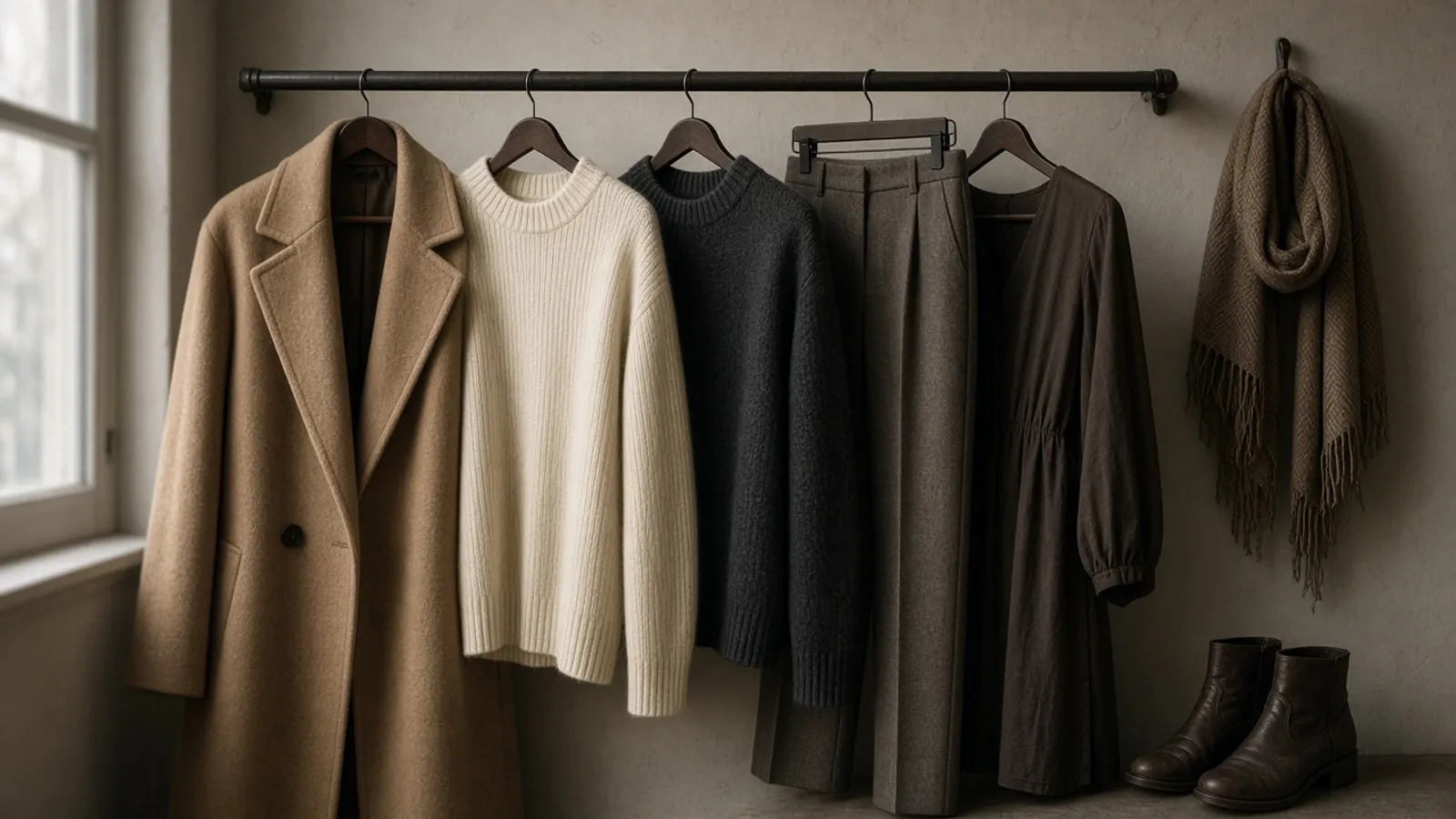
A winter capsule is not ten pieces you love. It is ten pieces that work together when the weather is bad and the decision window is short.
The goal is coverage: one coat that closes over a knit, one bottom that fits, one shoe that survives wet pavement. Everything else is a variation.
The ten pieces
| # | Piece | What it has to do |
|---|---|---|
| 1 | Coat | Close over a knit; hit below the hip |
| 2 | Fine knit | Layer under the coat, work indoors |
| 3 | Heavy knit | Stand alone on a cold day |
| 4 | Shirt | Add a collar and a clean line |
| 5 | Tailored trouser | Work, dinner, travel |
| 6 | Straight-leg jean | Weekend, errands |
| 7 | Dress | One-and-done for a dinner or event |
| 8 | Boot | Wet weather, cold floors |
| 9 | Closed shoe | Loafers, flats, or a low heel |
| 10 | Scarf or bag | The accent that finishes it |
That is ten. You can add a second coat or a second boot if your climate demands it, but do not add a fifth knit before you have a coat that works.
The palette
Use two neutrals and one accent from your season. The capsule wardrobe guide has the full method.
Examples:
- Winter: charcoal, navy, and a true red accent.
- Autumn: camel, chocolate, and a rust accent.
- Spring: cream, camel, and a coral accent.
- Summer: gray, navy, and a rose accent.
The coat, trouser, and boots should be neutrals. The accent belongs in the scarf, bag, or lip — the pieces you can change without buying a new wardrobe.
The formulas
Work
Fine knit + tailored trouser + coat + closed shoe.
Weekend
Heavy knit + straight-leg jean + boot + scarf.
Dinner
Dress + coat + boot or heel + one metal.
Travel
Fine knit + tailored trouser + coat + flat + scarf.
Cold snap
Heavy knit + fine knit + trouser + boot + coat.
The formula is the silhouette; the variety comes from texture, color, and the third piece. The outfit formula guide goes deeper.
What to spend on
- The coat. It is the piece you wear most and the one that has to close over everything. Spend here first.
- The boots. Wet feet ruin the day. Buy for the weather, not the outfit photo.
- The tailored trouser. A good wool blend holds its shape and can be worn to work and dinner.
The three-jacket wardrobe covers the layer if you need a second coat.
What to save on
- The shirt. A cotton poplin shirt is a commodity; the fit matters more than the price.
- The scarf. A cheap scarf in your palette does the same job as an expensive one.
- The bag. Use what you have; a bag is not the point of the capsule.
- The dress. If you wear it rarely, do not spend coat money on it.
The cost-per-wear check
Run the math before you buy:
- Coat: worn daily for four months → the lowest cost per wear in the wardrobe.
- Boot: worn three times a week → worth spending on.
- Dress: worn twice a season → buy at a lower price or borrow.
The cost-per-wear guide and the 30-wear rule are the filters.
The weather adaptations
- Rain: a water-resistant boot and a coat with a hood or a umbrella you will actually carry.
- Snow: a boot with grip; a coat that covers the hip.
- Wind: a scarf that stays put; a coat that closes at the neck.
- Indoor heat: a fine knit that works without the coat.
The seasonal transition guide covers the swap when the weather turns.
What not to do
- Do not buy five knits and no coat. The coat is the piece that makes the rest wearable.
- Do not buy a “statement” coat you cannot layer. It will be a photograph, not a winter.
- Do not buy boots you cannot walk in. The commute is part of the outfit.
- Do not ignore the palette. A capsule in colors that do not work together is just a small wardrobe.
- Do not rebuild everything at once. Start with the gap that ruins the most outfits.
The Monday test
It is 7:40 on a Monday, the radiator is ticking, and you are standing at the rail in a towel. A working capsule gets you dressed before the kettle boils: one knit off the hanger, one bottom, one pair of boots by the door. If you are still holding two hangers at 8:05, the gap is not taste. It is a missing piece, usually the coat that closes over the heavy knit, or the boot that survives the wet walk to the station.
Then count what you actually wore last week. Anything that has sat on the shelf for three weeks is the wrong weight, the wrong color, or a size you keep meaning to fix. Move it off the rail and your morning gets shorter. A capsule is measured in minutes saved, not in pieces owned.
Who this is not for
If you live in a climate with no winter, this is not your capsule. If you have a uniform, you already have the answer; just check the coat and the boot.
And if you love a large wardrobe and rotate it, keep it. A capsule is a tool for fewer decisions, not a rule for everyone.
Method and limits
This is a wardrobe system derived from the CiciTrends capsule, color, and cost-per-wear principles. The claim that clothing can affect how you feel is supported by enclothed cognition research; the ten-piece count is editorial judgment.
Sources
- Adam H, Galinsky AD. Enclothed cognition. Journal of Experimental Social Psychology, 2012.
- CiciTrends Color System. The 12 seasons. Internal framework used for the palette examples.
Direct answers
Frequently asked questions
What are the essentials for a winter capsule wardrobe?
A coat, two knits, a shirt, a tailored trouser, a jean, a dress, a boot, a closed shoe, and a scarf or bag. Ten pieces that work together in your palette are enough for most weeks.
How many pieces should a winter capsule have?
Ten is a useful starting point, not a rule. The number matters less than the coverage: one coat that closes over a knit, one bottom that fits, and one shoe for wet weather.
What colors should a winter capsule use?
Two neutrals and one accent from your seasonal palette. The neutrals carry the coat, trouser, and knit; the accent goes in the scarf, bag, or lip.
How do I keep a winter capsule from feeling boring?
Change the texture and the third piece, not the silhouette. A cable knit, a smooth wool, a leather boot, and a scarf give four different outfits from the same base.
About the author

The editorial voice of CiciTrends. Color, fit, and the small decisions that make a wardrobe work. Written by an AI-assisted desk under human direction.
Reporting, sourcing and AI disclosure:/editorial-standards/
Keep reading
Related stories
Winter wedding guest outfits by color season
A winter wedding is a color problem and a layering problem. Here is the guest outfit formula for all 12 color seasons, with specific palette colors and one coat rule.
Nov 4, 2026

The Winter School Run Uniform: Dress for the Car, Not the Catwalk
A winter school run outfit is a transition problem, not a mirror problem. The drivable coat, the swing layer, and the two-pair rule that get you to 9am.
Nov 7, 2026
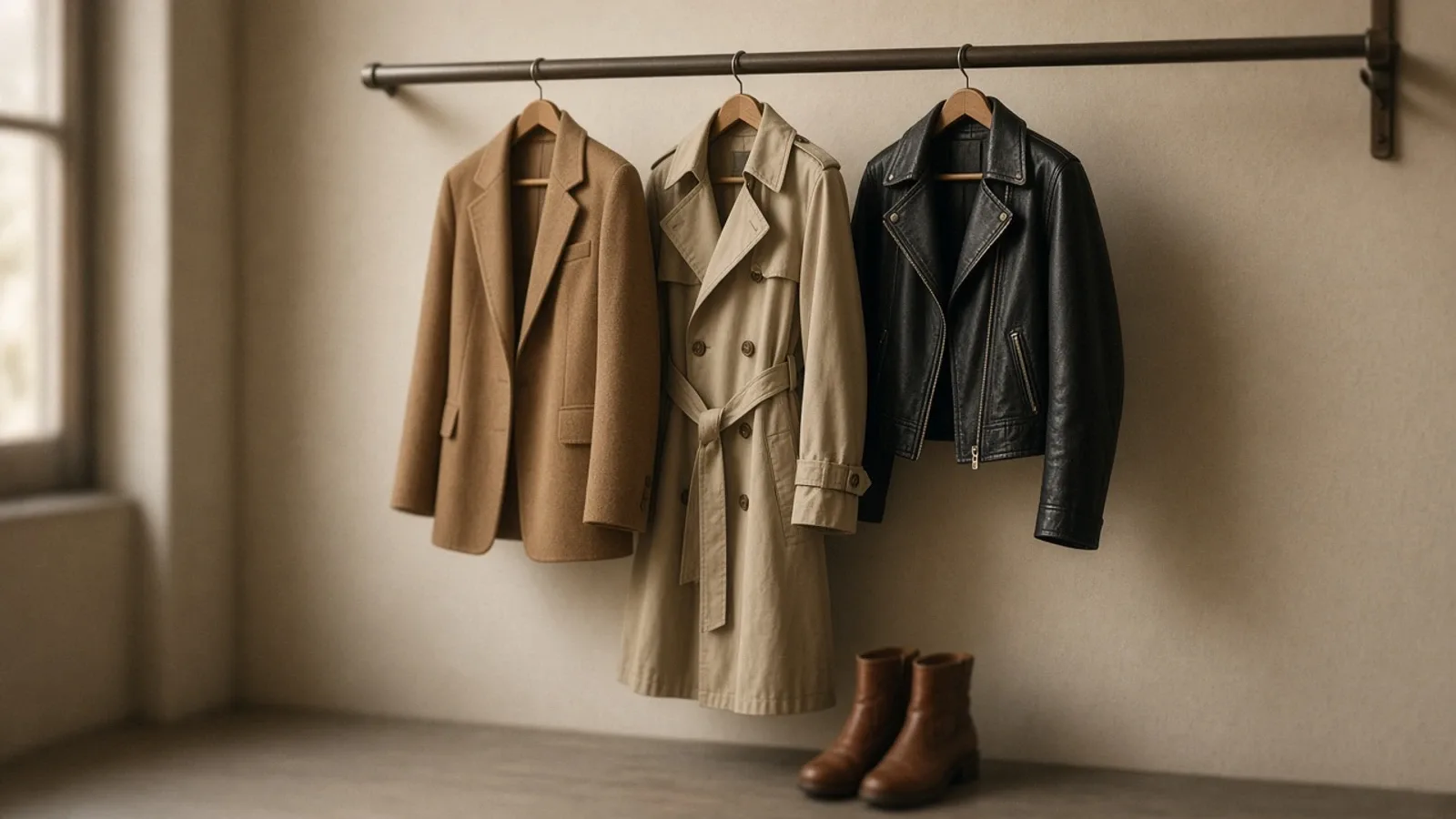
The three-jacket wardrobe
Three jackets, three jobs, one palette: the blazer, the trench, and the cropped jacket, with the proportions and color rules that make them work together.
Nov 5, 2026