The in-between wardrobe: winter to spring without the panic
In short
It is 40 in the morning and 65 by lunch. A three-layer system, the pieces to keep out, and a weekend swap that does not require a new wardrobe.
- Keep three layers: a base that looks finished alone, a mid-layer for warmth, and a shell for weather, then remove the shell by 2pm.
- Swap the wardrobe when the daytime high is consistently above 55°F and the morning low is above 40°F, and keep one coat and one knit out.
- A trench is water-resistant rather than waterproof, so keep a packable hooded rain shell for wet days and save suede shoes for dry ones.
By Cici
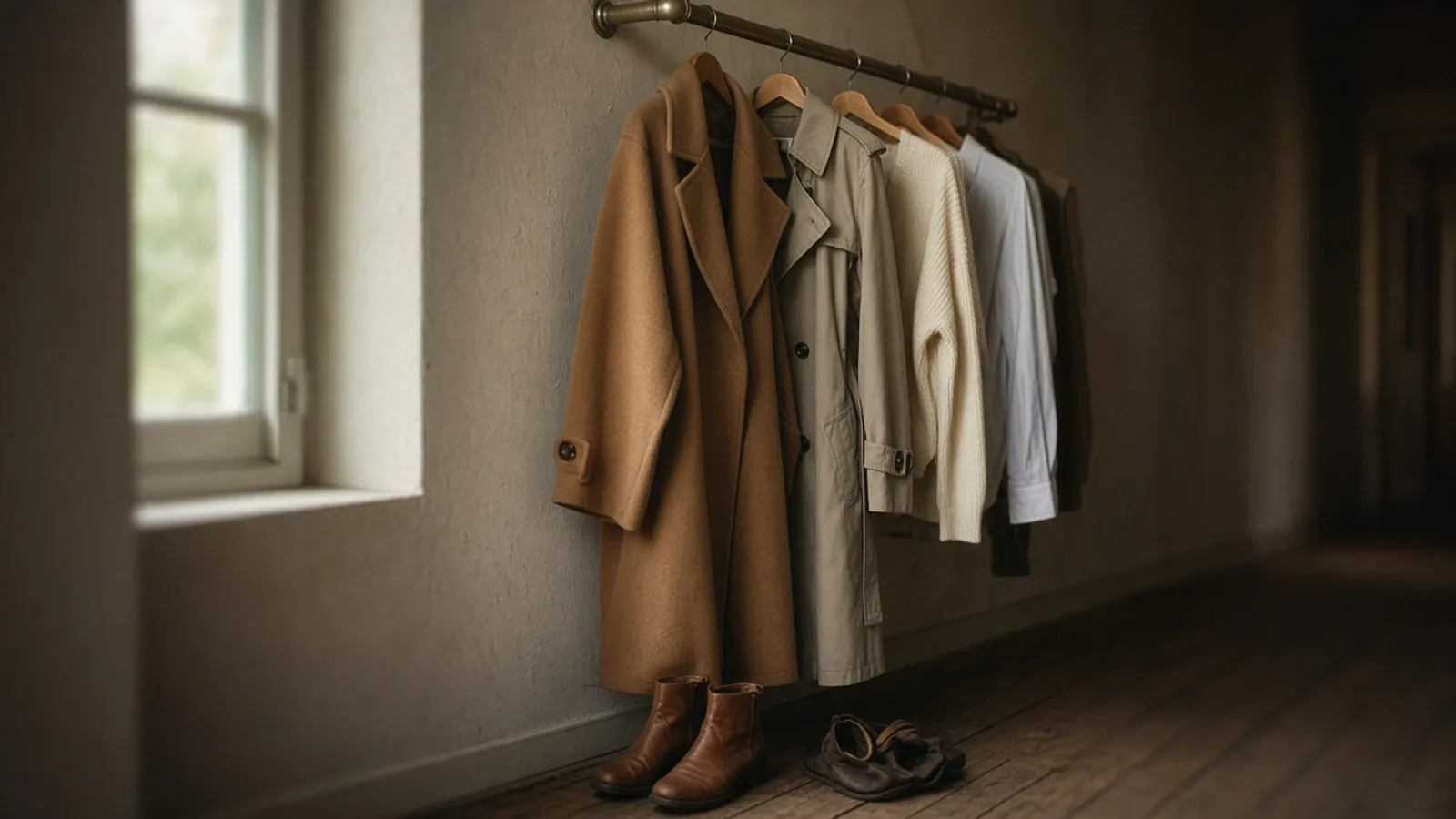
The in-between season is the hardest to dress for because the temperature changes faster than your outfit. It is 40°F when you leave and 65°F by lunch. A winter coat is too much; a light jacket is not enough at 7am.
The fix is not a new wardrobe. It is a three-layer system and a weekend edit.
The three-layer system
| Layer | What it is | When it comes off |
|---|---|---|
| Base | A cotton tee, fine knit, or shirt that works indoors | Never; by 2pm it is the whole outfit |
| Mid-layer | A cardigan, light sweater, or denim jacket | At lunch, or once the office is warm |
| Shell | A trench, light coat, or overshirt | On the way home if the day has warmed |
| Rain shell | A packable hooded jacket over base and mid | When the rain stops, and not before |
Every transitional outfit has three layers:
- Base — the top you would be comfortable wearing indoors. A cotton tee, a fine knit, a shirt.
- Mid-layer — the warmth. A cardigan, a light sweater, a denim jacket.
- Shell — the weather protection. A trench, a light coat, an overshirt.
The base has to look finished on its own, because by 2pm it is the whole outfit. The mid-layer and shell are removed and carried.
What to keep out
Do not pack everything away at the first warm day. Keep these within reach:
- A trench or light coat. The three-jacket wardrobe covers the layer.
- A mid-weight knit. For the cold mornings.
- One pair of boots. For wet days and cold floors.
- A closed-toe shoe. A loafer or sneaker.
- A scarf. The fastest way to add warmth without a coat.
What to put away
- The heavy down coat. Unless you live somewhere that still freezes.
- The heaviest wool knits. Keep one; store the rest.
- The snow boots. Keep one pair if you have late storms.
- The darkest palette. Not forever; just move the winter-only pieces to the back.
The weekend swap
Set aside an hour. Do not try to do it in a frenzy on a Tuesday.
- Wash and repair. Clean the winter pieces before storing them. Fix the hem, the button, the lining.
- Store clean and dry. Use breathable boxes or cotton bags, not vacuum-sealed plastic for natural fibres.
- Pull the spring pieces forward. Put the lighter layers at eye level.
- Try three outfits. Not the whole wardrobe; three real outfits for the week.
- List the gaps. If you are missing a light layer or a closed-toe shoe, write it down. Do not buy it in a panic.
The capsule wardrobe guide shows how to keep the palette coherent while the weight changes.
A week of transitional outfits
- Monday: fine knit, straight trouser, trench, loafer.
- Tuesday: shirt, mid-layer cardigan, denim, sneaker.
- Wednesday: tee, blazer, wool trouser, boot.
- Thursday: fine knit, midi skirt, light coat, flat.
- Friday: shirt, wide-leg jean, overshirt, loafer.
Each outfit has a base that works indoors and a layer that handles the morning. The outfit formula guide is the structure behind the combinations.
The palette shift
Spring does not require pastels. It requires a lighter weight and a slightly clearer color. If your palette is warm, move from chocolate to camel. If it is cool, move from black to navy or gray.
The shoe rotation is the other half of the transition: a boot for the wet mornings, a loafer or sneaker for the afternoon.
The rain problem
A trench is water-resistant, not waterproof. In a real downpour it will soak through at the shoulders and seams. If your spring is wet, keep one actual rain shell — a packable jacket with a hood — and wear it over the base and mid-layer.
The rain shell does not need to be stylish. It needs to keep you dry so the rest of the outfit survives the commute. Choose a neutral color and a simple shape; it will spend most of its life in your bag.
The same logic applies to shoes: a suede loafer is not a rain shoe. Keep one pair of boots or a water-resistant sneaker for the wet days, and save the suede for the dry ones.
What not to do
- Do not buy a whole spring wardrobe in March. The weather will change again.
- Do not pack away every warm piece. Keep one coat and one knit.
- Do not store dirty clothes. Moths and stains love a dark box.
- Do not ignore the shoes. Wet feet ruin the best outfit.
- Do not dress for the calendar. Dress for the forecast.
Who this is not for
If you live in a climate with no transition — tropical heat or a long freeze — this system is not for you. If you have a uniform, you already have the answer; just change the fabric weight.
Method and limits
This is a wardrobe transition system derived from the CiciTrends capsule, color, and layering principles. The temperature guidance is a rule of thumb, not a meteorological standard; use your local forecast.
Sources
- CiciTrends Color System. The 12 seasons. Internal framework used for the palette shift.
- Elliot AJ, Maier MA. Color Psychology: Effects of Perceiving Color on Psychological Functioning in Humans. Annual Review of Psychology, 2014.
Direct answers
Frequently asked questions
How do I dress for 40-degree mornings and 65-degree afternoons?
Use three layers: a base, a mid-layer, and a shell. Remove the shell or mid-layer at lunch. The base should look finished on its own, because that is what you will be wearing by 2pm.
When should I swap my winter wardrobe for spring?
When the daytime high is consistently above 55°F and the morning low is above 40°F. Keep one warm layer and one boot out for the transition; do not pack everything away at once.
What pieces should I keep out for the transition?
A trench or light jacket, a mid-weight knit, a closed-toe shoe, and one pair of boots for wet days. Keep a scarf for the morning and a lighter bag for the afternoon.
Should I buy a new wardrobe for spring?
No. The transition is about editing and layering, not replacing. Add one or two pieces only if they fill a real gap in the layers you already own.
Filed under
About the author

The editorial voice of CiciTrends. Color, fit, and the small decisions that make a wardrobe work. Written by an AI-assisted desk under human direction.
Reporting, sourcing and AI disclosure:/editorial-standards/
Keep reading
Related stories
The uniform: fewer outfits, more style
A personal uniform is not the same outfit every day. It is a small set of formulas that fit your life — and free your attention for everything else.
Jan 3, 2026
How to buy pre-loved luxury without getting burned
Authentication is a process, not a vibe. Platform versus peer-to-peer, what to inspect, the red flags, condition grades, and what to do if it is fake.
Dec 30, 2025
Winter wedding guest outfits by color season
A winter wedding is a color problem and a layering problem. Here is the guest outfit formula for all 12 color seasons, with specific palette colors and one coat rule.
Nov 4, 2026