How to find your personal style in your 30s
In short
When your body, schedule, and taste have all changed, style can feel like a stranger. A three-input method, a style sentence, and a palette to test it.
- Pull the ten pieces you wear most and read the pattern in silhouette, colour, fabric and formality; that pattern is your real style, not the one you wish you had.
- Write a style sentence with three adjectives and three nouns, such as relaxed, tailored, warm with blazer, knit and straight-leg denim, and refuse any purchase that does not fit it.
- Keep two neutrals and one accent in the palette, and test the sentence with five pieces worn for one week before you rebuild anything.
By Cici
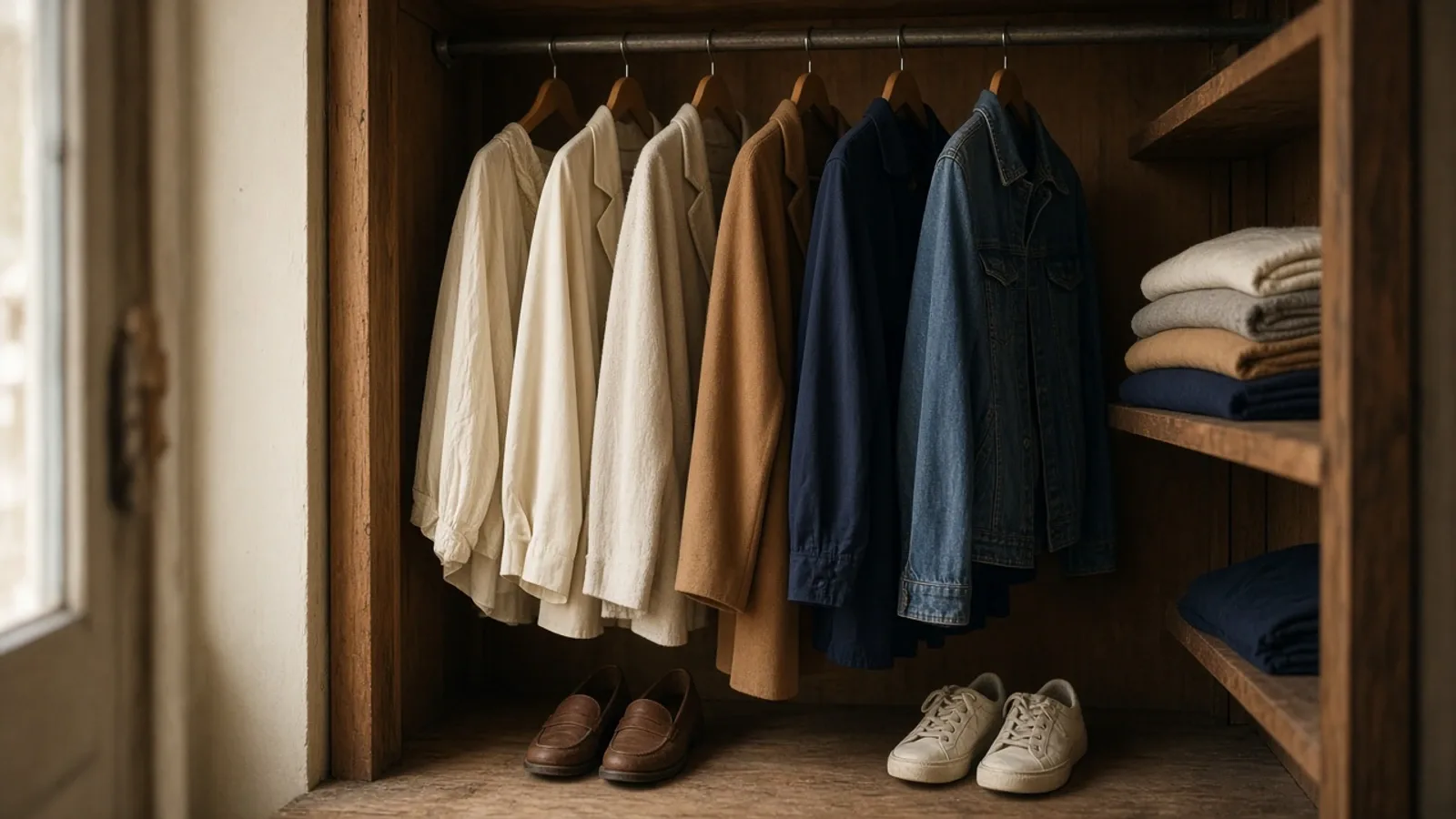
Your 30s are often when the old style stops working. The body changes, the job changes, the social life changes, and the clothes that used to feel like you start to feel like a costume. The mistake is to treat that as a failure of taste. It is usually a change of inputs.
Personal style is not a personality you invent. It is a pattern you notice. The method below is three inputs, one sentence, and a small test.
| Input | What to gather | What it tells you |
|---|---|---|
| What you reach for | The ten pieces in the laundry every week | Your real silhouette, colour, fabric and formality |
| What you admire | Ten images of outfits on other people | The principle you respond to, not the exact item |
| What you need | The situations you dress for in a normal month, ranked by frequency | Whether the style covers your actual week |
| The style sentence | Three adjectives and three nouns | The filter for every new purchase |
| The palette | Two neutrals and one accent | The base that makes the wardrobe work together |
| The test capsule | Five pieces worn for one week | Which outfits feel like you and which feel like a costume |
Why your 30s feel like a reset
In your 20s, style is often social: what your friends wear, what the algorithm shows you, what is on sale. In your 30s, the reference points shift. You have less time, more opinions, and a clearer sense of what you will actually wear.
That is not a crisis. It is data. The clothes you reach for without thinking are telling you something. So are the outfits you admire on other people, and the life you are actually dressing for.
The three inputs
1. What you reach for
Pull the ten pieces you wear most. Not the aspirational ones; the ones that are in the laundry every week.
Look for the pattern:
- Silhouette: fitted, relaxed, structured, flowing.
- Color: dark, light, warm, cool, neutral, accent.
- Fabric: knit, cotton, wool, silk, denim.
- Formality: what situations do they cover?
The pattern is your real style, even if it does not match the one you wish you had.
2. What you admire
Save ten images of outfits you love on other people. They can be celebrities, strangers, or illustrations. Then ask what you are actually responding to.
- Is it the color, the proportion, the fabric, or the confidence?
- Would you wear it if no one saw you?
- Does it fit your actual week, or only a fantasy version of it?
The goal is not to copy the image. It is to extract the principle.
3. What you need
Write down the situations you dress for in a normal month: work, school run, dinners, travel, weddings, weekends. Then rank them by frequency.
A style that does not cover your real week is a hobby, not a wardrobe. The five-piece workweek capsule is a useful test: can you make ten outfits from five pieces for the life you actually have?
The closet audit
Set aside an hour and pull everything out.
- Keep what fits, feels good, and appears in your real week.
- Repair what fits but has a hem, button, or seam problem.
- Tailor what fits at the shoulder or hip but not the waist.
- Release what does not fit, itches, or requires a life you do not have.
Do not keep clothes for a future body or a future job. The body-change guide covers that trap in more detail.
The style sentence
Write one sentence with three adjectives and three nouns. Not a mood board; a filter.
“Relaxed, tailored, warm — blazer, knit, straight-leg denim.”
The adjectives describe the feeling. The nouns describe the pieces you will actually buy. If a new item does not fit the sentence, it does not come home.
The sentence is not permanent. It can change with the season or the job. But it should be specific enough to make a decision.
The palette constraint
Style is easier when the colors agree. Use the free color analysis quiz to find your season, then the neutral roles guide to choose the base colors.
A simple rule: two neutrals and one accent. The neutrals carry the wardrobe; the accent carries the personality. If you are rebuilding, start with the neutrals and add the accent last.
The denim washes guide and the three-jacket wardrobe apply the same logic to the pieces you wear most.
Test it with a small capsule
Do not rebuild the whole wardrobe. Test the sentence with five pieces:
- One bottom in a neutral.
- One bottom in a second neutral or denim.
- One top that fits the sentence.
- One layer that fits over the top.
- One shoe you can walk in.
Wear only those pieces for a week. The outfits that feel like you are the answer. The ones that feel like a costume are information.
Try the week on a Saturday morning, with the five pieces laid out on the bed and the bedroom mirror in decent light. Put on the first combination, then sit down in it before you decide: a waistband that cuts when you are standing is a seam you will feel by lunchtime. Check the label at the back of the neck, the weight of the knit on your shoulders, and whether the shade works against your skin in daylight rather than in the bathroom mirror. By Friday the pattern is clear. The outfit that made you feel awkward on Monday is telling you something specific, and the one you pulled off the hanger without thinking is the sentence working.
The capsule wardrobe guide goes deeper, and the 30-wear rule is the filter for anything new.
What not to do
- Do not buy a new persona. A new aesthetic will not fix a wardrobe that does not fit your week.
- Do not copy an influencer’s closet. Copy the principle, not the shopping list.
- Do not chase every aesthetic. Clean girl, quiet luxury, mob wife, balletcore: they are costumes, not identities.
- Do not wait for the perfect body or the perfect job. Dress the life you have now.
- Do not confuse “flattering” with “slimming.” The right question is whether the color and shape make you look alive.
Who this is not for
If you already have a style that works, you do not need a method. If you love fashion as a hobby and rotation is the point, the sentence can still help you avoid duplicate purchases, but it should not become a rule that removes the pleasure.
And if your body or life is changing rapidly, do not force a permanent style sentence. Use a temporary one and revise it in three months.
Method and limits
This is a style-discovery method derived from the CiciTrends color and wardrobe systems. It draws on the idea that clothing carries meaning and can affect how you feel and perform, as described in the enclothed cognition research. It is a practical framework, not a personality test.
Sources
- Adam H, Galinsky AD. Enclothed cognition. Journal of Experimental Social Psychology, 2012.
- Elliot AJ, Maier MA. Color Psychology: Effects of Perceiving Color on Psychological Functioning in Humans. Annual Review of Psychology, 2014.
Direct answers
Frequently asked questions
How do I find my personal style in my 30s when nothing feels like me anymore?
Start with what you already wear rather than what you wish you wore. Pull the ten pieces that are in the laundry every week, then note their silhouette, colour, fabric and formality. That pattern is your real style, and it gives you something concrete to build on.
What should a personal style sentence look like?
One sentence, three adjectives and three nouns, describing the feeling and then the pieces. Something like relaxed, tailored, warm with blazer, knit and straight-leg denim. Keep it specific enough to make a buying decision: if a new item does not fit the sentence, it does not come home.
How many colours should a capsule wardrobe have?
Two neutrals and one accent is the simplest rule. The neutrals carry the bulk of the wardrobe and the accent carries the personality. When you are rebuilding, buy the neutrals first and add the accent last, so the base works with everything else you own.
How do I test a new style without replacing my whole wardrobe?
Build a five-piece capsule: one neutral bottom, one second neutral or denim bottom, one top, one layer and one walkable shoe. Wear only those pieces for a week. The outfits that feel like you are the answer, and the ones that feel like a costume tell you what to adjust.
About the author

The editorial voice of CiciTrends. Color, fit, and the small decisions that make a wardrobe work. Written by an AI-assisted desk under human direction.
Reporting, sourcing and AI disclosure:/editorial-standards/
Keep reading
Related stories
Interview dressing by season
The interview outfit is a four-piece formula, not a black suit. Here is what reads authoritative in each of the 12 color seasons, and what to skip.
Nov 4, 2026
The five-piece workweek capsule
Five pieces, ten outfits, one workweek. A capsule that works because the colors do, not because you own more. Includes the matrix and what to spend on.
Nov 4, 2026
Dopamine dressing: what the evidence actually supports
Color can change how you feel, but not because a jumper releases dopamine. The useful version of the trend is about agency, memory, and a palette that works.
Dec 31, 2025