Interview dressing by season
In short
The interview outfit is a four-piece formula, not a black suit. Here is what reads authoritative in each of the 12 color seasons, and what to skip.
- Build the interview outfit from a structured layer, a face-framing top, a clean-line bottom and a shoe you can walk in; the metal and bag then follow your season.
- Match the value jump to your natural contrast: high-contrast seasons can wear black with white, medium seasons camel with cream, and low-contrast seasons stone with ivory.
- In a video interview the top half is the whole outfit, so wear the face-framing top, skip busy prints and fine stripes, and avoid pure white against a white wall.
- Spend on the structured layer and the shoes, save on the top, and never wear new shoes to an interview: break them in first, because a blister is not a confidence signal.
By Cici
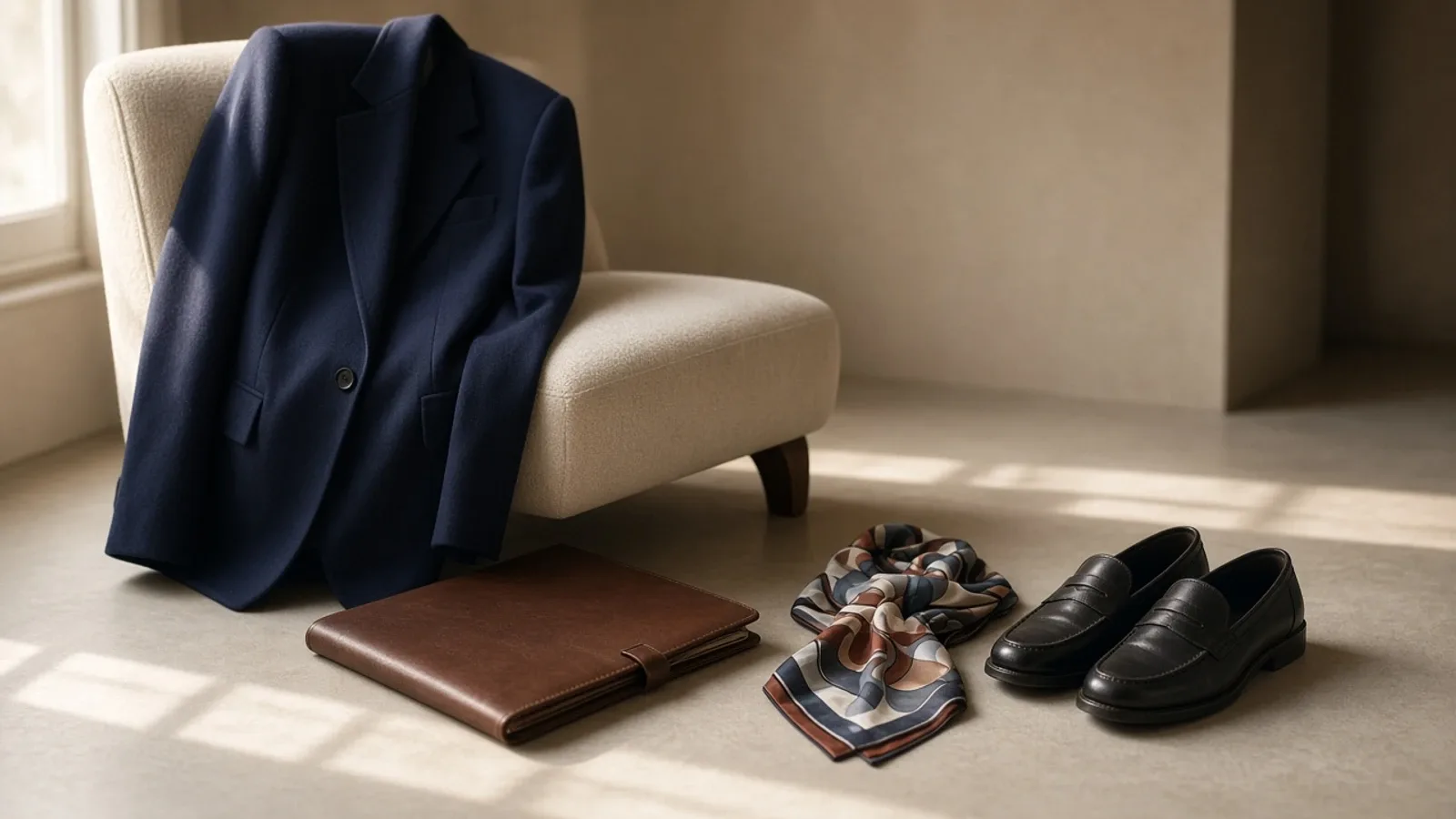
Interview advice usually lands on the same three words: wear a black suit. Black is not universally authoritative. On a light spring it can harden the face; on a soft summer it can look heavy. On a winter it is exactly right.
Authority is not a color. It is contrast, structure, and calm. Those three things look different on different women, which is why the same navy suit reads powerful on one candidate and borrowed on another.
This is the four-piece formula, mapped to all 12 color seasons.
The four-piece interview formula
- A structured layer — a blazer, a tailored cardigan, or a jacket. It creates the shoulder line and signals that you take the room seriously.
- A top that frames the face — a shirt, a fine knit, or a shell in a color that works with your skin. This is the piece the interviewer actually looks at.
- A bottom with a clean line — tailored trousers, a pencil skirt, or a dark denim only if the workplace allows it. No distressing.
- A shoe you can walk in — a low heel, a loafer, or a clean flat. You will be walking into the building, possibly across a campus, and possibly up stairs.
The metal in your jewelry and hardware should match your season. The bag should be one of your neutrals. That is the whole outfit.
The interview palette, by season
| Season | Structured layer | Top | Bottom | Metal | Skip |
|---|---|---|---|---|---|
| Light Spring | Warm beige or soft camel | Ivory or peach | Stone or camel | Gold | Black, dark navy |
| True Spring | Camel | Cream or warm coral | Chocolate or olive | Gold | Black, cool gray |
| Bright Spring | White or charcoal | Bright coral or emerald | Navy or charcoal | Gold or silver | Muted tones |
| Light Summer | Dove gray | Soft white | Slate or light navy | Silver | Black, orange |
| True Summer | Charcoal or navy | Soft white | Slate blue | Silver | Orange, rust |
| Soft Summer | Taupe | Dusty rose or soft white | Gray-blue | Silver | Black, hot pink |
| Soft Autumn | Olive | Cream | Camel or warm gray | Gold | Black, bright white |
| True Autumn | Chocolate | Cream | Rust or olive | Gold | Black, fuchsia |
| Deep Autumn | Espresso | Burgundy or cream | Dark olive or charcoal | Gold | Pastel pink, icy blue |
| Deep Winter | Black or navy | Pure white | Charcoal | Silver | Orange, mustard |
| True Winter | Black | Pure white | Navy | Silver | Warm brown, rust |
| Bright Winter | Black or cobalt | Pure white | Charcoal | Silver | Muted tones, dusty rose |
The pattern: your structured layer is your darkest neutral, your top is your lightest, and the bottom sits between them. That contrast is what reads as composed in a room, and it works on camera too.
Why contrast reads as authority
An interview is a short, high-stakes read. The interviewer is forming an impression before you finish your first sentence. High contrast between the face and the clothing helps the face hold attention; low contrast can make the whole outfit look soft or washed out.
That does not mean every candidate should wear black and white. It means the value jump should match your natural contrast:
- High-contrast seasons (bright spring, bright winter, deep winter) can wear a strong jump: black with white, charcoal with cream, navy with optic white.
- Medium-contrast seasons (true spring, true summer, true autumn) do better with a moderate jump: camel with cream, charcoal with soft white, chocolate with cream.
- Low-contrast seasons (light spring, light summer, soft summer, soft autumn) look more themselves in tonal combinations: stone with ivory, taupe with soft white, olive with cream.
If you wear a high-contrast outfit as a low-contrast season, the clothes arrive before you do. If you wear a low-contrast outfit as a high-contrast season, you can disappear.
The video interview
A video interview is a portrait crop. The top half of your outfit is doing almost all the work, and the camera is unforgiving about color.
- Wear the top that frames your face, not the jacket you would wear in person. The jacket can still be in frame, but the collar and neckline matter more.
- Avoid busy prints and fine stripes. They shimmer on camera.
- Avoid pure white against a white wall. It blows out. Cream, soft white, or a light blue reads better.
- Check the light. A window in front of you, not behind you. The same color can look warm or gray depending on the light source.
- Keep jewelry simple. Small earrings, a watch, no dangling pieces that catch the microphone.
If you are unsure, test the top on camera in the light you will actually use. The phone camera is a more honest mirror than the bathroom.
What to spend on, what to save on
- Spend on the structured layer and the shoes. These are the pieces that carry the silhouette and the walk into the room.
- Save on the top. A well-fitted shirt or fine knit does not need to be expensive; it needs to be clean, pressed, and the right color.
- Do not buy a new outfit for one interview. Start with the five-piece workweek capsule, which already contains the blazer, trouser, shirt, and knit you need.
- Do not wear new shoes to an interview. Break them in first. A blister is not a confidence signal.
What not to wear
- Logos and visible branding. They distract and can read as a statement.
- A strong fragrance. The room may be small, and your interviewer may be sensitive.
- A bag that does not fit your papers. A tote or a structured bag that holds a folder is part of the outfit.
- Anything you have to adjust all day. If you will be tugging at a hem or a strap, it will show.
Who this is not for
If you work in a creative field where a suit reads wrong, adapt the formula: a structured knit instead of a blazer, a dark denim if the culture allows it, a clean sneaker if that is the norm. The principle is contrast and structure, not a specific garment.
If your workplace has a uniform or a strict dress code, follow it. The interview is not the place to test the dress code.
And if you already have an interview outfit that fits and feels right, wear it. The goal is a decision you can trust, not a new wardrobe.
Method and limits
This guide maps the 12 seasonal palettes to a four-piece interview formula. The color recommendations use each palette’s neutrals, best colors, and metals from the CiciTrends Color System. The dress-code framing follows Texas A&M’s career center guide to interview attire. It is a styling guide, not a dress-code ruling; the employer’s expectations and the industry always come first.
If you want the wider wardrobe logic, the neutral roles guide and the denim washes guide cover the pieces this formula is built from. The cost-per-wear audit is the right filter before you buy anything new.
Direct answers
Frequently asked questions
What should I wear to an interview if black makes me look tired?
Swap the black suit for your palette's darkest neutral: espresso or chocolate for an autumn, charcoal or navy for a summer, camel for a warm spring. Keep the same structure and contrast, just in a colour that lets your face hold the room.
How much contrast should an interview outfit have?
As much as your own colouring already carries. High-contrast seasons look composed in black with optic white, medium seasons in camel with cream, low-contrast seasons in stone with ivory. Too strong a jump and the clothes arrive before you do, too weak and you disappear.
What do I wear for a video interview?
Treat it as a portrait, because the top does almost all the work. Wear the face-framing shirt or knit, avoid fine stripes and busy prints that shimmer, and skip pure white against a pale wall. Check the light with a window in front of you, then test the top on your phone camera.
Should I buy a new outfit for an interview?
Rarely. Start with the blazer, trouser, shirt and knit already in your wardrobe, choose the versions in your season's neutrals, and spend only where the silhouette lives: the structured layer and the shoes. Break in anything new well before the day.
About the author
The editorial voice of CiciTrends. Color, fit, and the small decisions that make a wardrobe work. Written by an AI-assisted desk under human direction.
Reporting, sourcing and AI disclosure:/editorial-standards/
Keep reading
Related stories
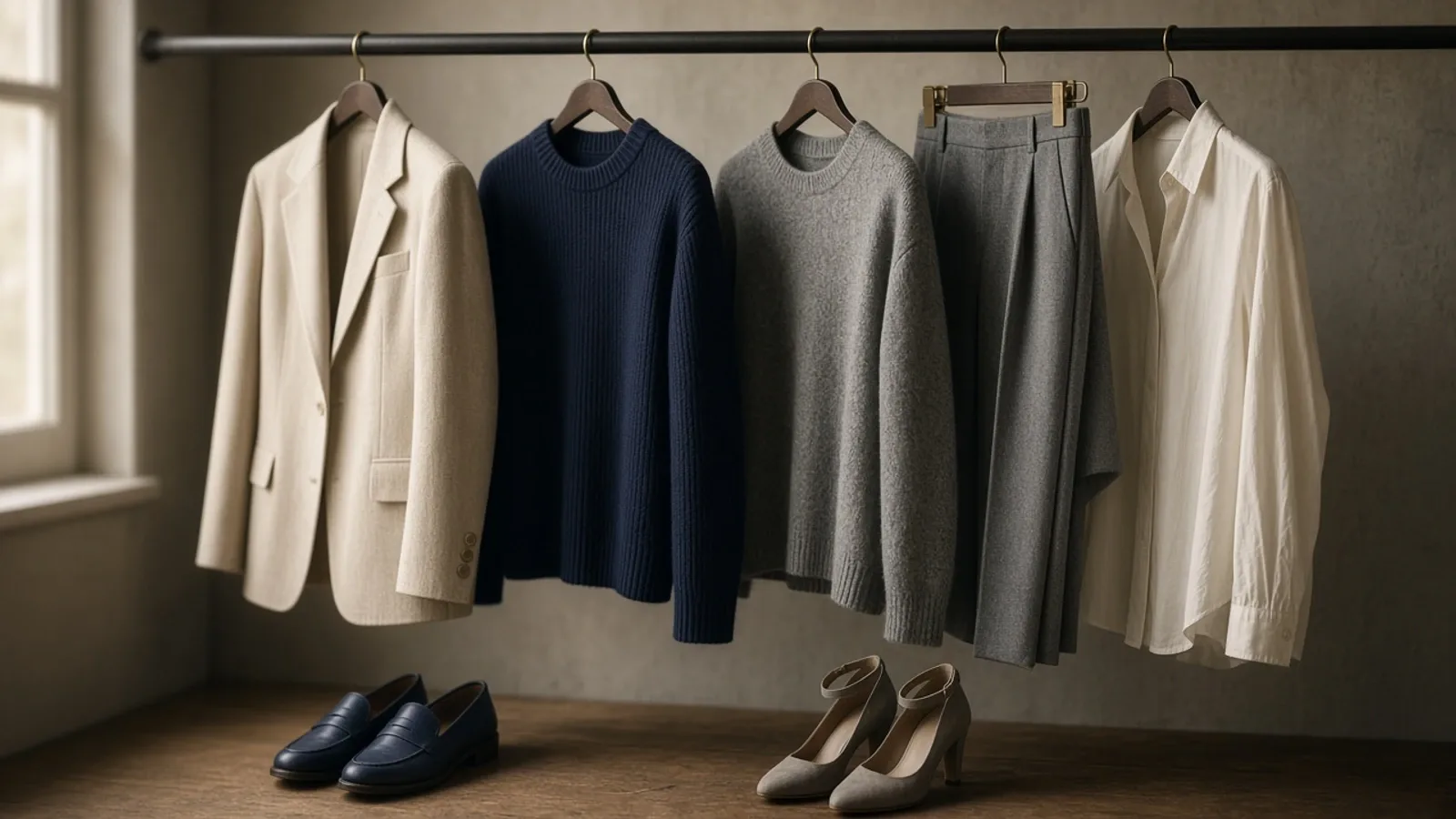
The five-piece workweek capsule
Five pieces, ten outfits, one workweek. A capsule that works because the colors do, not because you own more. Includes the matrix and what to spend on.
Nov 4, 2026
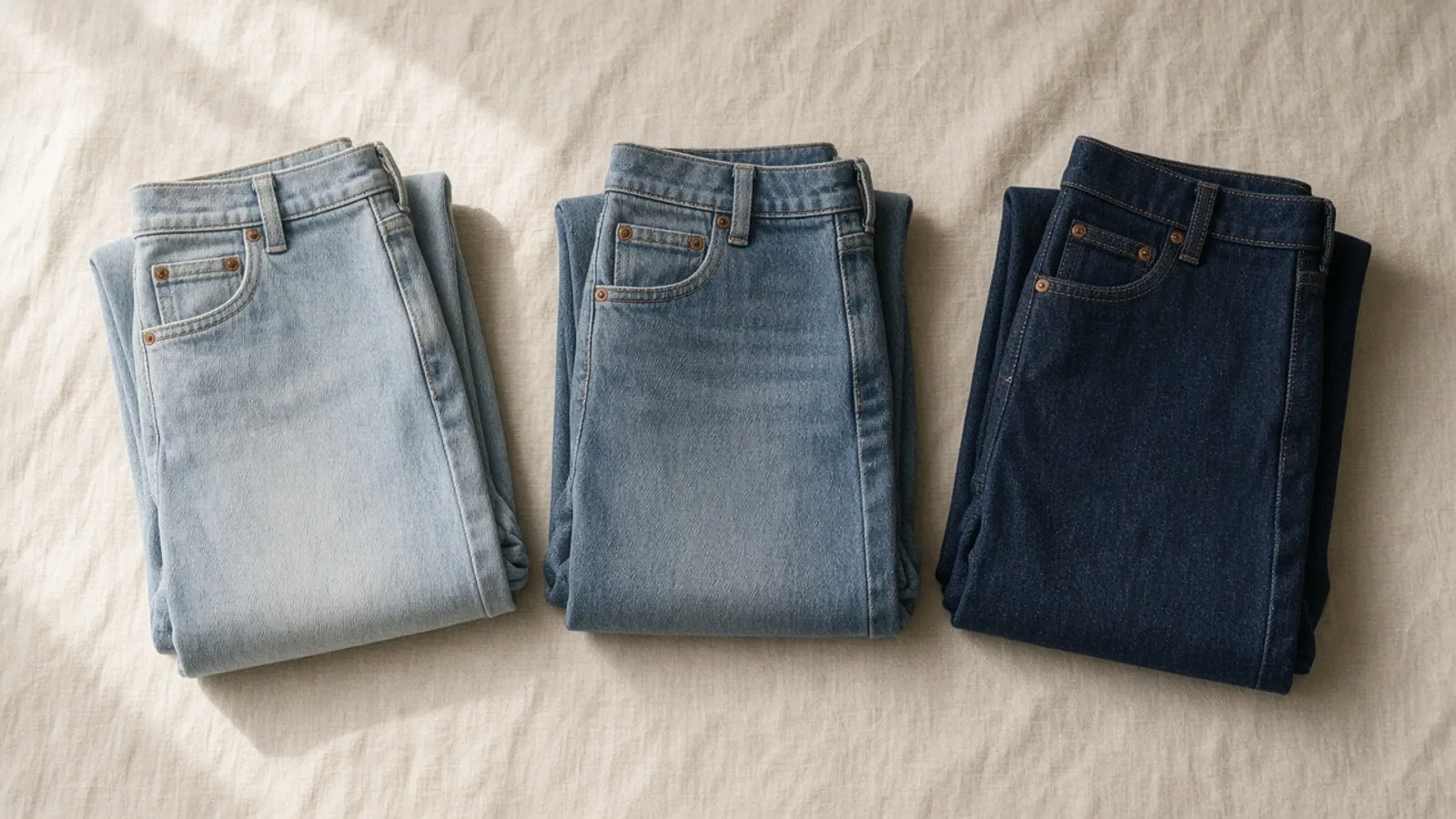
The three denim washes your season needs
Denim is a color decision before it is a fit decision. Here are the three washes worth owning for each of the 12 color seasons, and the black pair most women should skip.
Nov 4, 2026
The colors that drain you (and the ones that don't)
A color can make you look tired without changing your face. The contrast and undertone rules behind it, and how to test a shade in daylight.
Jan 5, 2026