Dopamine dressing: what the evidence actually supports
In short
Color can change how you feel, but not because a jumper releases dopamine. The useful version of the trend is about agency, memory, and a palette that works.
- Wear the color you are drawn to rather than the shade a trend calls happy, and test it in one accent near the face before committing to a whole outfit.
- Choose one structured piece you associate with competence over a bright top you feel silly in, because enclothed cognition depends on the meaning the garment carries for you.
- Build the outfit from a neutral base plus one accent color, one fabric that feels good on the skin, and one structural piece; then check the mirror once and stop.
By Cici
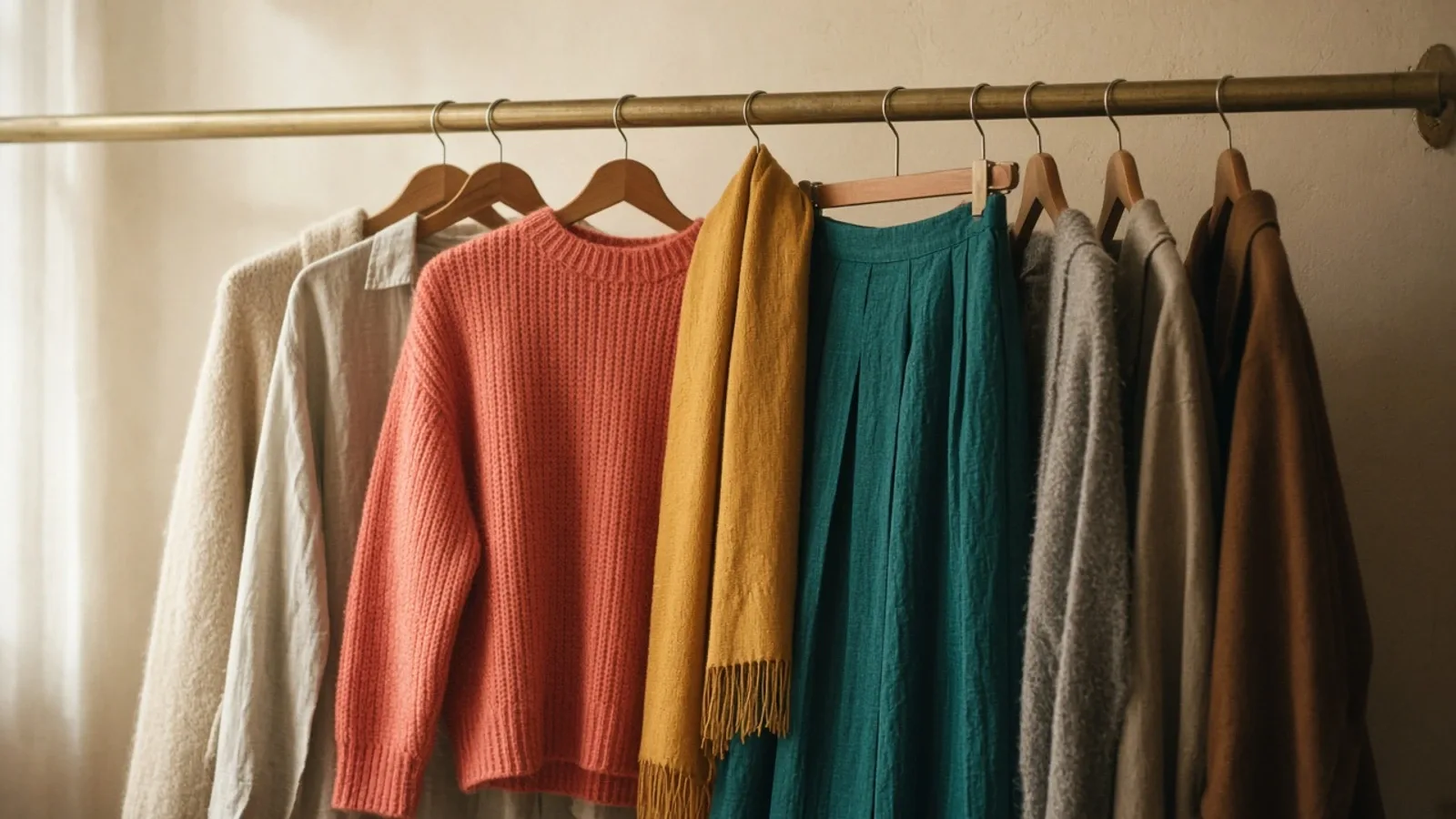
Dopamine dressing is usually explained as a chemical transaction: wear bright clothes, release dopamine, feel better. That is not how dopamine works, and it is not what the research on color shows.
The trend is still useful. It is just useful for a different reason: what you wear changes what you pay attention to, how you carry yourself, and what you remember. That is a real effect, even without the neurotransmitter story.
What the trend claims
The popular version goes like this:
- Bright colors stimulate the brain and lift mood.
- Certain fabrics feel good against the skin and reduce stress.
- Dressing “for joy” makes you more productive and confident.
Some of that is true in a limited way. Some of it is a metaphor that got promoted to a mechanism.
What color psychology actually shows
Color does affect psychological functioning, but the effects are context-dependent, learned, and often small. A 2014 review in the Annual Review of Psychology describes color as influencing attention, emotion, and judgment through a mix of biological and cultural associations — not a universal “yellow = happy” switch.
That matters for the trend. A color that reads energetic in one culture or context can read warning, mourning, or cheap in another. The same red can be confidence or alarm. The effect is not in the pigment alone; it is in the meaning you bring to it.
What enclothed cognition adds
The stronger evidence is about clothing as a symbol. The “enclothed cognition” study by Adam and Galinsky found that what people wear can affect their performance when the garment carries a meaningful association for them — a lab coat described as a doctor’s coat improved attention, while the same coat described as a painter’s coat did not.
The lesson is not “wear red, get promoted.” It is: the meaning of the garment matters more than the color alone. A blazer you associate with competence will do more for your focus than a bright top you feel silly in.
The useful version
| The claim | What the evidence says | The useful version |
|---|---|---|
| Bright color releases dopamine | Color affects attention and emotion through learned and cultural associations, not a dopamine release | Wear the color you associate with feeling composed |
| Certain fabrics reduce stress | Texture is a sensory input, so a scratchy knit is a bad mood in garment form | Choose fabrics you actually like touching |
| Dressing for joy makes you productive | Enclothed cognition depends on the meaning the garment carries for you | Choose one structured piece you associate with competence |
| A happy palette works for everyone | The same red can read confidence or alarm depending on context and culture | Use one accent near the face, not a full rainbow |
Dopamine dressing works best when it is treated as a practice of agency, not a chemistry hack.
- Wear the color you are drawn to, not the one a trend says is “happy.” If chartreuse makes you feel like a plant, skip it.
- Use one accent near the face. A scarf, a lip, a collar. You do not need a full rainbow to change the tone of an outfit. The neutral roles guide shows how to build the base so the accent can do its job.
- Choose fabrics you actually like touching. Texture is a sensory input. A scratchy knit is a bad mood in garment form.
- Dress for the version of the day you want, not the mood you are trying to escape. A structured jacket can shift how you sit and speak; a soft knit can signal rest.
- Repeat what works. If a color reliably makes you feel composed, that is data. Build it into your capsule rather than buying a new “mood” every week.
A practical formula
- Start with a neutral base from your palette.
- Add one color that has a positive association for you — not a generic “happy” color.
- Choose a fabric that feels good for the season and the day.
- Add one structural piece: a jacket, a belt, a shoe with a bit of lift.
- Check the mirror once, then stop.
That is dopamine dressing without the neuroscience costume. It is also more sustainable, because you are using the clothes you already own rather than buying a new personality.
What it does not do
- It does not treat depression, anxiety, or burnout. A bright dress is not a substitute for care.
- It does not override a bad fit. A color you love on a garment that pulls or scratches will not lift anything.
- It does not work the same way for everyone. Color associations are personal and cultural.
- It does not require a new wardrobe. The most effective version uses what you have.
A low-effort version for a low day
The trend is least useful when you feel worst and are asked to assemble a bright, joyful outfit from scratch. On those days, lower the decision cost.
- Pick the outfit you already know works. The one that fits, feels good, and does not require a decision.
- Add one color you like, even if it is a sock or a lip balm. One point of contact is enough.
- Choose the comfortable shoe. Discomfort is a mood tax that no color can repay.
- Skip the mirror negotiation. Get dressed, check once, leave.
The goal is not to perform happiness. It is to give yourself a small, reliable signal that you are on your own side.
Who this is not for
If you love neutrals and feel best in them, you do not need to add color to be “doing it right.” The colors that age you is a better guide to what suits your face than a trend about mood.
If you are using clothes to manage a serious mental health condition, talk to a clinician. Style can support a routine; it cannot replace treatment.
And if the phrase “dopamine dressing” makes you roll your eyes, that is fair. Call it getting dressed on purpose. The effect is the same.
Sources
- Elliot AJ, Maier MA. Color Psychology: Effects of Perceiving Color on Psychological Functioning in Humans. Annual Review of Psychology, 2014.
- Adam H, Galinsky AD. Enclothed cognition. Journal of Experimental Social Psychology, 2012.
Direct answers
Frequently asked questions
Does dopamine dressing actually work?
Not through dopamine. Color affects attention and emotion through learned and cultural associations, and the effects are small and context dependent. What does work is the meaning you attach to a garment: a jacket you associate with competence can change how you sit and speak.
What colors lift your mood when you get dressed?
The ones you already associate with feeling composed, not the shades a trend labels happy. A color can read energetic in one context and warning in another, so the useful test is memory: if you remember feeling good in it, wear it again, ideally as one accent near the face.
How do I wear bright colors without looking like a costume?
Keep the base neutral and let one accent do the work: a scarf, a lip, a collar, or a sock. A full rainbow needs more confidence than most mornings allow. If chartreuse makes you feel like a plant, skip it and choose the color you reach for without thinking.
What should I wear on a low day when getting dressed feels hard?
Pick the outfit you already know works, add one color you like even if it is only a sock or a lip balm, and choose the comfortable shoe. Lowering the decision cost is the point; a bright outfit assembled from scratch is the least useful version of the trend when you feel worst.
About the author

The editorial voice of CiciTrends. Color, fit, and the small decisions that make a wardrobe work. Written by an AI-assisted desk under human direction.
Reporting, sourcing and AI disclosure:/editorial-standards/
Keep reading
Related stories

The 30-wear rule: the shopping filter that survives a sale
Will you actually wear it thirty times? The rule, the math, the five questions to ask before you buy, and the exceptions worth making.
Dec 31, 2025
Interview dressing by season
The interview outfit is a four-piece formula, not a black suit. Here is what reads authoritative in each of the 12 color seasons, and what to skip.
Nov 4, 2026
The five-piece workweek capsule
Five pieces, ten outfits, one workweek. A capsule that works because the colors do, not because you own more. Includes the matrix and what to spend on.
Nov 4, 2026