The Heeled Loafer Is the Jeans Shoe That Finally Reads Polished
In short
Heeled loafers solve one specific problem: jeans that need to read polished without tipping into going-out. A guide to heel height, toe shape, and hem length.
- Keep the heel between 40 and 50mm: enough lift to clear a straight hem off the floor by a centimetre or two, short enough that the shoe stays in daytime territory.
- Hem straight-leg jeans to break at the top of the vamp with about 1cm of overlap; longer hides the loafer, shorter exposes an ankle that fights the shoe's weight.
- For wide-leg denim, hold the heel at 40mm or under and choose a rounded or square toe so the front of the foot keeps visual weight against the fabric.
- Judge heel width before heel height: a stacked block or cuban heel keeps the walk stable and the shoe in daytime, while a slim stiletto under a loafer upper reads as costume.
By Cici
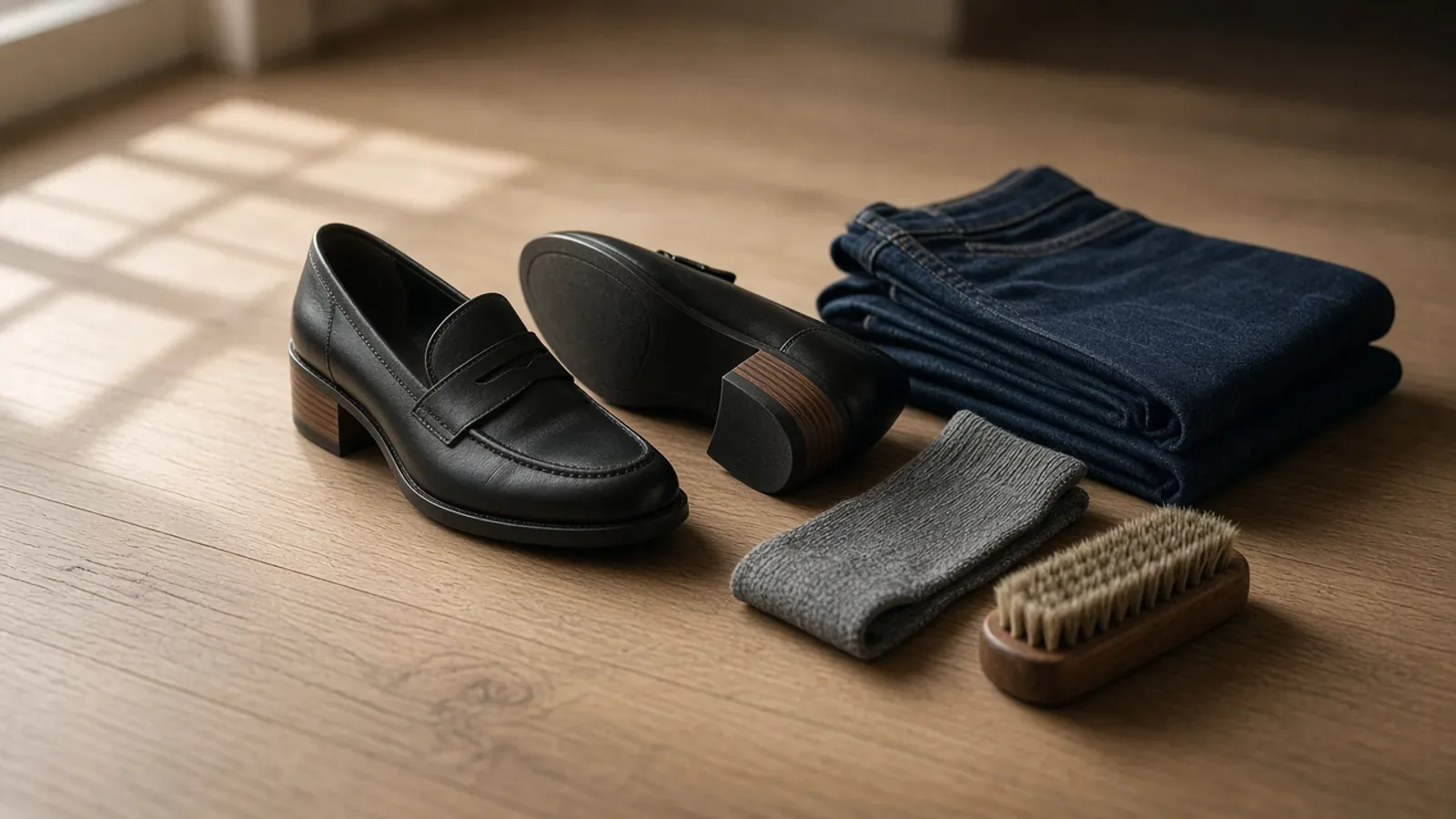
Jeans are not the problem. The shoe is.
A heeled loafer is what makes your jeans read polished instead of like something you threw on for an errand, and the reason is proportion, not trend: 40 to 50mm of heel lifts your hem clear of the floor and shortens the loafer’s low vamp line, so you see a longer leg and a smaller foot. That one number is why the same jean looks like a supermarket run at a flat sole and like a plan at 45mm.
You can wear the same dark straight-leg jean and grey knit to the supermarket and to a table with a reservation. Nothing about the denim changes between those two scenes. Your shoe changes everything.
A sneaker reads errand, a stiletto reads event, and a flat loafer sits close to the errand end, because the flat sole drops your whole leg line to the floor and makes the foot look long and horizontal against the ground. Add a heel and the same shoe moves into a middle register that denim rarely gets to occupy: polished, deliberate, and quiet enough for a Tuesday lunch.
What a heel actually changes about a loafer
A loafer has a low vamp: the panel across the top of the foot sits close to the toes. On a flat sole, that construction exposes a long run of your foot and points the whole line forward and down. With jeans, it reads casual, sometimes slightly slumped.
Raising the heel sits your foot more onto the ball. You can feel it when you stand: weight moves forward, the arch lifts, and the visible top line of the shoe gets shorter. The higher heel also holds your jean hem slightly clear of the floor, so the fabric hangs instead of pooling. And the altered ankle angle lengthens the line from hem to floor. All three shift with the rise of your jean and the length of your leg, so try the shoe with the pair you plan to wear, not the pair in the shop mirror.
The detail you should check first is heel width, not heel height. A stacked block or a sculpted cuban heel distributes your weight and keeps the walk stable, so the shoe stays in daytime territory. A slim stiletto under a loafer upper is a costume choice. It borrows a work shoe’s shape and a party shoe’s physics, and the mismatch reads as trying too hard.
The heel-height rule: where polished ends and costume starts
| Jean shape | Best heel band | Hem rule |
|---|---|---|
| Straight-leg | 40 to 50mm | Break at the top of the vamp with about 1cm of overlap |
| Cropped | 40 to 70mm | End the hem 2 to 3cm above the ankle bone |
| Wide-leg | 40mm or under | Cover about half the vamp, or clear the shoe entirely |
| Hem already pooling | Fix the hem before the shoe | Have 2cm taken off the leg rather than buying a taller heel |
Heeled loafers cluster into three bands, and each behaves differently with denim.
20 to 30mm. This reads almost exactly like a flat loafer from across the room. It is your safest option with a casual outfit, a washed jean and an overshirt, and you can wear it with any hem length because it barely lifts the fabric. It will not, however, fix a hem that is already pooling.
40 to 50mm. The working range, and the one I would buy first. You get enough lift to clear a straight hem off the floor by a centimetre or two, enough tilt to shorten the vamp line, and low enough that the shoe does not announce itself. If one height has to cover your office, dinner, and weekend, this is it.
60 to 70mm and up. At this point the shoe is a heel with a loafer upper. It can look excellent on you with a cropped jean and a long coat, and it can look costumey with a wide-leg jean in heavy denim, because a wide hem plus a high lift plus a chunky upper stacks three visual weights at the bottom of your body. Round toes and stacked heels rescue it. Pointed toes and slim heels push it toward evening.
Your leg length moves the reading. A high-rise straight-leg jean puts more fabric above the hip and makes a 50mm heel look lower; a low-rise cropped jean makes the same heel look taller. Try the shoe with the jeans you will actually wear it with, and take a photo from across the room. The camera flattens what the mirror flatters.
Toe shape and hem: two measurements that decide everything
Toe shape controls the width of your foot in the frame. A square or rounded toe adds visual width at the front, which balances a wide-leg or barrel-shaped jean. An almond or soft pointed toe narrows the foot and lengthens your line, which suits straight and cropped hems. The failure mode is a long pointed toe on a 70mm heel under a wide jean: the point disappears under the fabric and the shoe just looks heavy. For curve-heavy silhouettes, the fit logic in barrel jeans on a real body applies to the shoe as much as the hem.
Hem length is the other half. Three rules, one per jean shape:
- Straight-leg: the hem should break at the top of the vamp, roughly 1cm of overlap. Any longer and the shoe disappears; any shorter and the ankle looks exposed in a way that fights the shoe’s weight.
- Cropped: end the hem 2 to 3cm above the ankle bone. That gap is the whole point of the outfit. It is where a fine sock or bare skin shows, and it is the detail that makes your cropped jean look intentional rather than short.
- Wide-leg: the hem should either cover about half the vamp or clear the shoe entirely. The bad outcome is a hem that stops at the widest part of the toe box, which visually cuts the foot in half.
If your jeans were bought for a different shoe, have them hemmed. A tailor taking 2cm off a straight leg costs less than a new pair of shoes and fixes more.
Three formulas that work with what is already in the closet
Dark straight-leg, heeled loafer, knit. The default. A dark indigo or black straight leg with a 40 to 50mm loafer and a fine-gauge crewneck reads as a considered outfit without a blazer. A belt in the same tone as the shoe keeps your vertical line unbroken.
Cropped jean, heeled loafer, sock. The sock is not optional here. It is the accessory that separates this from a summer outfit worn in the wrong month. Match your sock to the jean’s value, dark with dark and mid-blue with grey, so the ankle reads as one column. A contrast sock turns the whole thing into a styling trick.
Wide-leg, heeled loafer, tailored coat. The coat does the vertical work your wide hem removes. The coat hem should sit at or below the knee and the loafer heel at 40mm or under. Wool is the fabric that holds that line longest, because the fiber’s natural crimp behaves like a spring and returns to shape, so the front edge stays straight all day instead of collapsing into your hands (Woolmark covers the fiber). This is the formula that overlaps most with the shoe logic for boyfriend trousers: the same hem-to-shoe rules, with denim instead of wool.
For a dinner closer to evening, holiday party color rules apply here too: a loafer in your palette’s metal or leather tone reads more deliberate than black worn out of habit.
The five-point check before buying
- Heel width. Put the shoe on a hard floor and press the heel with your thumb. If it flexes, it will wear unevenly within a season.
- Sole grip. Smooth leather soles are slippery on wet pavement. A rubber or rubber-tipped sole is the difference between wearing them in November and leaving them in the box.
- Vamp position. The top edge of the shoe should sit behind the ball of your foot, not on it. A vamp that cuts across the widest part will pinch by the end of a walk.
- Counter stiffness. Squeeze the back of the heel. It should hold its shape. A soft counter means the shoe will slip at your heel as you walk, and a heel that slips will rub. A blister is a fit problem, not a break-in ritual.
- Cost per wear. Run the number before you commit. The method in the cost-per-wear audit is the honest test of whether a 70mm pair worn four times a year beats a 40mm pair worn twice a week.
Care: the difference between patina and damage
A heeled loafer lives or dies on two surfaces: the upper and the heel tip. Leather wants a cream polish every few weeks and a horsehair brush after wear; suede wants a brass brush when dry and a protector spray before the first outing. The heel tip is the part people ignore, and a worn tip changes the angle of the whole shoe and makes a good pair look neglected. A cobbler replaces tips quickly, and it is the single repair that keeps your loafer looking new longest.
The decision
The order is your jean first, then the heel height, then the hem. A straight or cropped jean aimed at dinner calls for a 40 to 50mm loafer with an almond or soft square toe and a hem adjusted to break at the vamp or clear your ankle by 2cm. For wide jeans, keep the heel at 40mm or under, choose a rounded toe, and let the coat carry the length. If your jeans already pool, no heel saves them. Hem first, shoe second.
Direct answers
Frequently asked questions
How high a heel works with jeans without looking like a going-out shoe?
40-50mm is the working range. It lifts the hem clear of the floor and shortens the loafer's low vamp line while keeping the shoe in daytime territory. Below 30mm the shoe reads almost flat; above 60mm it starts to behave like an evening shoe, especially with a slim heel or a long pointed toe.
What length should straight-leg jeans be with heeled loafers?
The hem should break at the top of the shoe's vamp, with roughly 1cm of overlap. Longer and the loafer disappears under the fabric; shorter and the exposed ankle fights the weight of the shoe.
Can socks be worn with heeled loafers and cropped jeans?
Yes, and socks are often the detail that makes the outfit read as intentional. The sock should match the value of the jean, dark with dark and mid-blue with grey, so the ankle reads as a single column rather than a stripe.
Do heeled loafers work with wide-leg jeans?
They do, with two constraints: the heel should stay at 40mm or under and the toe should be rounded or square so the front of the foot has visual weight. The hem should either cover about half the vamp or clear the shoe entirely, never stopping at the widest part of the toe box.
Filed under
About the author

The editorial voice of CiciTrends. Color, fit, and the small decisions that make a wardrobe work. Written by an AI-assisted desk under human direction.
Reporting, sourcing and AI disclosure:/editorial-standards/
Keep reading
Related stories

The uniform: fewer outfits, more style
A personal uniform is not the same outfit every day. It is a small set of formulas that fit your life — and free your attention for everything else.
Jan 3, 2026
Celebrity color twins: copy the palette, not the face
A color twin is a reference, not a comparison. How to find one, what to copy, what to ignore, and why the same season can look different on two people.
Jan 8, 2026

Dressing after your body changes
A wardrobe reset for the body you have now, not the one you had before. Measure, keep, tailor, and fill the gaps without the bounce-back pressure.
Jan 3, 2026