How to reset your skin barrier (without stopping everything)
In short
A barrier reset is not a week of doing nothing. It is removing the irritants, keeping the basics, and giving the skin time to recover.
- Stop exfoliating acids, retinoids, vitamin C, scrubs, and hot water, and keep only a gentle cleanser, a ceramide moisturizer, and sunscreen.
- Days 1 to 3 are cleanse, moisturize, and sunscreen only; reintroduce one active at the lowest frequency, two nights a week, from day 6.
- Most mild irritation settles within one to two weeks once the irritant is removed, so give the basics a fortnight before judging them.
By Cici
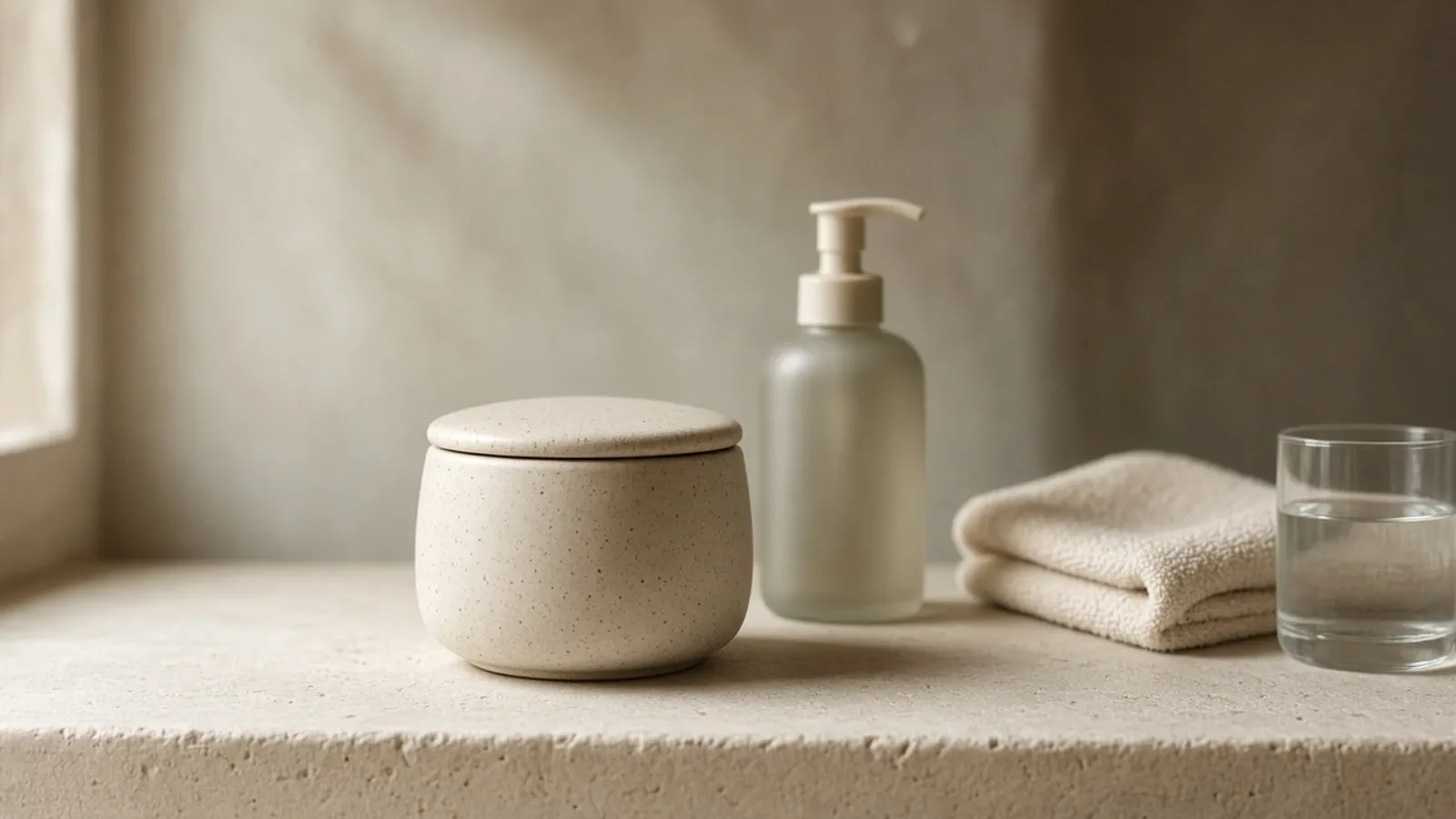
The “skincare fast” sounds clean: stop everything for a week, let the skin reset. But a damaged barrier does not need nothing. It needs less of the wrong things and enough of the right ones.
A barrier reset is a subtraction plan, not a cleanse-your-soul retreat. The longer the irritation goes on, the more likely you are to buy another product instead of removing the one that caused it.
Your morning usually tells you before the mirror does. The water hits your cheeks and they sting, the moisturizer that felt comfortable last month now sits on your skin like cling film, and by lunchtime your chin is flaking under the fluorescent light of the office bathroom. That is not a skin type you have to live with. It is a barrier asking for fewer steps, not more, and it will tell you plainly when the steps are working again.
What the skin barrier is
The stratum corneum is the outer layer of the skin. It is often described as bricks and mortar: skin cells are the bricks, and lipids — ceramides, cholesterol, and fatty acids — are the mortar. A 2026 review of ceramides and the defective barrier describes how a drop in ceramides and long-chain fatty acids weakens that wall, increasing water loss and irritation.
When the barrier is compromised, the skin stings, flakes, looks red, and feels tight. More actives make it worse. That is the moment people buy a “repair” serum and add another variable.
The signs you actually need a reset
- Stinging when you apply products that used to be fine.
- Redness or flaking that lasts more than a few days.
- Tightness after washing.
- New breakouts alongside dryness.
- A reaction after a new active, acid, or retinoid.
If you have a medical condition such as eczema, rosacea, or dermatitis, this is not a DIY reset. See a clinician.
What to stop
| Step or ingredient | During the reset | Reason |
|---|---|---|
| Exfoliating acids | Stop completely | Glycolic, lactic, salicylic, and mandelic all strip the surface |
| Retinoids | Pause, then restart two nights a week | Frequency is the variable you control |
| Vitamin C | Stop, especially high strength or low pH | Acidic formulas sting skin that is already irritated |
| Gentle cleanser | Keep | Cream or gel, no fragrance, no acids |
| Ceramide moisturizer | Keep, and add a second night layer from day 4 | Moisturization is the first-line strategy |
| Sunscreen | Keep | A damaged barrier is more vulnerable to UV |
- Exfoliating acids — glycolic, lactic, salicylic, mandelic.
- Retinoids — pause until the irritation settles.
- Vitamin C — especially at higher concentrations or low pH.
- Physical scrubs and cleansing brushes.
- Hot water and long showers.
- Fragrance-heavy products near the face.
- New products. Do not introduce a “repair” product in the middle of a reaction; you will not know what helped.
What to keep
- A gentle cleanser. Cream or gel, no fragrance, no acids.
- A moisturizer with ceramides, glycerin, or petrolatum. Moisturization is the first-line strategy for a compromised barrier.
- Sunscreen. A damaged barrier is more vulnerable to UV.
- A bland lip balm. The lips are part of the barrier too.
That is the whole routine. If it feels too simple, that is the point. The microbiome guide explains why gentle cleansing matters more than a probiotic serum.
The seven-day reset
Days 1–3: cleanse, moisturize, sunscreen. Nothing else. No exfoliation, no retinoid, no vitamin C.
Days 4–5: if the stinging has stopped, add a second layer of moisturizer at night. Keep the rest the same.
Days 6–7: if the skin feels calm, reintroduce one active at the lowest frequency — a retinoid two nights a week, for example. Do not reintroduce everything at once.
If the irritation returns, go back to the basic routine for another week. The goal is not to finish a challenge; it is to stop the cycle.
What not to do
- Do not use lemon juice, baking soda, or toothpaste. They are irritants, not treatments.
- Do not scrub off flakes. Flakes are a symptom; scrubbing damages the barrier further.
- Do not “starve” the skin. A moisturizer is not a crutch.
- Do not add a new product every day. One change at a time is how you learn what caused the reaction.
- Do not ignore pain. A barrier reset is not supposed to hurt.
What about slugging?
Slugging is the practice of sealing the face with a thin layer of petrolatum after moisturizer at night. It is an occlusive, which means it reduces water loss rather than adding water. For a dry, compromised barrier, that can be useful.
It is not for everyone. If you are acne-prone, sweat heavily, or live in a hot climate, a heavy occlusive can feel suffocating and contribute to breakouts. Test it on a small area first, and do not layer it over actives.
Slugging is not a repair treatment on its own. It is a way to hold moisture in while the barrier recovers. The evening routine guide covers where it fits, if it fits at all.
When to see a dermatologist
If the skin is painful, oozing, spreading, or not improving after two weeks, see a dermatologist. If you have a history of eczema, rosacea, or contact dermatitis, a professional plan is faster and safer than trial and error.
The beauty in your 30s guide covers the actives worth keeping once the barrier is stable, and the skincare conflicts guide covers what not to layer.
The honest summary
A barrier reset is less, not nothing: stop the actives, keep the cleanser, moisturizer, and sunscreen, and give the skin one to two weeks. The products are not the point. The subtraction is.
Sources
- Farris PK, Campos V. Evidence-Based Alternative Strategies to Improve and Restore Skin Barrier Function: A Narrative Review. American Journal of Clinical Dermatology, 2026.
- Wertz PW, Fluhr JW. Ceramides and the Defective Barrier in Atopic Dermatitis. Skin Pharmacology and Physiology, 2026.
Direct answers
Frequently asked questions
How long does it take to repair a damaged skin barrier?
Most mild irritation improves within one to two weeks once the irritant is removed. A damaged barrier from over-exfoliation or a reaction can take longer. If it is painful, spreading, or not improving, see a dermatologist.
Should I stop all skincare to reset my barrier?
No. Stop the actives and exfoliants, but keep a gentle fragrance-free cleanser, a moisturizer with ceramides or petrolatum, and sunscreen. Doing nothing leaves the skin dry and unprotected, and a stripped barrier takes longer to settle than one that is simply left alone.
What ingredients help repair the skin barrier?
Ceramides, glycerin, cholesterol, fatty acids, and petrolatum all support the barrier. Moisturization is the first-line strategy, so a plain cream with one or two of those ingredients does more than a ten-step routine, and it does not need to be expensive.
Can I use retinol while my barrier is damaged?
Pause it until the stinging, redness, and flaking settle, usually one to two weeks. Then restart at a lower frequency, two nights a week, and build up slowly. If the irritation returns, go back to the basic routine for another week.
About the author

The editorial voice of CiciTrends. Color, fit, and the small decisions that make a wardrobe work. Written by an AI-assisted desk under human direction.
Reporting, sourcing and AI disclosure:/editorial-standards/
Keep reading
Related stories

Blue light and your skin: what the evidence says
Visible light can worsen pigmentation, especially in melasma. Screens emit far less than the sun. What to protect against, and what not to buy.
Dec 31, 2025
The Sephora Holiday Sale Is a Restock, Not a Haul
A discount does not make an untested product a good buy. How to spend the Sephora Holiday Savings Event on repurchases and gift sets, and what to skip.
Nov 6, 2026
Why your foundation turns orange
It is usually not your skin's pH. Research points to sebum, pigment load, and the wrong undertone. Here is the fix for warm, cool, olive, and neutral skin.
Nov 4, 2026