TikTok beauty hacks: what the evidence actually supports
In short
These were not tested on camera. The mechanism, the evidence, and the risk were checked — and the hacks sorted into worth keeping or skipping.
- Judge a hack on three tests: a named mechanism, evidence from a trial or review, and a risk you accept, and skip it when the first two are vague.
- Keep slugging for dry, compromised skin with a thin layer of petrolatum over moisturiser at night, and skip it if you are acne-prone or live somewhere hot and humid.
- Use a retinoid two or three nights a week without layering a strong acid on top, and moisturise on the off nights rather than following a fixed four-night cycle.
- Skip lemon juice, toothpaste, baking soda, and mouth tape: lemon is a photosensitizer that can blister in sun, and mouth tape carries risk with sleep apnoea.
By Cici
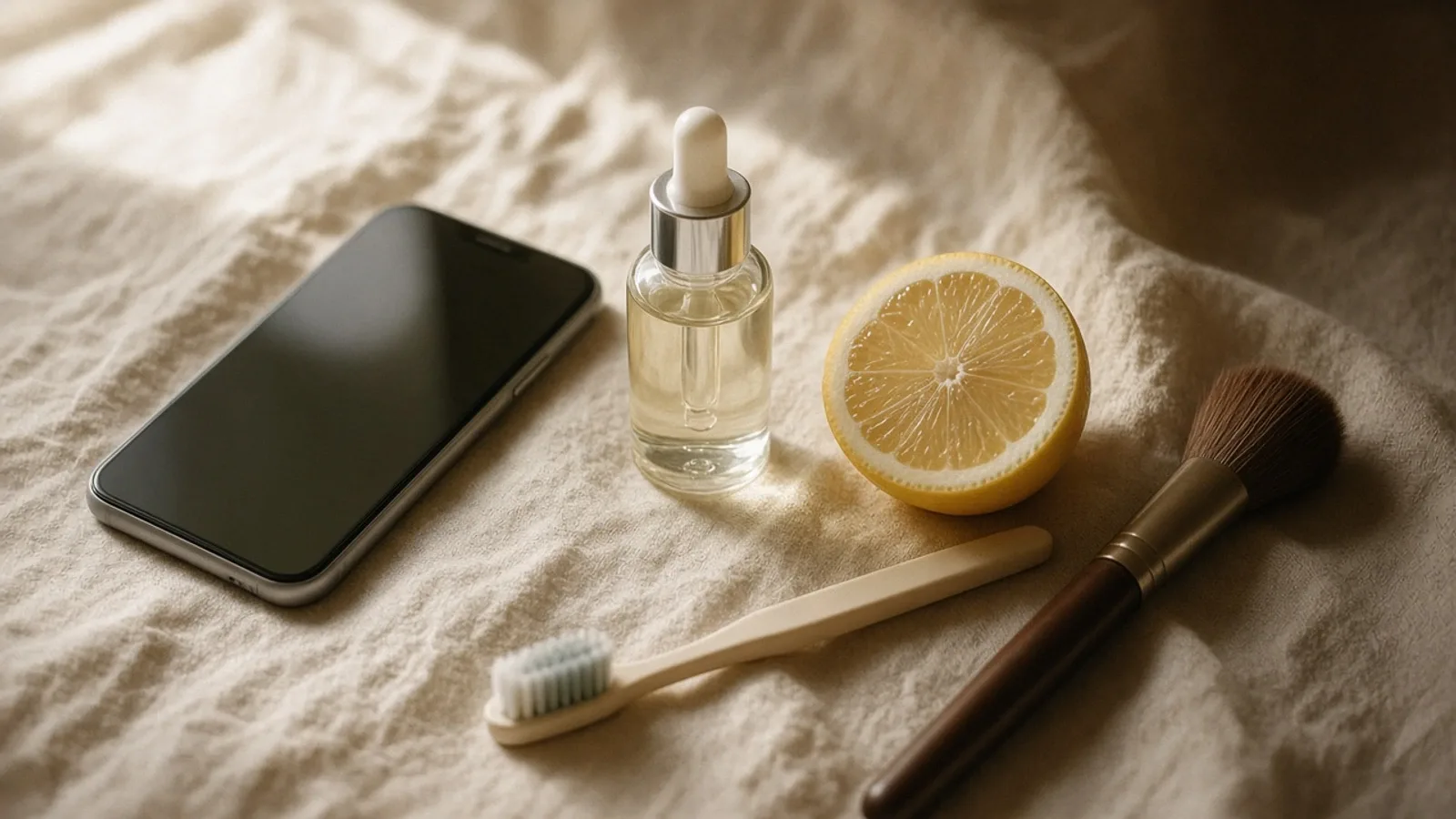
These hacks were not tested on camera. There is no “Viral Beauty Lab,” and a phone video is not a clinical trial.
The useful check is simpler: read the mechanism, the evidence, and the risk. Here is the sort.
Why hacks spread
Short-video platforms have become a primary source of skin health information, and the quality is uneven. A 2026 study in JMIR Dermatology describes the shift toward short video as a beauty-discovery channel and the accompanying risk of misinformation and creators who are not health professionals.
That does not make every hack wrong. It means the burden of proof is on the video, not on you.
The hacks worth keeping
Slugging
The claim: seal the face with a thin layer of petrolatum after moisturizer to lock in water.
The evidence: petrolatum is an occlusive; it reduces water loss. It is well tolerated by most people and is a standard ingredient in barrier repair. A 2026 review of barrier restoration describes moisturization as the first-line strategy for a compromised barrier.
The verdict: keep it for dry, compromised skin. Skip it if you are acne-prone, sweat heavily, or live somewhere hot and humid. It is not a treatment for acne or rosacea.
Skin cycling
The claim: alternate a retinoid, an exfoliant, and recovery nights in a four-night cycle.
The evidence: the exact schedule is not strongly evidenced. The individual pieces — a retinoid, an exfoliant, and recovery — are reasonable. Retinoids are among the best-studied over-the-counter anti-aging ingredients.
The verdict: keep the principle, not the ritual. Use a retinoid two or three nights a week, do not layer it with a strong acid, and moisturize on the off nights. The barrier reset is the better guide if you are irritated.
Glass skin
The claim: layer hydration and a dewy base for a reflective finish.
The evidence: this is makeup technique, not skin science. Hydrated skin reflects light differently, and a dewy base can look smoother. The effect is temporary.
The verdict: keep it as a makeup look. Do not confuse it with a change in skin quality.
Brow mapping and lip liner
The claim: map the brow with a pencil; overline the lip slightly.
The evidence: these are techniques, not medical claims. They work if the color and shape suit your face.
The verdict: keep them, but adjust the ratio to your features. A strong brow and a strong lip together can overwhelm; pick one.
The hacks to skip
Lemon juice as a toner or spot treatment
Citrus juice on skin followed by sun exposure can cause phytophotodermatitis, a painful, blistering reaction. A 2025 case report in Contact Dermatitis describes the pattern after contact with lime juice. Lemon is not a gentle exfoliant; it is a photosensitizer.
Verdict: skip.
Toothpaste on a spot
Toothpaste contains irritants — menthol, baking soda, hydrogen peroxide — that can burn or dry the skin. It is not an acne treatment.
Verdict: skip.
Baking soda as a scrub
Baking soda is alkaline. The skin’s acid mantle is slightly acidic. A baking soda scrub disrupts the barrier and does not “detox” anything.
Verdict: skip.
Mouth tape for a jawline
There is no good evidence that mouth tape changes jaw shape, and it can be dangerous for people with nasal congestion or sleep apnea. If you are worried about sleep, see a clinician.
Verdict: skip.
“Natural” retinol replacements
Some alternatives have evidence — bakuchiol has a randomized comparison with retinol — and many do not. The bakuchiol guide covers what the evidence supports and what the marketing skips.
Verdict: keep the ones with trials; skip the ones with only a testimonial.
How to judge the next hack
| Hack | What the evidence shows | Verdict |
|---|---|---|
| Slugging | Petrolatum is occlusive and reduces water loss | Keep for dry, compromised skin; skip if acne-prone or humid |
| Skin cycling | The exact four-night schedule is not evidenced, though retinoids are | Keep the principle: a retinoid two or three nights a week |
| Glass skin | A makeup technique, not a change in skin quality | Keep as a look; the reflective finish is temporary |
| Lemon juice | Phytophotodermatitis risk after sun exposure | Skip: it is a photosensitizer, not an exfoliant |
| Mouth tape | No evidence it changes jaw shape; risk with sleep apnoea | Skip |
Ask three questions:
- What is the mechanism? “It balances the pH” is not a mechanism. “It is an occlusive that reduces water loss” is.
- What is the evidence? A trial, a review, or a named dermatologist beats a before-and-after.
- What is the risk? Irritation, burns, and barrier damage are not worth a temporary glow.
Take a worked example. A video tells you to put lemon juice on a dark spot. The mechanism offered is that it “brightens”. The evidence is a before-and-after filmed in the same afternoon light. The risk is a blister that takes a fortnight to settle. You have two answers missing and one risk you did not agree to, so you close the app. The whole test takes less time than watching the video twice.
If the mechanism is vague, the evidence is a video, and the risk is your face, skip it. Before you layer anything new, check it against the skincare conflicts guide.
Who this is not for
If you enjoy trying hacks and can afford a reaction, that is your choice. This is not a ban on experimentation; it is a filter.
If you have a skin condition, ask a dermatologist before trying a viral treatment. And if a hack hurts, stop. Pain is not proof that it is working.
Sources
- Ahimsa FQ, Saputra K, Hutasoit MEA, Handayani PW, Fitriani H. Skin Health Information Seeking on Short Video Platforms in Indonesia: Mixed Methods Approach. JMIR Dermatology, 2026.
- Wagner JN, Zirkenbach F, Augustin M. Palmate Erythema With Pruritus Following Contact With Lime Juice, a Variant of “Margarita Photodermatitis”. Contact Dermatitis, 2025.
- Farris PK, Campos V. Evidence-Based Alternative Strategies to Improve and Restore Skin Barrier Function: A Narrative Review. American Journal of Clinical Dermatology, 2026.
Direct answers
Frequently asked questions
Does slugging work?
Slugging is a thin layer of petrolatum over moisturiser at night. It reduces water loss and can help a dry, compromised barrier, but it is not suitable for everyone, especially acne-prone or heavily sweating skin, or anyone living somewhere hot and humid.
Is skin cycling real?
The specific four-night schedule is not strongly evidenced, but the underlying idea is reasonable: use a retinoid less often and support the barrier on the nights in between. Retinoids themselves are among the best-studied over-the-counter ingredients, so keep the principle and drop the ritual.
Is lemon juice safe for skin?
No. Citrus juice on skin followed by sun exposure can cause phytophotodermatitis, a painful blistering reaction. Do not use it as a toner or spot treatment.
Does mouth tape give you a jawline?
There is no good evidence that mouth tape changes jaw shape. It can be dangerous for people with nasal congestion or sleep apnoea. Treat the claim as false.
How do I tell if a beauty hack is worth trying?
Ask three questions: what is the mechanism, what is the evidence, and what is the risk if it goes wrong? If the answer to the first two is vague and the third is high, skip it.
About the author

The editorial voice of CiciTrends. Color, fit, and the small decisions that make a wardrobe work. Written by an AI-assisted desk under human direction.
Reporting, sourcing and AI disclosure:/editorial-standards/
Keep reading
Related stories
Lipstick by color season: the shades that work
Most lipstick advice fails because it ignores undertone and contrast. A practical map of the 12 seasons, the reds, the nudes, and how to test in daylight.
Jan 7, 2026
The clean girl aesthetic is a standard, not a routine
The slick bun and dewy skin are sold as effortlessness. The labor, money, and narrow beauty ideal behind them are the actual story.
Jan 3, 2026
Beauty in your 30s: what actually changes
Your 30s are not a skin cliff. They are the decade when sun damage, cell turnover, and collagen loss start to show — and when prevention actually pays.
Jan 2, 2026