How to wash cashmere so it does not pill or stretch
In short
A friction-point care method for winter knits: wash at 30C or cooler, dry flat, de-pill only when bone dry, and treat underarms, cuffs and strap line first.
- Wash cashmere at 30C or cooler every three to four wears, never wring it, and dry it flat in shape rather than hanging.
- A knit pills first at three friction points, the underarm, the cuff and hem, and the bag-strap line, so inspect those zones before judging quality.
- De-pill only when the sweater is completely dry; combing a damp knit pulls live fibre out and thins the surface faster.
- Fold any knit heavy enough to stretch on a hanger, and store it fully dry in a breathable cotton bag, never sealed.
By Cici
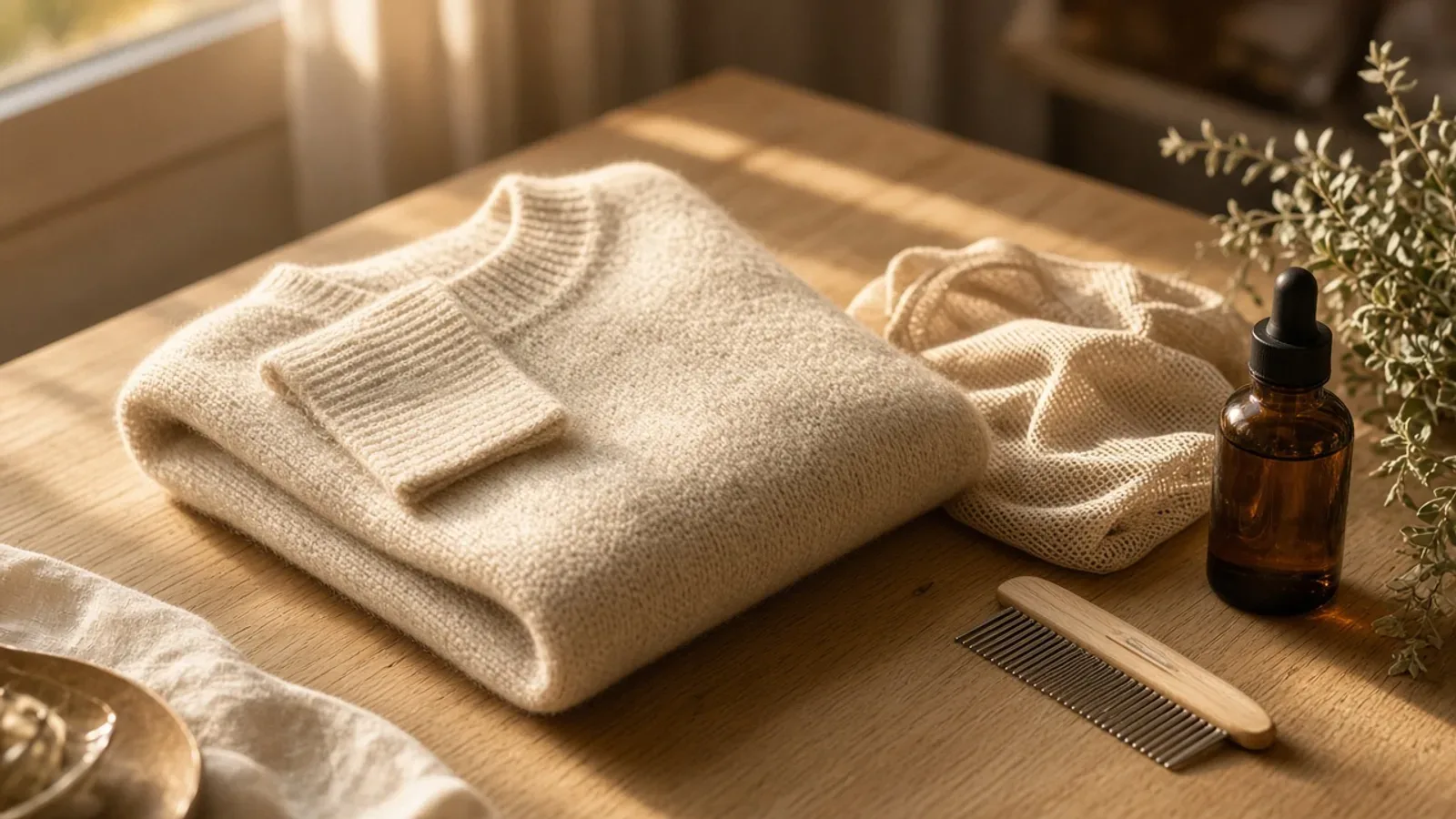
You pull the sweater off at 11:20 on a Tuesday night and there it is: a grey shadow of pills under the arm, a cuff gone thin, the body still perfect. That is not a bad sweater. It is a friction map, and it has three zones. Wash cashmere at 30C or cooler, no more than every three or four wears, never wring it, and dry it flat in shape. De-pill only once the knit is completely dry.
Why does cashmere pill under the arms first?
Look at a sweater you have worn hard. The pills cluster under the arm, along the inside of the cuff, and in a diagonal line across the shoulder where a bag strap sits. The front panel, the part you actually look at, is usually the last place to go.
A pill is not dirt and it is not a moral failure of the garment. It is short fibre that has worked loose from the yarn and tangled with its neighbours under repeated rubbing. Wool fibres have a natural crimp that gives knitwear its spring and bulk, and Woolmark’s wool care guidance treats abrasion and agitation as the two things worth managing, which is exactly what a friction map is for.
Which explains the underarm: it is the one place on a sweater that rubs against another part of the same sweater every time you move your arm. The cuff rubs your desk. The hem rubs your waistband and the strap of a tote.
So a sweater that pills at the underarm and nowhere else is telling you where it is being worn, not how much it cost. Two jumpers knitted from the same fibre can pill at completely different rates if one is spun tighter and knitted denser than the other. Feel for that before you feel for the price tag.
How do you wash a cashmere sweater so it does not stretch?
You are at the bathroom sink at 9:40 on a Sunday night, the water going faintly grey, one hand under a sleeve that suddenly feels twice as long as it did. This is the moment most sweaters are ruined, and it happens because a soaked knit is heavy.
Lift a wet sleeve by the cuff and it keeps going. That weight is what pulls a sweater long, so the first rule is a handling rule, not a detergent rule: support the whole garment with both hands or in a towel, never lift it by the shoulders, and never hang it damp.
Then the wash spec: 30C or cooler, a wool or delicate cycle if the label permits machine washing, a pH-neutral wool detergent with no enzymes, and a spin no more forceful than the machine’s wool setting. If you hand wash, press the water through the knit and never rub two surfaces of it together.
Stop wringing. Roll the sweater in a towel and press, so the towel takes the water instead of your hands.
Dry it flat, face up, reshaped to the measurements you remember from before the wash. Not on a hanger, not over a radiator, not in sun.
Washing frequency does more work than any detergent. Every three to four wears is plenty for cashmere in winter. Between washes, air it overnight on a chair back and let the fibre recover.
On labels, my decision rule is structure, not fear. A plain, unstructured cashmere or merino crewneck gets hand washed, because that is the gentler option for a soft hand and it is easy to reshape while damp. A tailored knit jacket, a bonded or lined piece, or anything with a shoulder pad follows the label, because structure is harder to reshape than fibre. When a plain knit says dry clean only, I read that as the label’s safest instruction rather than a verdict on water.
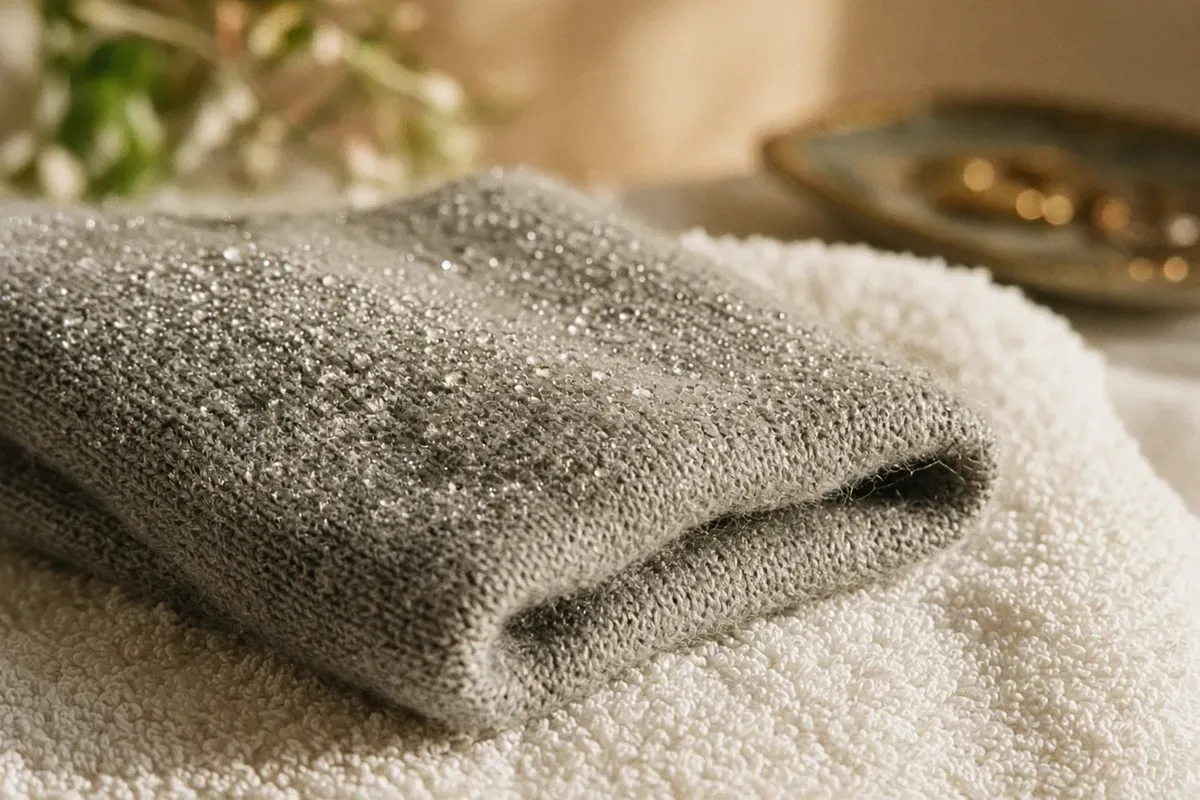
Wet wool has no strength to hold its own shape.
The friction map: where to spend the repair effort
You will be tempted to attack the pills the moment you see them, on a sweater still faintly damp from the wash. Wait.
De-pilling a wet knit pulls live fibre out of the yarn, not just the dead ends sitting on the surface, and it makes the thin patch thinner. Let it dry completely, then use a fabric comb or a fine-tooth de-piller in one direction, light pressure, short strokes, starting at the underarm where the surface is already compromised. If a hole has opened where the pills were, that is a repair job rather than a shaving job, and invisible mending is worth understanding before you decide.
Fold heavy knits. A chunky lambswool or alpaca sweater on a hanger will stretch at the shoulder within a season, and no amount of correct washing will undo it.
If you machine wash, a mesh bag protects the two high-friction zones by stopping the sweater from rubbing against the drum and against other laundry. Wash knits alone or with other knits. A zip and a cable knit in the same load is a fight the knit loses.
Cashmere vs merino vs lambswool: which needs which care?
In a shop in February you are holding two grey sweaters, one at three times the price of the other, and the only visible difference is the label.
The useful question is not which fibre is better. It is which fibre, at this gauge and this spin, will survive the way you actually wear it. Rubbing them between finger and thumb, this is the order I would put them in. Merino feels finer and springs back faster, so it shows pills at the cuff sooner but recovers shape well. Lambswool feels coarser and denser and holds structure, but it abrades hard at the strap line. Cashmere is softest and least tolerant of agitation, which is why cold water and flat drying matter more to it than to anything else in the drawer.
If the choice comes down to two greys, a cool grey can drain a warm undertone and a warm grey can fight a cool one; the Soft Summer guide is the quickest way to see which grey keeps your face in focus.
For the money question underneath all this, the cost-per-wear audit is the honest test: a well-made cashmere crewneck that survives several winters beats a cheap blend that pills out by February.
| Knit fiber and friction point | Wash or care spec | What to check before washing or buying |
|---|---|---|
| Cashmere, underarm | 30C or cooler, wool cycle or hand wash, mesh bag, low spin | Two-ply yarn and a tight gauge pill far less than a loose single-ply |
| Merino, cuff and hem | 30C wool cycle, pH-neutral wool detergent, reshape damp, dry flat | Label reads machine wash wool rather than dry clean only |
| Lambswool, bag-strap line | Hand wash or wool cycle, never wring, dry flat away from direct heat | Hold it to the light: a blooming, gappy knit will abrade fast |
| Cashmere blend with 10 to 20 percent nylon | Same as cashmere, expect slower pilling at high-rub zones | Blend percentage on the fibre label, not the front swing tag |
| Chunky alpaca or lambswool, hem | Fold, never hang, wash every six to eight wears at most | Wet weight: anything heavy will stretch if it is hung damp |
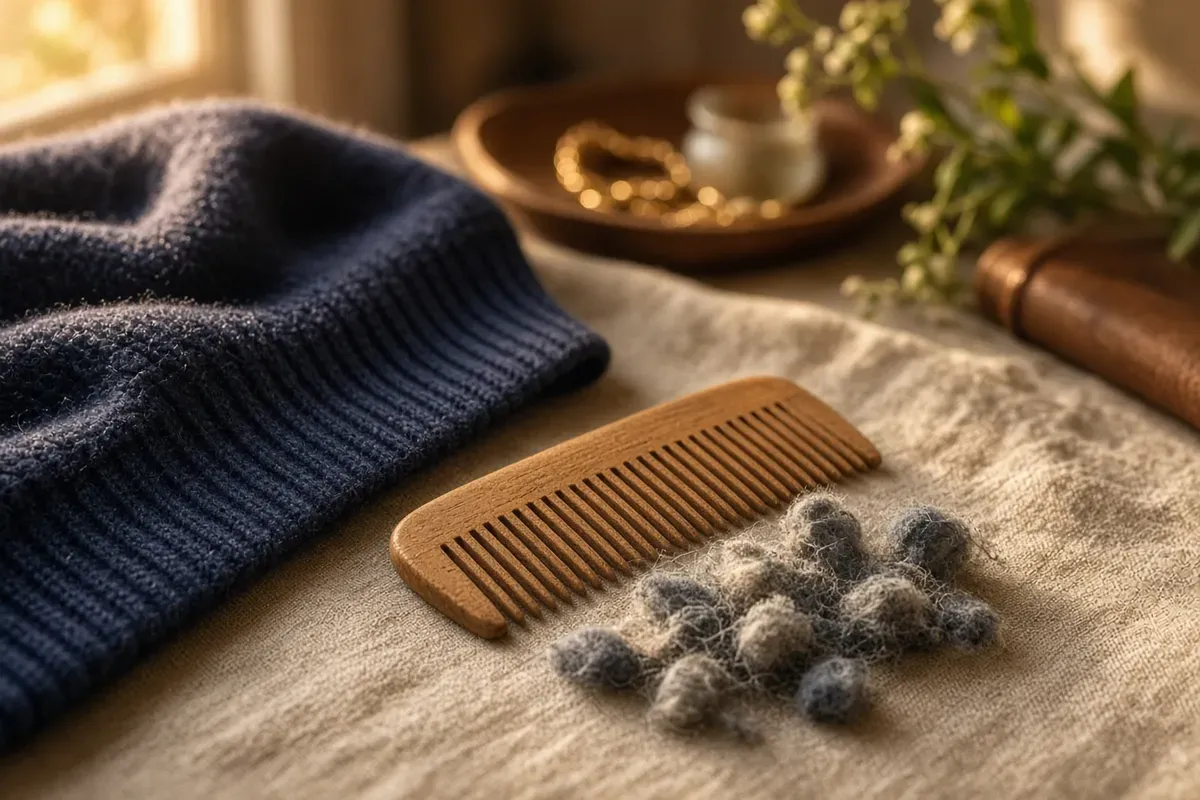
Comb dry, in one direction, starting at the underarm.
What changes in a warm climate, or when you pack it away?
The first warm Saturday in April, you take the sweater off the shelf and it smells faintly of the restaurant you wore it to in December. That smell is the whole argument for washing before storage rather than after.
In a warm, humid climate the sequence is the same but the drying matters more. Wash at the end of the season, dry flat in shade with air moving around it, and do not put it away until it is dry to the touch in the underarm seam. Folded damp, wool sets creases and holds odour, and humidity gives both a head start.
Store folded in a breathable cotton bag or a pillowcase, not a sealed vacuum bag, with cedar if moths have found you before. A few days of airing before the season turns does more than a freshening spray.
The warmer-climate version of the wash rule: fewer wears per wash is still right, but dry time stretches from a day to two, so plan the wash around a dry forecast. A damp sweater left flat for 48 hours in a close room is where the musty smell comes from. If your seasons run the other way, the winter to spring wardrobe transition is the moment to do the wash-and-store pass rather than in October.
Tonight, before the sweater goes back in the drawer, do two things: check the underarm for pills and leave them alone until the knit is bone dry, then fold it flat instead of hooking it over the chair back. Friction first, cold water second, patience third.
Sources
Direct answers
Frequently asked questions
Can you machine wash a cashmere sweater?
Often, yes. Use a wool or delicate cycle at 30C or cooler, a pH-neutral wool detergent, a mesh bag, and the lowest spin. Skip the dryer entirely and dry flat in shape. If the label says dry clean only and the sweater is lined, padded, or structured, follow the label instead.
Does dry cleaning stop sweaters from pilling?
No. Pilling comes from abrasion during wear, not from washing, so dry cleaning cannot prevent it. Wash less often, air the sweater overnight between wears, and look over the underarm and cuff zones before each wear. I keep dry cleaning for structured pieces whose labels ask for it.
How often should a wool or cashmere sweater be washed?
Every three to four wears in normal winter rotation is enough for cashmere and fine merino. Air the sweater overnight between wears and spot treat marks. Wash more often only if you wore it against bare skin in heat, exercised in it, or spilled something on it.
Why does a wet sweater stretch out of shape?
A soaked sweater is heavier than the same sweater dry, and that weight pulls the knit downward. Lifting it by the shoulders or hanging it damp stretches it further. Support it in a towel, roll to remove water, then dry flat and reshape to its original measurements while still damp.
Should you shave pills off a sweater immediately?
Wait until the knit is completely dry. De-pilling a damp sweater pulls live fibre out of the yarn and thins the thin spots further. Once dry, use a fabric comb or fine-tooth de-piller in one direction with light pressure, starting at the underarm where the surface is already worn.
About the author

The editorial voice of CiciTrends. Color, fit, and the small decisions that make a wardrobe work. Written by an AI-assisted desk under human direction.
Reporting, sourcing and AI disclosure:/editorial-standards/
Keep reading
Related stories
How to Wash Wool and Cashmere Sweaters Without Shrinking Them
Wash wool and cashmere sweaters less often, at 30C or cooler, with low spin, and dry them flat. The fiber-first rule that stops shrinking and pilling.
Nov 11, 2026

Digital minimalism: a phone setup that gives you your evenings back
The problem is not willpower; it is the home screen. A five-part phone setup, a 30-minute install, and what digital minimalism will not fix.
Jan 3, 2026

The Sunday reset: a 90-minute system for the week ahead
Not a whole-day clean, not a productivity performance. A 90-minute Sunday system built on habit research, with an if-then plan that survives Monday.
Jan 3, 2026