How to Wash Wool and Cashmere Sweaters Without Shrinking Them
In short
Wash wool and cashmere sweaters less often, at 30C or cooler, with low spin, and dry them flat. The fiber-first rule that stops shrinking and pilling.
- Wool and cashmere sweaters need a wash every four to six wears, not every wear: air for 24 hours between outings and spot clean spills at the sink.
- Wash knits at 30C (86F) or cooler on a wool cycle with low spin, using half the detergent dose and no fabric conditioner at all.
- Never hang a wet sweater: roll it in a towel, press out the water, and dry flat in shape for 24 to 48 hours.
- Treat pilling with a fabric comb in one direction; if you can see light through a patch or the underarm has felted, it is structural wear to repair or replace.
By Cici
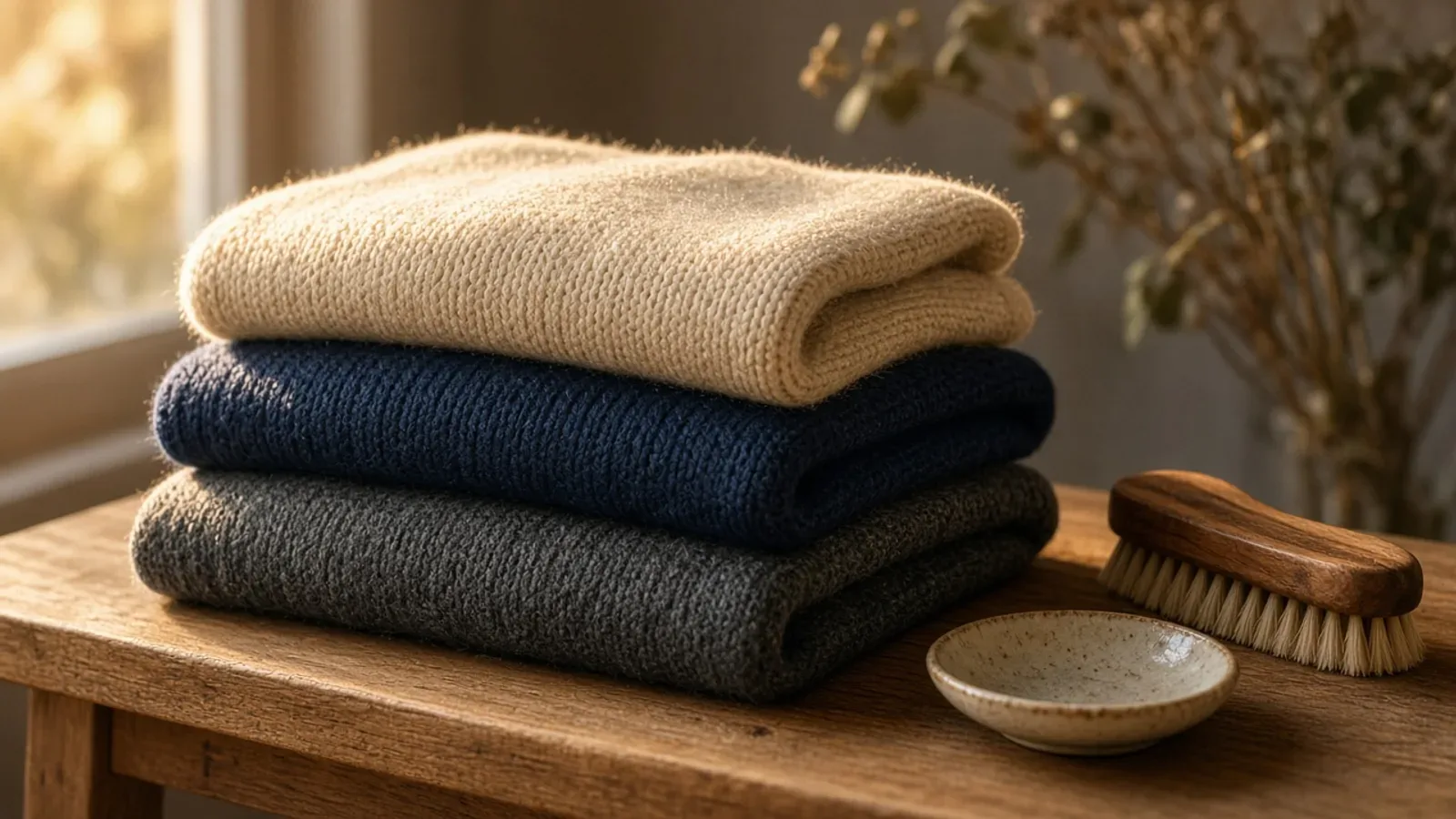
You pull the navy sweater out of the machine and it is smaller, denser, and older than it went in. The rule that would have saved it: wash wool and cashmere at 30C (86F) or cooler, on the lowest spin your machine offers, never in the same load as denim or towels, and dry it flat. Not on a hanger. Not over a radiator.
Most knits fail in the wash, not in the wardrobe.
The care label opens the conversation. The blend line and the way the sweater was knitted close it, which is why two garments both marked ‘hand wash’ can want different routines from you. I start with the blend every time.
How often should you wash a wool sweater?
Less than you think, and the test is your nose and your skin, not the calendar. A sweater worn over a blouse gets four to six wears. One worn against bare skin, or to a party where someone hugged you in perfume, gets two.
Between washes, give it air. Twenty-four hours on a door hook does more for a knit than a quick cycle, because wool moves moisture away from the body and lets go of odor faster than cotton does.
You know the moment: collar to your face on a Tuesday morning, a two-second verdict, out the door. Trust it. Woolmark’s care guidance is built around washing less and airing more, and the reason is not preciousness about fiber. Agitation is what ages a knit.
Brush it with a soft clothes brush along the nap. For a splash, cool water and a drop of wool detergent at the sink, blot with a towel, do not rub.
Does hot water really shrink wool?
Heat, moisture, and movement, together. Wool fibers carry overlapping scales that point in one direction. Add warm water and a drum turning at speed and those scales lock into each other. That is felting, and it does not reverse.
Cool water and a low spin are the two variables you control. Woolmark’s care guidance recommends hand washing or a wool cycle at 30C (86F) with low agitation and a wool-safe detergent. There is a setting on your machine you have never once pressed. Press it.
| Knit fiber or blend | Wash and dry spec | What to check before you start |
|---|---|---|
| Lambswool or merino, 100% | 30C wool cycle or hand wash, low spin, dry flat | Ribbing at the cuffs for slack, seams for a pulled shoulder |
| Cashmere, pure or with silk | Hand wash cool, no wringing, roll in a towel, flat for 24 to 48 hours | Bobbles at the underarm versus thin, see-through patches |
| Cotton or cotton-linen knit | 30 to 40C gentle cycle, low spin, dry flat or line dry in shape | The weight of it wet, which grows it on a hanger |
| Wool with 20 to 30% nylon or polyamide | Wool cycle, low spin, dry flat, no dryer | Pilling at friction points, the sign the blend is doing its job |
| Vintage or unlabelled hand wash | Hand wash cool, soak under 10 minutes, dry flat | Dye bleed on a hidden hem corner first |
Halve the detergent. Residue is what stiffens a sweater at the elbow, and half a capful rinses clean in cool water where a full one leaves a film. Skip fabric conditioner entirely. Woolmark advises against conditioner on wool, and the reason is plain: it coats the scales that give the fiber its warmth and its spring, and that film holds odor.
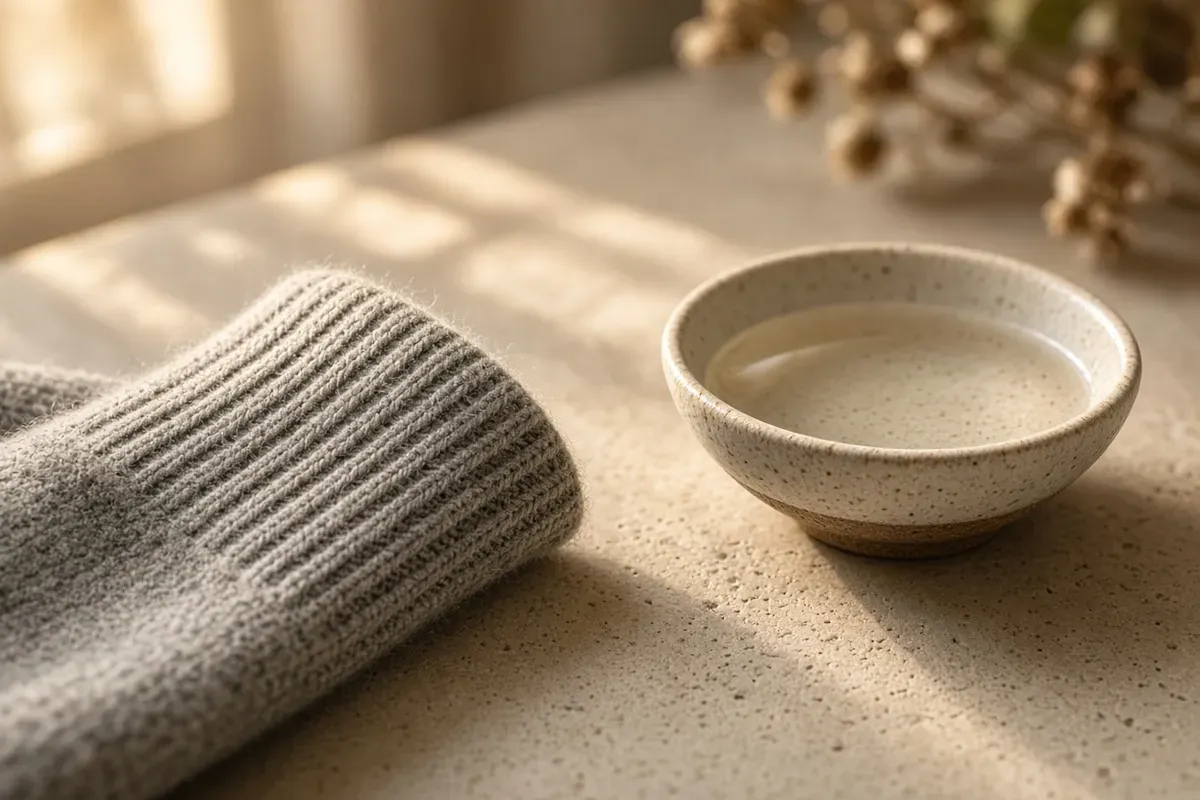
Cool water, half a capful, low spin.
Why does my sweater pill?
Pilling is short fibers escaping the yarn and tangling into bobbles, and it happens where friction lives: underarm, the side seam beneath a bag strap, the cuff you push up forty times a day.
I would treat the first two months as settling time. Loose short fibers work their way free first, then the surface calms. Judge the sweater after that, not after two wears, which is why the one you nearly returned in November is often the one you still wear in February. A nylon blend may pill less early and thin later; that is a trade-off to know, not a fault in your care.
Depill with a fabric comb or a small electric shaver, laid flat on a table, in one direction. Do not pick bobbles off with your fingers. You take a loop of yarn with them.
The judgment call is surface fuzz versus structure. Fuzz is cosmetic. A patch you can see light through, a felted underarm, or a hole at the seam is wear, and it is worth pricing a repair before you replace. Reweaving can close a small hole. Nothing can unfelt a matted jumper. That distinction is the whole invisible mending decision, and it costs nothing to make it before you spend.
Color matters here more than most care advice admits. A deep saturated knit forgives pilling that a pale heathered one advertises, which is part of why a True Winter navy still reads expensive after three seasons and an oatmeal marl starts to look tired.
Certifications sit in a different lane. The Responsible Wool Standard, run through Textile Exchange, tells you about farm-level sourcing. It tells you nothing about whether the sweater survives a 40C cycle, so read it as an ethics label, not a care instruction.
How do you dry a wet sweater without stretching it?
Support it. A soaked sweater is heavy and weak enough to pull its own shoulders out of shape on a hanger. You have seen the result: two soft peaks at the collarbone of a jumper that dried in a hotel bathroom.
Press the water out, do not wring. Lay the sweater on a clean towel, roll the towel with the garment inside, and kneel on the roll. Then lay it flat on a dry towel or a mesh rack, in the shape you want it to keep, and nudge the hem and cuffs straight with your palms.
Twenty-four to forty-eight hours, away from radiators and direct sun. A fan in the room is better than heat beneath it.
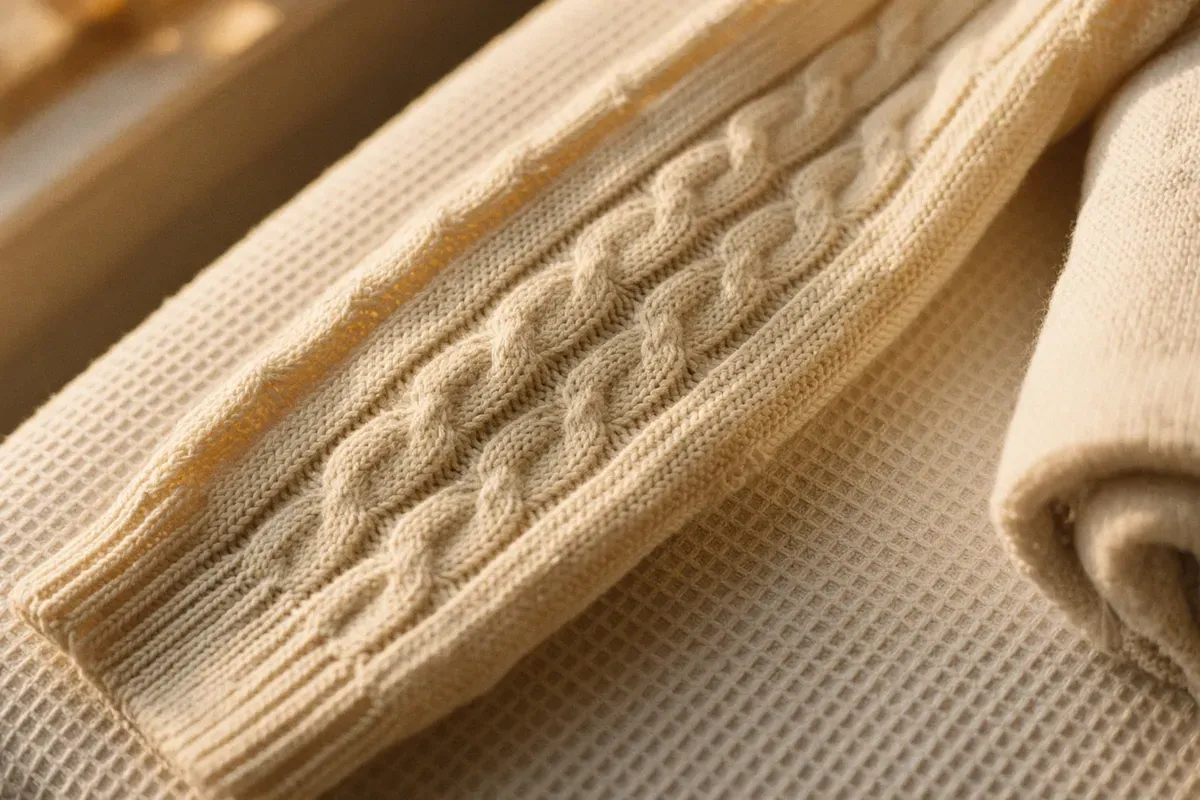
Roll, press, reshape, wait.
How should you store winter knits so next October is easy?
Clean first, then fold. My storage rule is plain: I do not put a sweater away with a coffee stain on the cuff or a day of body oil in the collar. Six months is long enough for a mark to set, and I would rather not give anything in the drawer a reason to stay. The clean knit is the one that comes out in October the way it went in.
Fold, do not hang. A hanger leaves a bump at the shoulder that no steamer fully lifts, and you will notice it every time you wear the thing. Stack by weight instead of color: heavy cables at the bottom of the drawer, fine gauge on top, so nothing beneath is crushed. Cedar helps, and a sealed cotton bag helps more if moths have already found you.
If late spring is arriving where you live, the logic simply reverses. Clean, dry, fold, store, and take the same care pulling lighter knits into rotation, which is exactly the move set out in the winter to spring wardrobe transition.
Then do the arithmetic before you buy another one. A $180 sweater worn 60 times costs $3 a wear. The same sweater worn 90 times because you washed it six times a season instead of sixteen comes down to $2. That is the argument in one number, and cost per wear should decide your next purchase, not the sale tag.
Today: read the blend line, not the care line, set the machine to 30C, and lay the next wet sweater flat.
Direct answers
Frequently asked questions
Can you machine wash cashmere?
Yes, if the label allows it. Use a wool or hand-wash cycle at 30C (86F) or cooler, low spin, wool-safe detergent at half dose, and no fabric conditioner. Wash cashmere with other knits, never with denim or towels, and dry it flat. Hand washing stays gentler on loose, older or unlined pieces.
Does fabric softener ruin wool?
It does not destroy wool, but it coats the fiber. Woolmark advises against conditioner on wool because the film reduces natural warmth, bounce and odor release. Skip it entirely and use half a dose of wool-safe detergent instead. Softness should come from the fiber, not the rinse.
How often should you wash a sweater?
Four to six wears for a sweater worn over a shirt, two for one worn against bare skin. Air it for 24 hours between wears and spot clean spills as they happen. Wash when the collar or underarm holds odor, and always before it goes into storage.
Why do sweaters pill?
Short fibers work loose from the yarn and tangle into bobbles where friction is highest: underarms, side seams, cuffs. New cashmere and lambswool shed most in the first two months, then settle. Remove pills with a fabric comb flat on a table, never by pulling them off with your fingers.
How do you dry wool without stretching it?
Never wring it and never hang it. Roll the wet sweater inside a towel and press the water out, then lay it flat on a mesh rack or dry towel, reshaped to its original measurements, away from radiators. Expect 24 to 48 hours. A hanger pulls the shoulders out permanently.
Filed under
About the author

The editorial voice of CiciTrends. Color, fit, and the small decisions that make a wardrobe work. Written by an AI-assisted desk under human direction.
Reporting, sourcing and AI disclosure:/editorial-standards/
Keep reading
Related stories
The Cost-Per-Wear Audit: What Your Wardrobe Actually Costs
A cost-per-wear audit turns a closet full of maybes into a decision. The formula, the thresholds, and the one number most shoppers never calculate.
Dec 30, 2025

The Sunday reset: a 90-minute system for the week ahead
Not a whole-day clean, not a productivity performance. A 90-minute Sunday system built on habit research, with an if-then plan that survives Monday.
Jan 3, 2026

How to maintain friendships as an adult
Adult friendship dies from no system, not distance. A five-person list, a rhythm, a format, and a repair plan — without guilt or performative catch-ups.
Jan 20, 2026