Scalp care: what actually works (and what doesn't)
In short
The scalp is skin, but most scalp care is marketing. What the evidence supports for flakes, itching, front hairline thinning, and when to see a dermatologist.
- Wash an oily scalp every one to two days with a gentle shampoo, because waiting longer raises oil and irritation rather than training the scalp.
- Treat greasy, yellowish, or itchy flakes as seborrheic dermatitis with a medicated shampoo two to three times a week until controlled, then maintain.
- Stop treating flakes with oil: oils can feed Malassezia, so treat the scalp first and add oil only if your scalp tolerates it.
- A scalp routine cannot cure genetic hair loss, so sudden shedding, patches, or a receding hairline need a dermatologist rather than a new serum.
By Cici
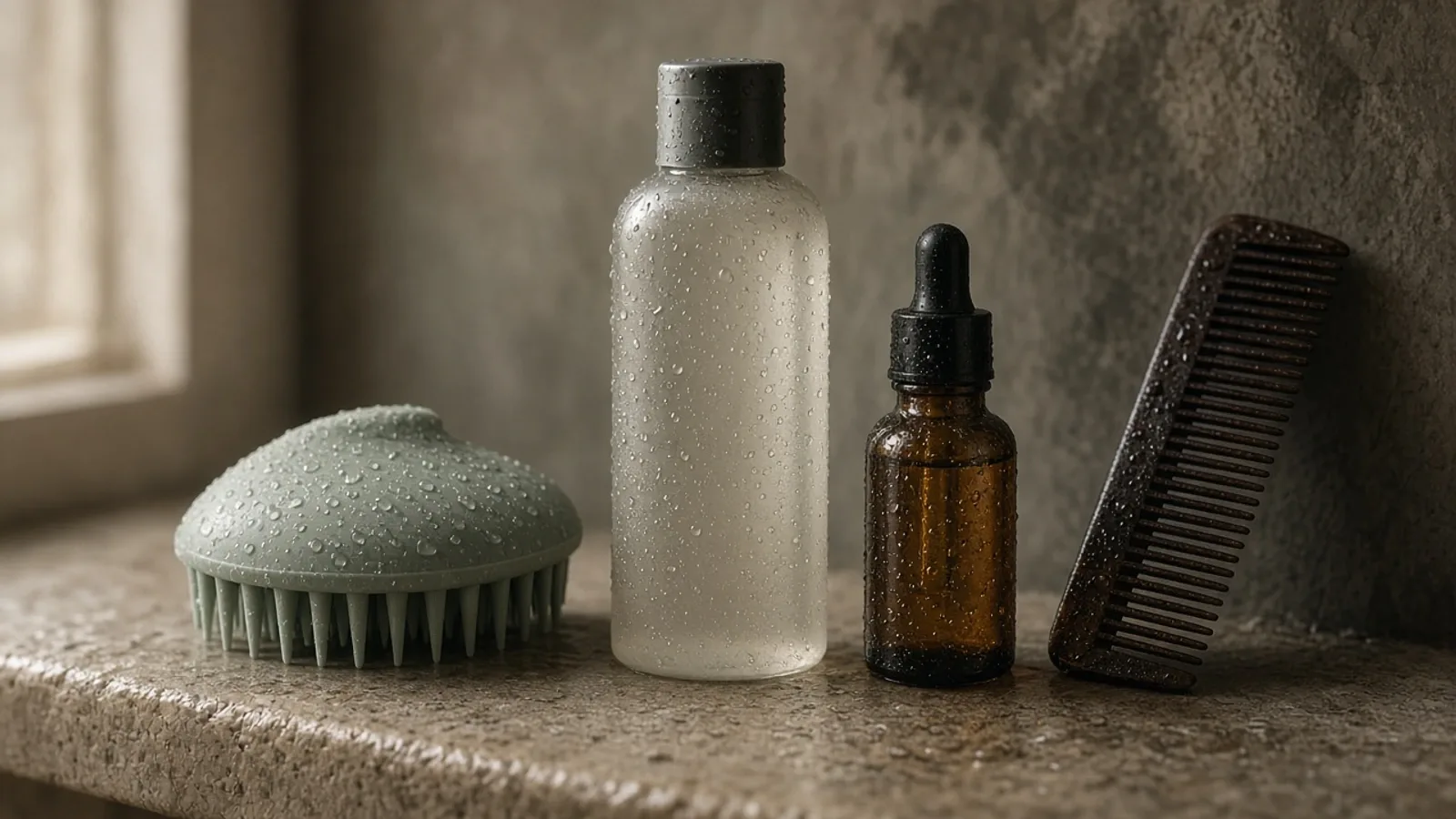
The scalp is skin. That sentence is true, and it has been used to sell a lot of unnecessary products. The scalp does have a barrier, a microbiome, and a sebaceous gland system, and those things matter for hair. The barrier logic is the same one in the body care routine. But “treat your scalp like your face” is not a routine. It is a slogan.
The useful version is narrower: cleanse it appropriately, treat inflammation when it is there, avoid things that damage the follicle, and see a dermatologist when hair is actually falling out. Most of the expensive stuff in between is optional.
What the scalp actually is
The scalp is skin with a high density of hair follicles and sebaceous glands. It has its own microbiome, and a growing body of research links changes in that microbiome to scalp conditions and, more tentatively, to hair loss.
A 2026 review describes a “scalp microbiome–hair axis,” with microbial shifts and sebum composition changes associated with alopecia. A separate 2026 review of androgenetic alopecia reports enrichment of Cutibacterium acnes and, less consistently, Malassezia, along with changes in sebum lipids. That is promising science, but it is still emerging. It does not mean a $60 serum fixes hair loss by “balancing the microbiome.”
What it does mean: oil, inflammation, and the follicle environment are worth paying attention to. Those are the levers a routine can actually pull.
The four things a scalp routine can do
1. Cleanse at the right frequency
| Scalp type | Wash frequency | Why |
|---|---|---|
| Oily scalp | Every one to two days | Waiting longer increases oil and irritation |
| Dry scalp | Less often, with a gentler surfactant | Hot water and strong shampoo strip it further |
| Frequent exerciser | Rinse or wash after sweating | Sweat and product build-up feed flakes |
| Flaky or itchy scalp | Medicated shampoo two to three times a week | Ketoconazole, zinc pyrithione, selenium sulfide, or salicylic acid |
| Tight or stinging after washing | Change the shampoo | The formula is too harsh for your scalp |
There is no universal wash schedule. It depends on how much oil you produce, how much product you use, and how your scalp reacts.
- Oily scalp: wash every one to two days with a gentle shampoo. Waiting longer does not “train” the scalp; it usually just increases oil and irritation.
- Dry scalp: wash less often, use a gentler surfactant, and avoid very hot water.
- Frequent exerciser: rinse or wash after sweating, especially if you are prone to flakes.
The goal is a clean scalp without a tight, stripped feeling. If your scalp stings after washing, the shampoo is too harsh for you.
2. Treat flakes and itching as a condition, not a personality flaw
Dandruff and seborrheic dermatitis are common, treatable, and often confused with “dry scalp.” The American Academy of Dermatology’s guidance on seborrheic dermatitis recommends medicated shampoos with ingredients such as ketoconazole, zinc pyrithione, selenium sulfide, or salicylic acid, used according to the label or a clinician’s instructions.
The mistake is treating flakes with more oil. Oils can feed Malassezia, the yeast associated with seborrheic dermatitis, and make the problem worse. If your flakes are greasy, yellowish, or itchy, treat them as seborrheic dermatitis until a clinician says otherwise.
3. Avoid traction and chemical damage
The follicle is the factory. Tight ponytails, braids, extensions, and repeated heat or chemical processing can damage it. Traction alopecia is real and preventable.
- Loosen the hairstyle. If it hurts, it is too tight.
- Rotate the parting and the updo.
- Give the hair a break from heat and tight styles. If you color your hair, the gloss, glaze, and toner guide explains which services are gentler.
- Do not ignore patches of hair loss. Early treatment matters.
4. Protect the scalp from the sun
The scalp is exposed, especially where the hair is parted or thinning. Sunscreen for the scalp is awkward but not optional for long exposure. A hat is easier. If you are worried about a spot that bleeds, crusts, or changes, see a dermatologist.
What scalp care cannot do
- It cannot cure genetic hair loss. Minoxidil, prescription treatments, and procedures have evidence; a scalp scrub does not.
- It cannot “detox” the scalp. The scalp does not accumulate toxins that a clay mask removes.
- It cannot replace a diagnosis. If you have sudden shedding, patches, scaling, pain, or a rash, the answer is a dermatologist, not a new serum.
- It cannot make hair grow faster in a meaningful way. Most “growth” products support the appearance of density or reduce breakage; they do not change the growth rate.
The routine, in order
- Shampoo at the frequency your scalp needs, with a gentle formula.
- Treat flakes or itching with a medicated shampoo two to three times a week until controlled, then maintain.
- Condition the ends, not the scalp, unless your scalp is genuinely dry.
- Avoid tight styles, harsh heat, and daily scrubbing.
- Protect with a hat or scalp SPF for long sun exposure.
- See a clinician for hair loss, patches, or persistent inflammation.
That is the whole routine. It is shorter than most scalp-care content suggests, and it costs less. For a shorter wash-day routine, see the low-maintenance hair guide.
Front hairline and scalp treatment
The front hairline is where traction and chemical damage show first. If you wear tight braids, ponytails, or extensions, the tension can cause traction alopecia over time.
- Stop the tension. Loosen the style, move the part, and give the hairline a break.
- Treat the scalp gently. No scratching, no harsh scrubs, no tight headbands.
- Do not mask hair loss with oil. Oil can soothe dry hair, but it will not regrow a receding hairline.
- See a dermatologist early. Hair loss is easier to treat before the follicle is scarred.
The evidence on “scalp facials” is thin. A clean scalp, a medicated shampoo if you need one, and less tension will do more than a serum with a ritual.
What about scalp facials, serums, and oils?
They are not inherently bad. A gentle exfoliating treatment can help if you have build-up; a lightweight serum can soothe. But they are optional, and they are not a substitute for treating a medical condition.
If you enjoy them, use them. If you are buying them to fix hair loss, save the money and see a dermatologist.
Who this is not for
If you have a diagnosed scalp condition, follow your clinician’s plan. If you are experiencing sudden or patchy hair loss, do not experiment with products first; get a diagnosis.
If you have a healthy scalp and your current routine works, you do not need a ten-step scalp regimen. The goal is a comfortable scalp and intact hair, not a shelf of bottles.
FAQ
What is the best treatment for a dry, flaky scalp?
A medicated shampoo with ketoconazole, zinc pyrithione, or salicylic acid, used consistently for several weeks. The right one depends on whether the issue is fungal overgrowth or scale.
Can scalp treatment regrow hair?
It depends on the cause. Treating dandruff or folliculitis can improve the scalp environment, but it does not reverse androgenetic alopecia. Pattern hair loss needs a diagnosis and evidence-based treatment.
Why is my front hairline thinning?
Traction from tight styles, chemical damage, and pattern hair loss are the common causes. Stop the tension, treat the scalp gently, and see a dermatologist if the hairline is receding.
Should I put oil on my scalp?
Oils can help dry, tightly coiled hair, but they can worsen seborrheic dermatitis. If you have flakes or itching, treat the scalp first.
Sources
- American Academy of Dermatology, Seborrheic dermatitis: treatment.
- Li T, Yao D, Cheng F, Mou X, Bian Q. The Scalp Microbiome–Hair Axis: Mechanisms and Therapeutic Translation. Research, 2026.
- Gupta AK, Teasell EM, Liddy A, Economopoulos V. Scalp Microbiome Alterations in Androgenetic Alopecia: Patterns and Emerging Mechanistic Insights. International Journal of Dermatology, 2026.
Direct answers
Frequently asked questions
What is the best treatment for a dry, flaky scalp?
Use a medicated shampoo with ketoconazole, zinc pyrithione, or salicylic acid, depending on whether the issue is a fungal overgrowth or scale. Leave it on the scalp for the time on the label, and use it consistently for several weeks before judging it.
Can scalp treatment regrow hair?
It depends on the cause. Treating dandruff or folliculitis can improve the scalp environment, but it does not reverse androgenetic alopecia. Pattern hair loss needs a diagnosis and evidence-based treatment such as minoxidil or finasteride, prescribed by a clinician.
Why is my front hairline thinning?
The most common causes are traction from tight styles, chemical damage, and pattern hair loss. Stop the tension, treat the scalp gently, and see a dermatologist if the hairline is receding or the scalp is inflamed.
Should I put oil on my scalp?
Oils can help dry, tightly coiled hair, but they can worsen seborrheic dermatitis and make the scalp a better environment for Malassezia. If you have flakes or itching, treat the scalp first and add oil only if your scalp tolerates it.
About the author

The editorial voice of CiciTrends. Color, fit, and the small decisions that make a wardrobe work. Written by an AI-assisted desk under human direction.
Reporting, sourcing and AI disclosure:/editorial-standards/
Keep reading
Related stories
How to clean makeup brushes (and how often)
Brushes and sponges collect bacteria, and most people clean them far less than they think. The wash, the drying, and when to replace them.
Jan 3, 2026
Beyond retinol: what bakuchiol can and cannot do
One randomized trial found bakuchiol comparable to retinol for photoageing, with less irritation. Here is what the evidence supports, and what it does not.
Dec 31, 2025
The Sephora Holiday Sale Is a Restock, Not a Haul
A discount does not make an untested product a good buy. How to spend the Sephora Holiday Savings Event on repurchases and gift sets, and what to skip.
Nov 6, 2026