How to clean makeup brushes (and how often)
In short
Brushes and sponges collect bacteria, and most people clean them far less than they think. The wash, the drying, and when to replace them.
- Wash foundation and concealer brushes once a week, powder, blush and bronzer brushes every one to two weeks, and sponges after every use or at least weekly.
- Dry brushes flat with the bristles over the edge of a counter so water runs away from the ferrule; standing them upright lets water loosen the glue and cause shedding.
- A 70% alcohol spray eliminates bacterial growth but dries natural bristles, so use it as a periodic disinfectant rather than a daily wash.
By Cici
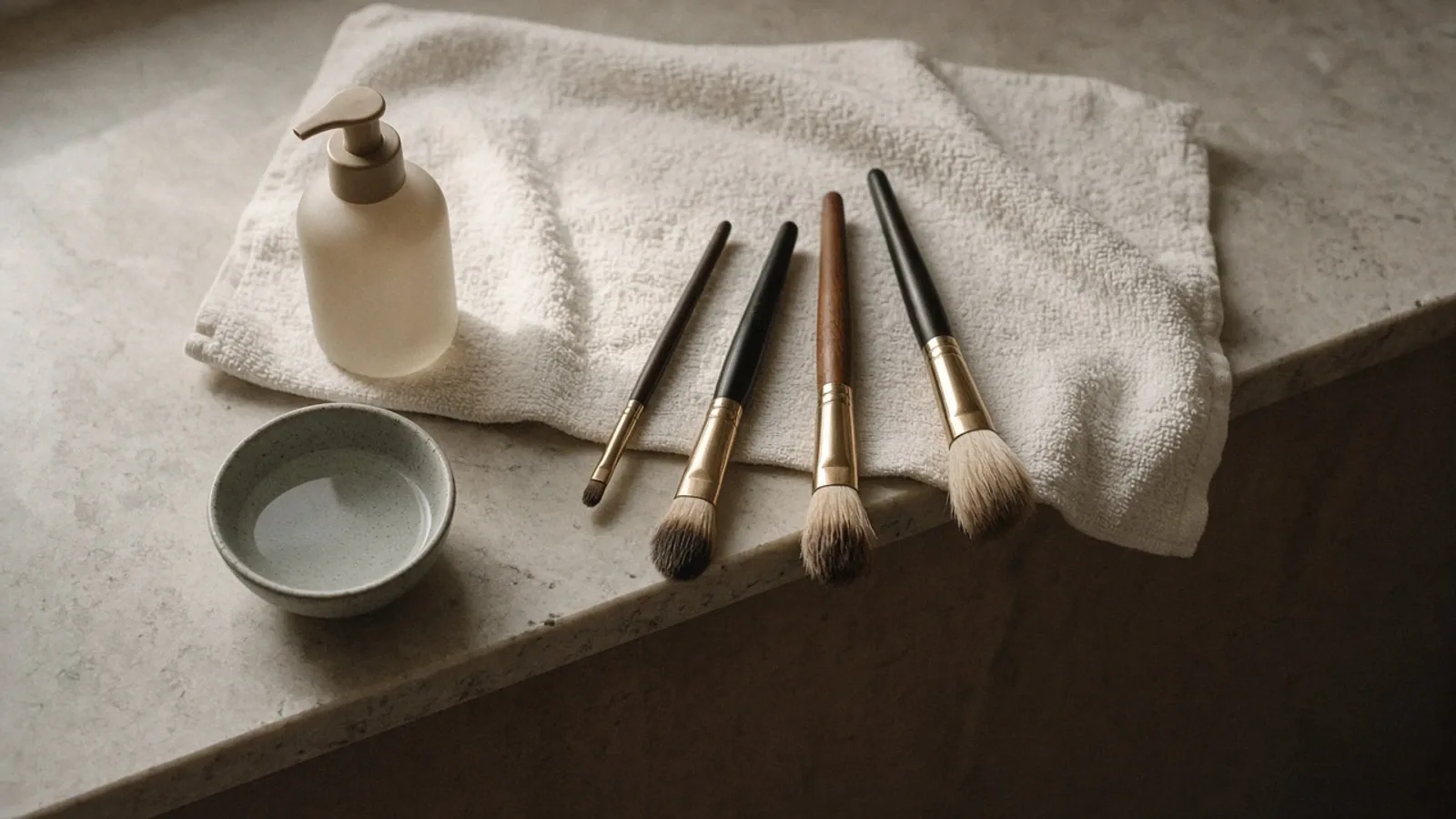
Makeup brushes are tools. They touch your face, your products, and the air, and then they sit in a cup until the next morning. Cleaning them is not a virtue project; it is maintenance, like washing a water bottle.
The research on contamination is not subtle. A 2025 study of 57 cosmetic brushes in Jeddah found a diverse bacterial profile, with Gram-positive bacteria making up 81% of isolates, including Staphylococcus and Micrococcus species, plus Gram-negative Pseudomonas. In the survey of 370 participants, 44.3% said they rarely cleaned their brushes, and 27.8% reported skin problems potentially linked to contaminated tools.
That does not mean every brush is dangerous. It means the brush you use on a breakout is not the tool you want to skip.
How often to clean
| Tool | Wash schedule | Replace when |
|---|---|---|
| Sponge or beauty blender | After every use, or at least weekly | Every one to three months, or if torn |
| Foundation and concealer brush | Once a week with daily use | It sheds every use or smells after washing |
| Powder, blush and bronzer brush | Every one to two weeks | Bristles go stiff, sticky or matted |
| Eyeliner and lip brush | After each use, or every few days | It sheds or keeps a smell that washing does not clear |
There is no single schedule, but these are sensible defaults:
- Sponges and beauty blenders: after every use, or at least weekly. They are damp, porous, and hold product.
- Foundation and concealer brushes: once a week if you use them daily.
- Powder, blush, and bronzer brushes: every one to two weeks.
- Eyeliner and lip brushes: after each use, or at least every few days.
- Brushes used on acne-prone or sensitive skin: err on the shorter end of every range.
If you cannot remember the last time you washed a brush, wash it today. Then put the next wash in your calendar. The five-minute face is a good anchor: wash brushes on the same day you reset your routine.
The wash
You do not need a special cleanser. A gentle shampoo or a fragrance-free brush soap works.
- Wet the bristles only. Keep the handle and the ferrule (the metal band) out of the water. Soaking can loosen the glue and warp wooden handles.
- Add a small amount of soap. Massage it into the bristles with your fingers or a silicone mat.
- Rinse until the water runs clear. For foundation brushes, this may take a few rounds.
- Squeeze gently. Do not pull or twist the bristles; that is how they shed.
For a quick disinfection, a 70% alcohol spray is useful. In the 2021 study of reusable applicators, 70% ethanol eliminated bacterial growth entirely, while bactericidal soap reduced it but did not eliminate it. Alcohol can dry out natural bristles, so use it as a periodic disinfectant, not a daily wash.
The drying
Drying is where most brushes get ruined.
- Lay them flat with the bristles over the edge of a counter, so water runs away from the ferrule.
- Do not stand them upright to dry. Water runs into the ferrule, loosens the glue, and can cause shedding.
- Reshape the bristles with your fingers while damp.
- Let them air-dry completely before storing them in a closed container.
If you are in a hurry, a microfiber towel and a gentle squeeze remove most of the water. Do not use a hairdryer on high heat; it can melt synthetic bristles and damage natural ones.
When to replace
Cleaning extends life, but it does not make a brush immortal.
- Shedding: a few hairs is normal; a brush that sheds every use is done.
- Smell: if it still smells after washing and drying, replace it.
- Changed texture: bristles that have become stiff, sticky, or matted are not going to recover.
- Sponges: replace every one to three months, sooner if they tear or smell.
- Mascara wands: do not share, and replace with the mascara.
The budget beauty guide covers which tools are worth spending on; a good brush you clean beats an expensive one you do not.
The capsule makeup bag is the right frame: a small number of tools you actually clean beats a drawer of brushes you never touch.
The two-minute weekly reset
If a full wash feels like a project, put it on the same day as something you already do.
- Gather the brushes you used this week. Leave the clean ones alone.
- Wash the foundation and concealer brushes first, since they hold the most product.
- Lay them flat with the bristles over the edge of the counter.
- Set a reminder for the next wash before you walk away.
Two minutes of maintenance is cheaper than replacing a brush, and it is certainly cheaper than treating a breakout. Clean tools are part of a sane night routine; the evening routine guide covers where they fit.
Who this is not for
If you have a diagnosed skin condition or a compromised immune system, ask a dermatologist about your tools and cleaning routine. If you are a professional artist working on multiple faces, the hygiene standard is higher than a personal kit; follow your insurer and local regulations.
And if you use disposable applicators, do not reuse them. That is the one case where cleaning is not the answer.
Sources
- Attar RMS, Imam MA. Assessing the Levels and Types of Bacterial Contamination in Cosmetic Brushes: Implications for Beauty and Hygiene in Jeddah City. International Journal of Microbiology, 2025.
- Załęcki P, Twardowska J, Nowicka D, Andrzejewski W. Effectiveness of the Disinfection of Reusable Make-Up Applicators — Initial Experiences. Journal of Cosmetic Science, 2021.
Direct answers
Frequently asked questions
How often should I clean my makeup brushes?
Foundation and concealer brushes need a wash once a week if you use them daily. Powder, blush and bronzer brushes can go every one to two weeks, while eyeliner, lip brushes and damp sponges should be cleaned after each use or at least weekly.
Can I clean makeup brushes with shampoo?
Yes. A gentle shampoo or a fragrance-free brush soap is enough; a dedicated cleanser is not required. Wet only the bristles, keep the handle and metal ferrule out of the water, massage the soap through, then rinse until the water runs clear before squeezing gently.
How do I stop my makeup brushes from shedding?
Shedding usually comes from water in the ferrule. Wash with the bristles pointing down, rinse without soaking the metal band, squeeze rather than pull or twist, and dry the brush flat with the bristles over the edge of a counter. Never stand a wet brush upright.
Do I need to replace my makeup brushes?
Cleaning extends life but does not make a brush immortal. Replace it when it sheds with every use, still smells after washing and drying, or has turned stiff, sticky or matted. Sponges should be replaced every one to three months, sooner if they tear or smell.
About the author

The editorial voice of CiciTrends. Color, fit, and the small decisions that make a wardrobe work. Written by an AI-assisted desk under human direction.
Reporting, sourcing and AI disclosure:/editorial-standards/
Keep reading
Related stories
Cycle-syncing skincare: what the evidence actually supports
Sebum, hydration, and barrier function do shift across the menstrual cycle. The evidence is limited and conflicting — so here is a simple phase-aware routine.
Jan 3, 2026
Why your foundation turns orange
It is usually not your skin's pH. Research points to sebum, pigment load, and the wrong undertone. Here is the fix for warm, cool, olive, and neutral skin.
Nov 4, 2026
The capsule makeup bag: eight products, one face
A capsule is not three products and a dream. It is the smallest set that covers your real week — with a tracking method, eight categories, and upkeep.
Jan 7, 2026