Bold gold: the point where the undertone rule stops applying
In short
Once gold jewelry is large, architectural, and worn over fabric, contrast and scale matter more than undertone matching. How to style bold gold off-undertone.
- Bold gold works off-undertone once the piece is large, architectural, and worn over fabric rather than against the skin.
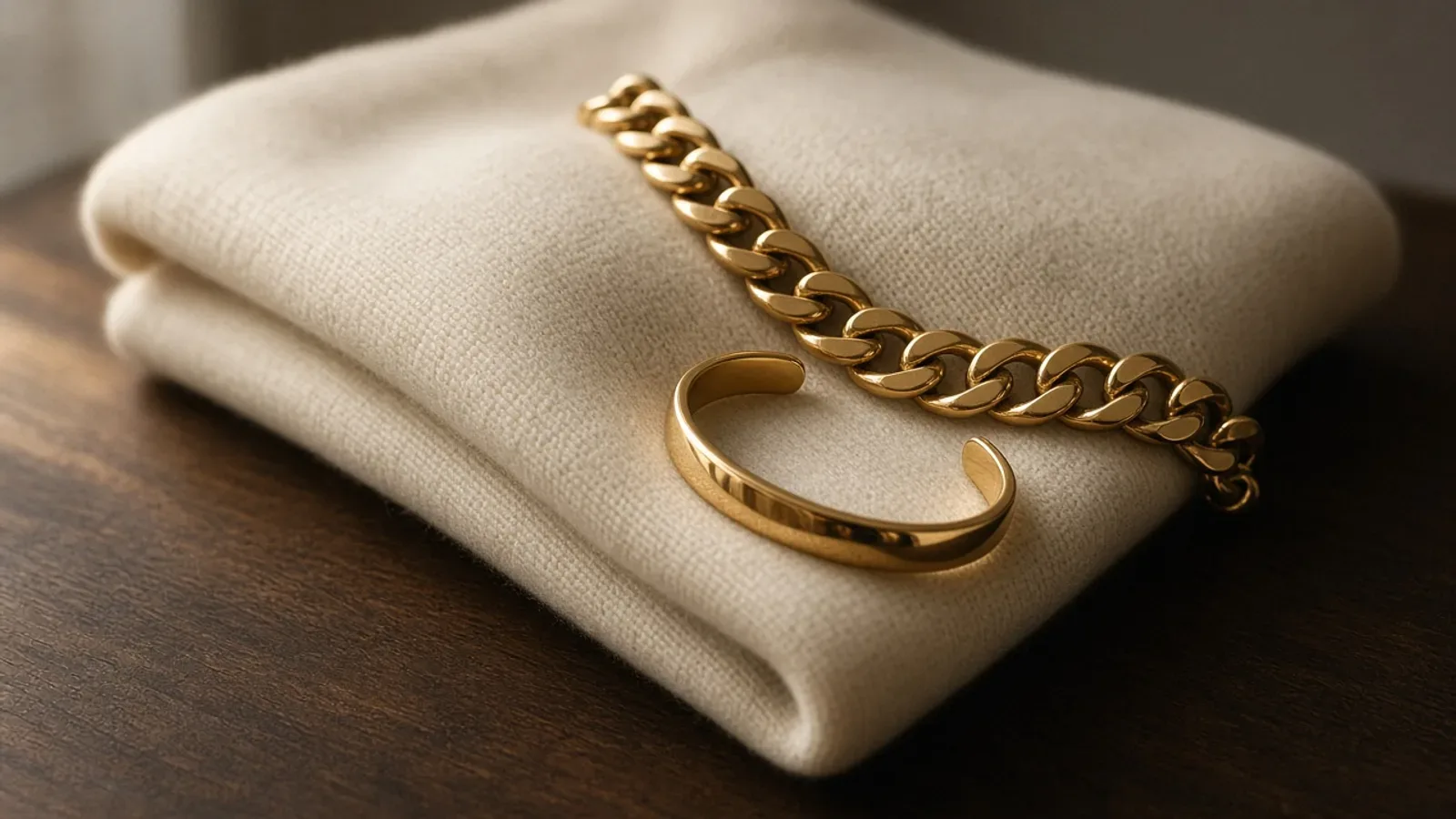
- Undertone matching still matters for metal thinner than a pencil line: a 5-millimeter chain disappears into a cool-toned neck, while a 15-millimeter curb chain projects a shadow.
- Test a bold piece from three feet away rather than at the wrist: if it reads as a deliberate object on the silhouette, undertone is not the deciding factor.
By Cici
The short answer: yes, once the piece is large enough
Yes. If your undertones run cool, you can still wear the big gold thing, provided the piece is large, architectural, and worn away from bare skin. Undertone is a tiebreaker for bold gold, not a gatekeeper; contrast and scale do more of the work.
The hesitation is understandable. You see chunky gold hoops, heavy curb chains, and rigid cuffs on colleagues, in shop windows, in November editorials. A stylist, or a friend, once held a silver bangle to your wrist, looked at the veins there, and told you gold would drain you. So you left the whole category on the shelf, and a strict rule made a decision you never really tested.
Stand in front of a jeweller’s window at dusk, though, and the gold in it does not look like a colour swatch. It catches the light, throws a shadow, and moves against cloth. That is what the flat-swatch framing misses: a bold piece behaves like an object, not like a tint held next to your skin.
Where undertone matching actually earns its keep
Delicate pieces, meaning thin chains, small studs, and slim bangles, sit close to the wrist, neck, or earlobe. There, your skin colour dominates the frame. A soft 14k yellow gold chain against very pink-cool skin can look separate, almost brassy; a silver or white gold chain recedes and blends. The classic gold versus silver undertone test works for fine jewelry because the pieces are small, close, and subtle. The test measures what disappears into your skin.
A metal thinner than a pencil line reads as an extension of you. Small hoops, delicate pendants, and fine chain bracelets therefore need to match undertone: when a piece disappears, it either flatters the skin or fights it. There is no middle ground, and you can usually see which one it is doing in a bathroom mirror.
What changes at scale
Three properties change the contrast maths: volume, finish, and distance from skin.
Volume gives a piece its own architecture. A thick cuff, a heavy link necklace, or a sculptural hoop measuring 40 millimetres reads as a solid object, not a line of metal. A high-polish finish produces hard reflections, so the piece registers first as a bright object and only second as a colour. Distance from skin matters most: worn over a high-neck knit, a blazer lapel, or a cashmere sleeve, the gold no longer shares a plane with your undertone. It picks up the clothing colour and the room light instead.
Treat the sizes as working benchmarks rather than measured thresholds. A 5-millimetre chain disappears into a cool-toned neck while a 15-millimetre curb chain throws a shadow. You are buying the shadow, not the metal colour. At that weight the piece reads as a separate object, like a handbag or a shoe.
That is also why a dark brown belt or an oxblood shoe works regardless of skin tone. Clothes are not matched to undertone, and jewelry that behaves like clothing should not be either. A chunky chain over a navy knit still reads as punctuation under the changing-room light, which is usually the least flattering light you will ever stand in.
The myth problem: strict color-season rules deserve skepticism
Undertone gets taught as a hard classification: warm or cool, spring or winter, gold or silver. In practice it shifts with sun, makeup, hair colour, and age, and two people with the same depth of skin can read differently under the same bulb. When the rule is taught as absolute, it produces false prohibitions: cool-toned women avoiding all yellow gold, warm-toned women skipping silver altogether.
When a stylist tells you that gold is off-limits on the strength of one wrist test, that is overfitting. The stricter versions of seasonal typing ignore visual weight. A metal strip held to the face can show a difference, but it cannot predict how a 60-gram chain will read from across a room. The same contrast that makes a washed-out pastel look tiring can make a chunky gold necklace look crisp and deliberate. For more on how contrast affects color choices, see the colors that drain you. In lipstick, undertone without contrast leads to bad advice; the same mistake happens with jewelry. The lipstick by color season guide shows why undertone alone is not enough.
How to wear bold gold off-undertone
| Piece type | Scale signal | Does undertone still decide? |
|---|---|---|
| Thin chain or small stud | Thinner than a pencil line | Yes, match the metal to the skin |
| Mid-weight chain | Around 5 millimeters | Yes, it still reads as a skin extension |
| Curb chain | Around 15 millimeters | No, the shadow does the work |
| Sculptural hoop or cuff | 40 millimeters or a 60-gram cuff | No, it reads as a separate object |
The most direct route is to wear the gold over fabric rather than against skin. A turtleneck, a crewneck sweater, or a collared shirt places the gold on a field of cloth, not on a wrist or collarbone. You get the light and presence of gold without the side-by-side comparison with your skin. A chunky gold chain over a navy knit reads as punctuation, not as a flush test. A cream sweater, a black blazer, or an olive tee creates a neutral field, and the gold becomes the incident.
Another route is layering with the silver you already own. A mixed-metal stack, one gold cuff beside silver rings or a gold chain over a silver chain, changes the reading. Because the eye sees contrast between the metals, it stops comparing each one to your skin. Mixed metal signals that you meant it. A cool-undertone woman who already owns silver can add one gold piece in the same volume for a deliberate clash, and the same stacking solves the reverse problem: a warm-toned person can wear a single chunky silver piece.
The simplest route is one piece only. The more gold you add near the face, the more undertone becomes part of the comparison. A single sculptural cuff, one pair of oversized hoops, or one rigid choker against a dark top reads as a prop rather than a metal match. With one bold gold piece, scale does all the work. None of this requires abandoning the metal you already wear; it only gives the gold a stage where undertone is not the backdrop.
When to ignore this advice
The one case where undertone still gates gold is a small, tight-fitting, very yellow-gold piece against very pink skin. If your skin is strongly cool-pink and a thin 24k yellow gold band or a small snug hoop sits directly on the earlobe or wrist, the colour can look jaundiced next to the flush. That is the small, close, subtle scenario again.
A lower-karat gold with more copper, gold vermeil over silver, or a stack with a white metal can break the yellow with shine. A matte or brushed finish makes the yellow less sharp; high polish amplifies it, while a satin finish turns gold more neutral.
But if the piece is large, architectural, and worn away from skin, the rule stops applying. Counter advice about fine jewelry does not scale up to hardware. As a check rather than a measured test, put the piece on and step three feet from a mirror, looking at the whole silhouette rather than the metal-to-skin edge. If it reads as a deliberate object, the answer is yes. If what bothers you is the colour rather than the size, try a satin finish or a lower karat before you give up on gold entirely.
Sources
- Buying guide: white, yellow and rose gold. Gemological Institute of America, on how alloy metals change gold colour.
- Hallmarking: practical guidance. UK government guidance on precious metal fineness and karat marks.
Direct answers
Frequently asked questions
Can someone with cool undertones wear bold gold jewelry?
Yes, when the piece is large, architectural, and worn over fabric or layered with silver. The undertone rule mainly applies to small, skin-adjacent pieces, where the metal needs to blend with skin. For bold gold, contrast and scale matter more than undertone matching.
Should undertone still be matched for small gold jewelry?
Yes. Thin chains, small studs, and slim bangles sit close to the skin and read as a skin extension. If the metal is smaller than a pencil line, undertone matching helps the piece blend rather than fight the skin. Bold pieces that hold their own as objects do not follow the same rule.
Can you mix gold and silver jewellery in one outfit?
Yes. A gold cuff beside silver rings, or a gold chain layered over a silver chain, makes the eye compare the two metals rather than each one to your skin. Mixed metal reads as intentional, and it lets a cool-undertone woman add one bold gold piece in the same volume.
What gold finish is easiest to wear if gold usually looks brassy on you?
A satin or brushed finish softens the yellow, while high polish amplifies it. Lower-karat gold with more copper, gold vermeil over silver, or a stack with a white metal can also break the yellow. Try the piece over a navy knit before deciding against it.
Filed under
About the author

The editorial voice of CiciTrends. Color, fit, and the small decisions that make a wardrobe work. Written by an AI-assisted desk under human direction.
Reporting, sourcing and AI disclosure:/editorial-standards/
Keep reading
Related stories
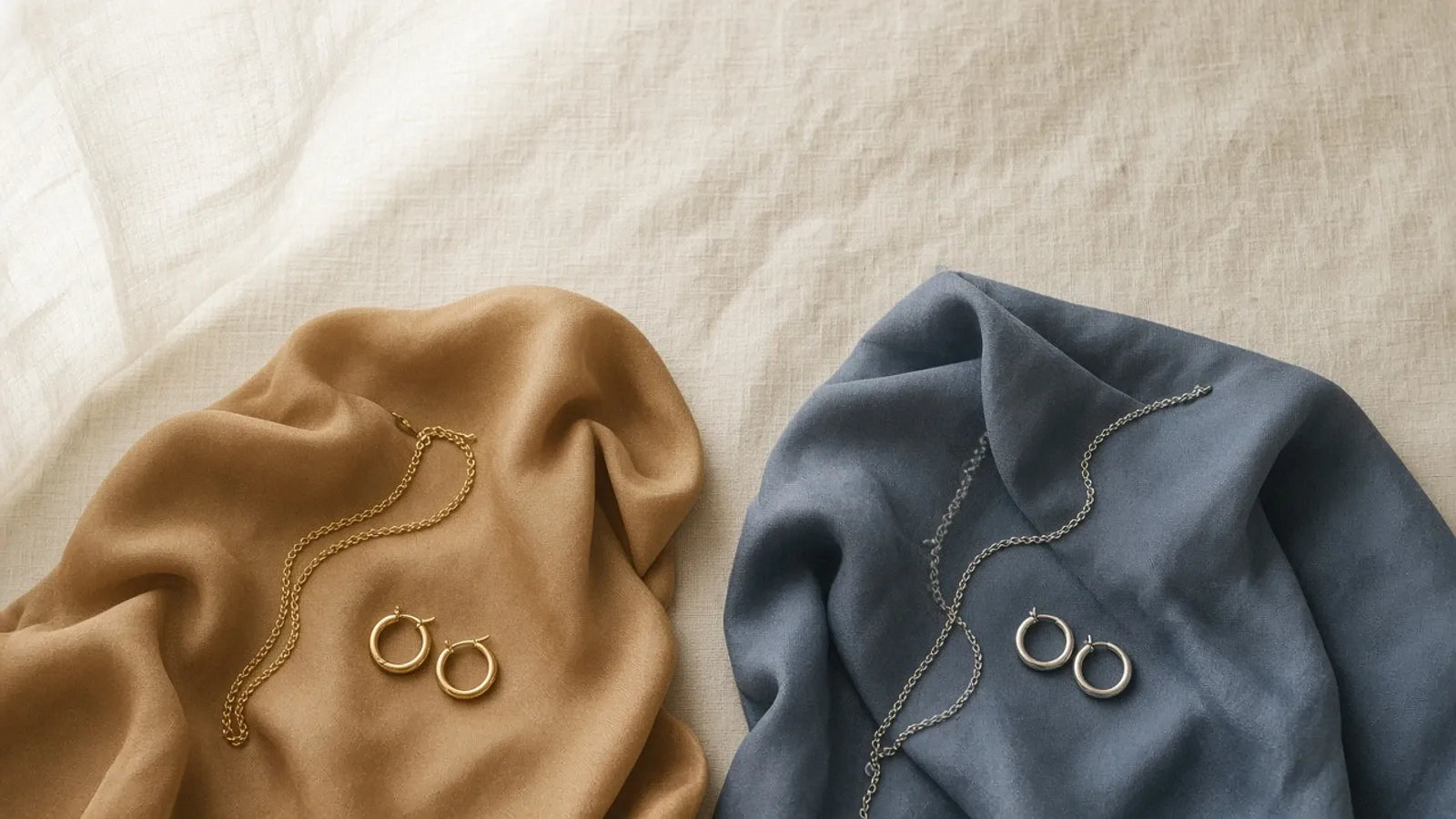
Am I gold or silver? The undertone test, explained
Three quick tests — veins, jewelry, and white vs cream — plus the seasonal metal map, mixed-metal rules, and what to do with inherited pieces.
Jan 12, 2026
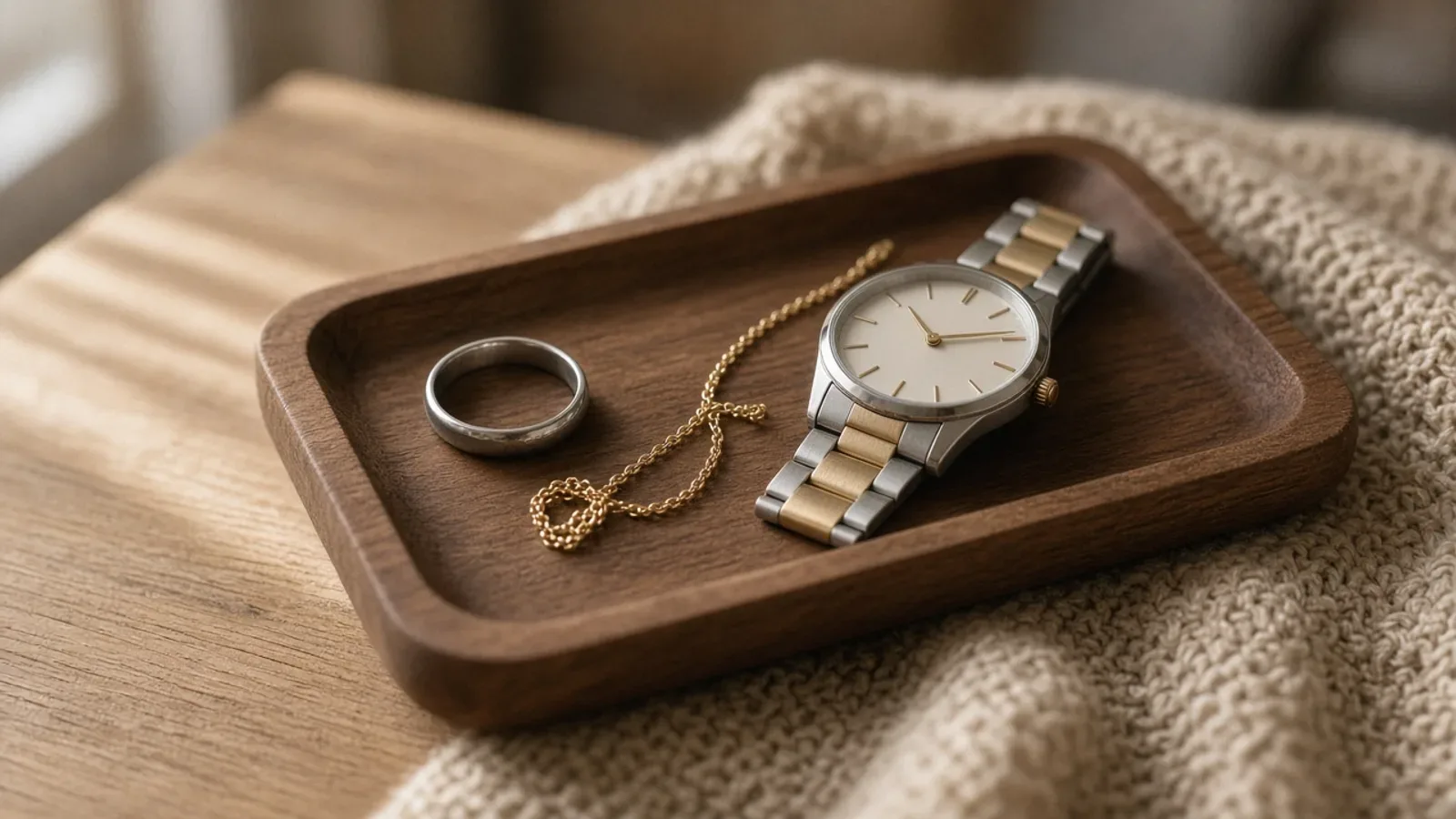
Mixed metals: the 70/30 rule that replaces the gold-or-silver test
The gold or silver test dead-ends on a real jewelry box. A working rule for mixing metals: a 70/30 split, one repeated finish, and a bridge piece that works.
Nov 6, 2026
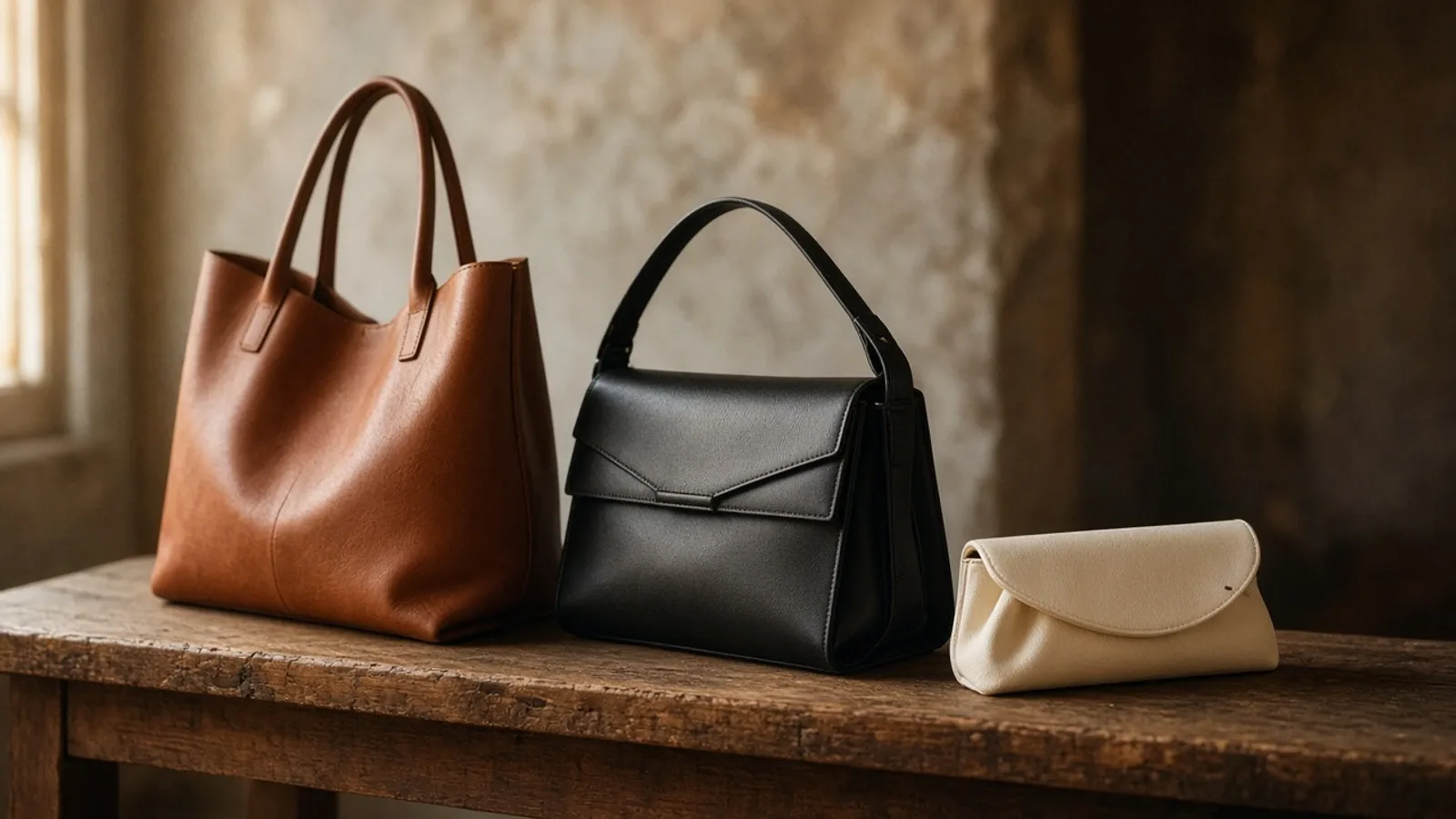
The three-bag rotation: the only handbags you need
A bag collection is usually a category problem. Three bags — everyday, shoulder, evening — in your palette cover almost every day. Here is how to choose them.
Jan 3, 2026