Am I gold or silver? The undertone test, explained
In short
Three quick tests — veins, jewelry, and white vs cream — plus the seasonal metal map, mixed-metal rules, and what to do with inherited pieces.
- Read greenish wrist veins as warm, blue or purple veins as cool and a mix of both as neutral, then confirm the result with metal held near your face in daylight.
- Hold gold and silver against your inner wrist and then your face: the metal that makes your skin look clearer and calmer is your dominant metal, and the other becomes an accent.
- For mixed metals, keep the dominant metal near your face in earrings, necklace and glasses, place the other in bracelets or rings, and repeat that accent only once.
- When the vein test and the fabric test disagree, trust the fabric for the outfit you are wearing now; skin does not change, but the cloth behind the metal does.
By Cici
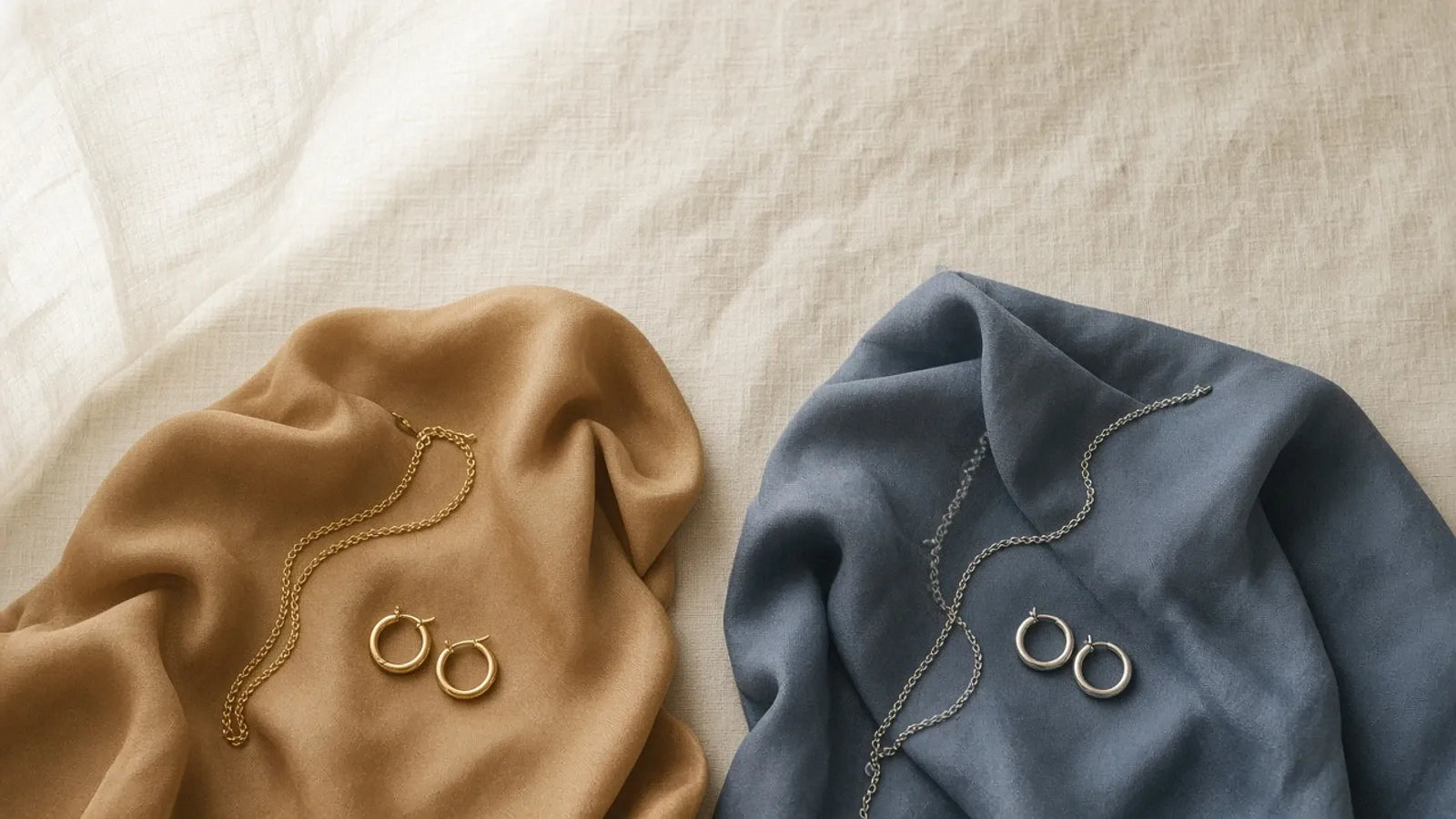
If gold makes your skin look alive and silver makes it look gray, you are warm. If silver clears your complexion and gold makes it look yellow, you are cool. If both work, you are neutral or high-clarity.
That is the short answer. The longer answer is that “gold or silver” is a question about undertone, contrast, and the company the metal keeps — not a rule about which metal is better.
Test 1: the vein check
Look at the veins on the inside of your wrist in daylight.
- Greenish veins usually suggest a warm undertone.
- Blue or purple veins usually suggest a cool undertone.
- A mix of blue and green usually suggests neutral.
The vein test is a starting point, not a verdict. Veins sit under skin, and skin has its own color. If the result is ambiguous, use the jewelry test.
Test 2: the jewelry test
Hold a gold-toned piece and a silver-toned piece against your inner wrist, then near your face. Use natural light. Look at your skin, not the jewelry.
- Gold makes your skin look warmer, clearer, and more even → warm.
- Silver makes your skin look clearer and calmer → cool.
- Both look fine, but one makes your face look brighter → that is your dominant metal.
The wrong metal often makes the skin look slightly sallow, gray, or tired. The right one looks like you slept well. The difference is subtle, which is why daylight matters.
Test 3: white vs cream
Hold a pure white cloth and a cream or ivory cloth under your chin.
- White looks crisp and cream looks dull → cool.
- Cream looks soft and white looks harsh → warm.
- Both work → neutral, or you have enough contrast that both can work.
This is the same temperature logic that governs your clothing capsule. The neutral palette guide applies it to the base colors you wear most.
The seasonal metal map
The CiciTrends Color System maps each of the 12 seasons to a metal family. This is the system’s analysis, not a universal law; use it as a starting point and trust your mirror.
Warm seasons
| Season | Best metals | Notes |
|---|---|---|
| Light Spring | Light gold, champagne gold | Keep the finish light and polished |
| True Spring | Yellow gold, warm brass | Bright, saturated gold works |
| Soft Autumn | Matte gold, bronze, brass | Brushed or antiqued finishes |
| True Autumn | Yellow gold, copper, bronze | Rich, earthy metals |
| Deep Autumn | Deep gold, bronze, copper | Heavier pieces can carry the depth |
Cool seasons
| Season | Best metals | Notes |
|---|---|---|
| Light Summer | Silver, white gold | Delicate, polished pieces |
| True Summer | Silver, platinum, white gold | Cool and soft |
| Deep Winter | Silver, platinum, gunmetal | High contrast |
| True Winter | Silver, platinum, white gold | Crisp, bright finishes |
| Bright Winter | Polished silver, white gold | Shine matters as much as temperature |
The in-betweens
| Season | Best metals | Notes |
|---|---|---|
| Bright Spring | Polished gold or silver | Clarity matters more than warmth |
| Soft Summer | Rose gold, matte silver | Muted, blended finishes |
| Soft Autumn | Rose gold, matte gold | The bridge metal season |
Rose gold is the useful bridge for the soft seasons: warm enough for autumn, pink enough for summer. If yellow gold feels too yellow and silver feels too cold, start there.
What about olive and neutral undertones?
Olive skin often reads neutral or warm, but the surface can have a green cast that makes both yellow gold and bright silver look wrong. In that case, look at the finish as well as the temperature:
- Brushed or satin gold is often easier than high-shine yellow gold.
- Gunmetal or oxidized silver can work better than bright sterling.
- Rose gold often flatters olive skin because the pink balances the green.
The test is still the same: hold the metal near your face in daylight and look at your skin, not the jewelry.
Mixed metals: how to do it
Mixed metals are not a mistake. They are a ratio.
- Keep your dominant metal near your face. Earrings, necklace, and glasses frames should be the metal that suits your undertone.
- Use the other metal further away. Bracelets, rings, and a watch can be the accent.
- Repeat the accent once. If you wear a silver ring, a silver detail on the bag or shoe makes it look intentional.
- Do not split the face 50/50. A gold necklace and silver earrings can work, but one should clearly lead.
The third-piece rule applies here: one focal point, then restraint.
Inherited jewelry
Many people have a piece in the “wrong” metal. A grandmother’s silver locket, a family ring, a watch that does not match your palette.
Wear it. Sentimental value is not a color analysis problem.
- Move it away from your face if the metal fights your undertone.
- Balance it with your dominant metal so the overall look reads intentional.
- Wear it for the meaning, not for the photograph.
The goal is not a perfect palette. It is a wardrobe that feels like yours.
FAQ
Can I wear both gold and silver?
Yes. Keep the metal that suits you best closest to your face and use the other as an accent further away.
What if I have neutral undertones?
You can usually wear both. Choose by contrast and finish, and trust the mirror over the category.
Is rose gold warm or cool?
Warm-leaning, but the pink makes it a useful bridge for soft seasons and olive skin.
Does hair color change which metal I should wear?
It can change your contrast, so retest near your face after a significant color change.
Can I wear inherited jewelry that is not my metal?
Yes. Sentimental value matters more than color theory. Balance it with your dominant metal or wear it away from your face.
Should I test gold or silver on my skin or on my clothes?
Both, for different questions. The wrist test reads undertone; the fabric test reads what the metal does against the colors you actually wear. In winter, the fabric is usually what people see.
What if the vein test and the fabric test disagree?
Trust the fabric for the outfit in front of you. Skin does not change much; the surface behind the metal does. If a chain dulls a charcoal knit, the undertone test was correct about skin and useless about the morning.
The one-minute answer
Stand in daylight. Hold gold near your face, then silver. Whichever makes your skin look clearer, calmer, and more alive is your dominant metal. Everything else is a variation.
If you want the full palette — clothing, makeup, and metals — take the color analysis quiz. It maps your season to the metals in this guide.
Sources
- American Academy of Dermatology. Skin care for all skin types.
- CiciTrends Color System. The 12 seasons. Internal framework used for the seasonal metal map.
Direct answers
Frequently asked questions
Can I wear both gold and silver?
Yes. Keep the metal that suits you best closest to your face, in earrings, necklace and glasses, and use the other metal further away in bracelets, rings, or a watch. The dominant metal should match your undertone; the accent can be the opposite.
What if I have neutral undertones?
Neutral undertones can usually wear both. Choose by contrast and finish: polished metals for high-contrast coloring, matte or brushed finishes for softer coloring. If one metal still makes your skin look tired, trust that over the category.
Is rose gold warm or cool?
Rose gold is warm-leaning because of the copper, but the pink can flatter some cool and soft seasons too. It is often the best bridge metal for Soft Autumn, Soft Summer, and anyone who finds yellow gold too yellow and silver too cold.
Does hair color change which metal I should wear?
Hair color can change your contrast and the overall temperature near your face, so it can change which metal looks best. Test near your face in daylight after a color change rather than assuming your old metal still works.
Can I wear inherited jewelry that is not my metal?
Yes. Sentimental value matters more than color theory. Wear the piece away from your face, or balance it with a dominant metal that suits you. A silver locket on a warm-toned person is not a style failure.
Should I test gold or silver on my skin or on my clothes?
Both, for different questions. The wrist test reads undertone; the fabric test reads what the metal does against the colors you actually wear. In winter, the fabric is usually what people see.
What if the vein test and the fabric test disagree?
Trust the fabric for the outfit in front of you. Skin does not change much; the surface behind the metal does. If a chain dulls a charcoal knit, the undertone test was correct about skin and useless about the morning.
About the author

The editorial voice of CiciTrends. Color, fit, and the small decisions that make a wardrobe work. Written by an AI-assisted desk under human direction.
Reporting, sourcing and AI disclosure:/editorial-standards/
Keep reading
Related stories
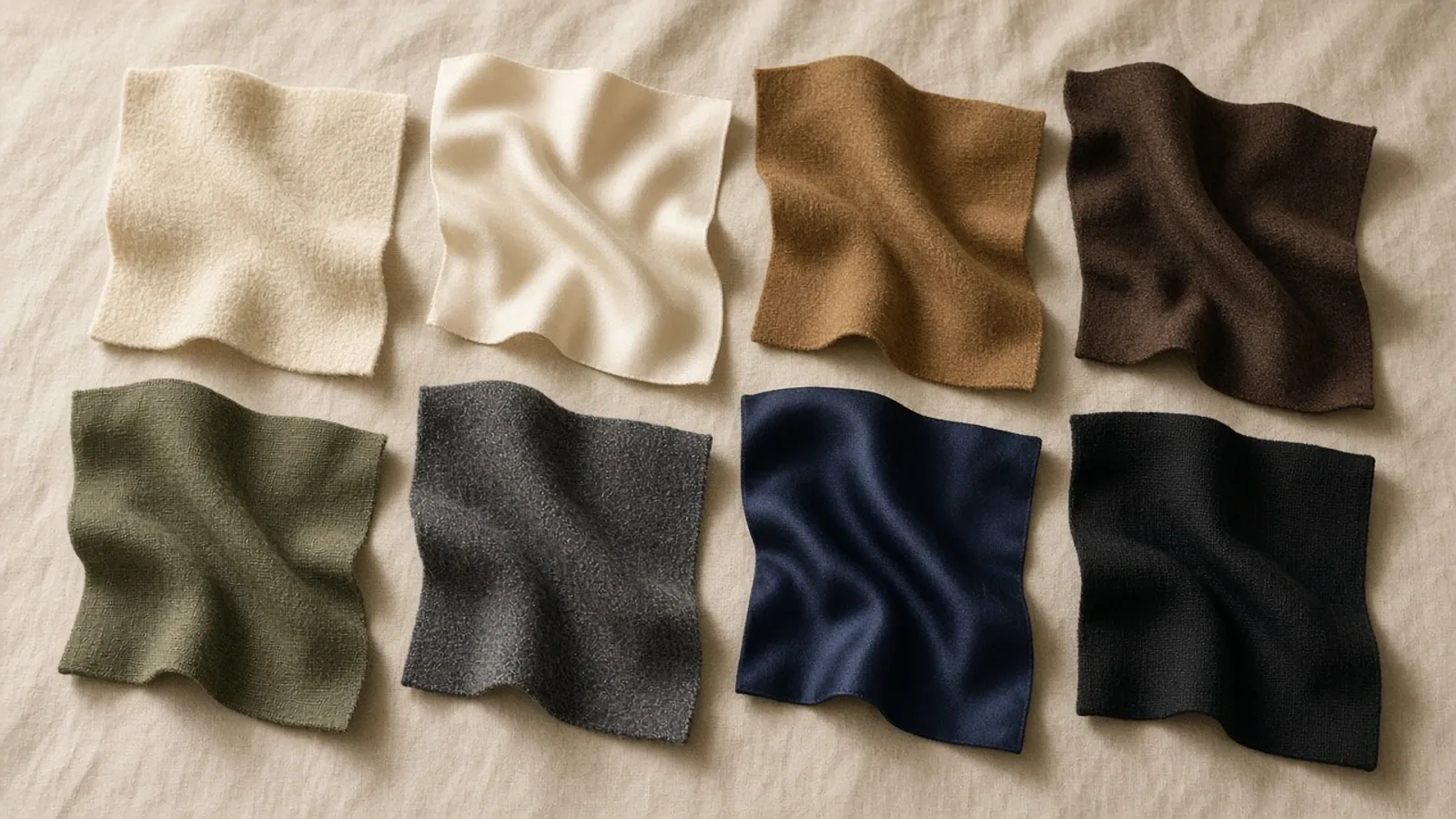
The 8 neutrals every palette needs
All 60 neutrals in the Color System were counted. Only two colors repeat in five seasons. The eight neutral roles worth buying, and the black almost nobody should own.
Nov 4, 2026
The colors that drain you (and the ones that don't)
A color can make you look tired without changing your face. The contrast and undertone rules behind it, and how to test a shade in daylight.
Jan 5, 2026
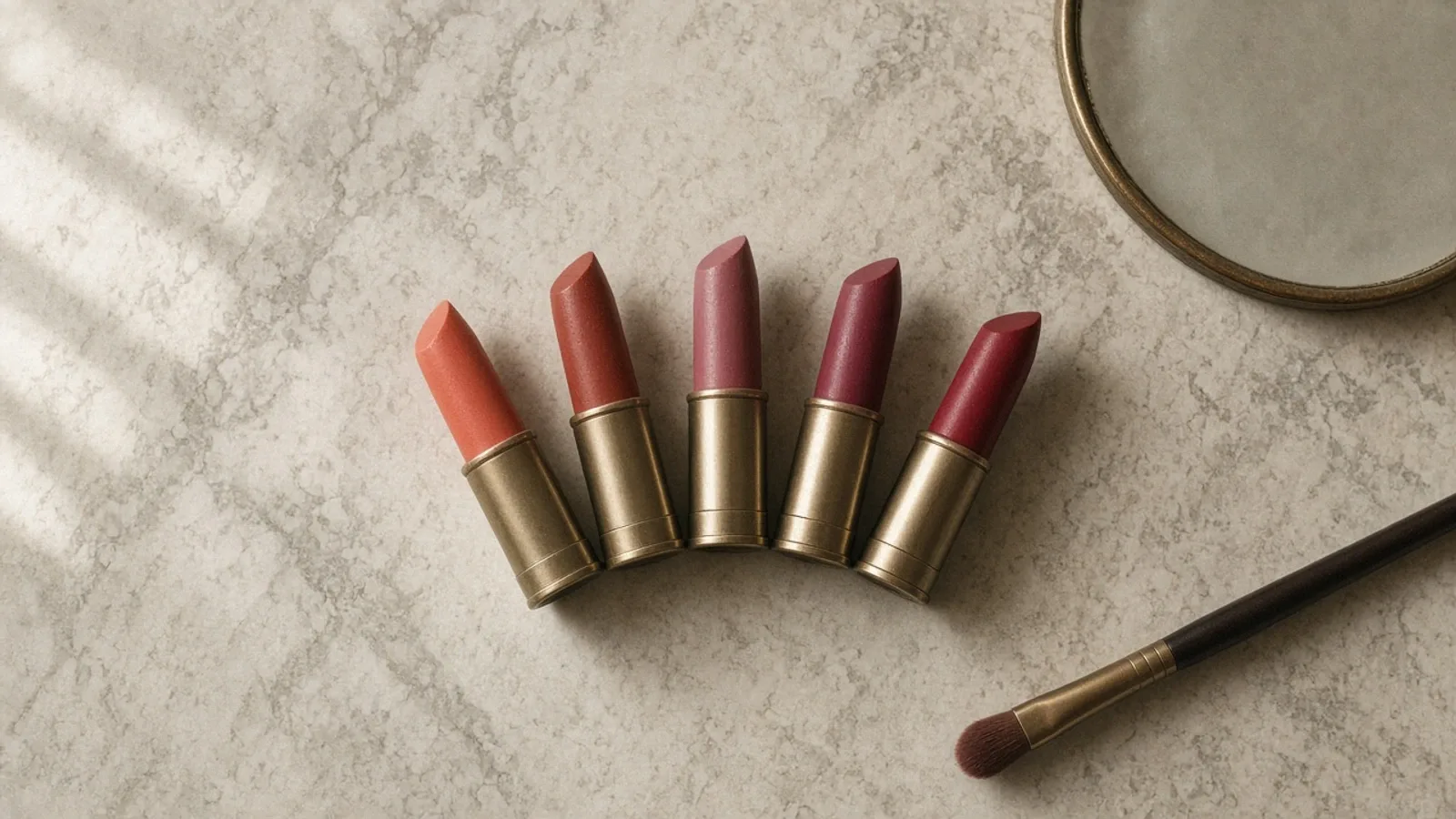
Lipstick by color season: the shades that work
Most lipstick advice fails because it ignores undertone and contrast. A practical map of the 12 seasons, the reds, the nudes, and how to test in daylight.
Jan 7, 2026