At-home date night: seven ideas that actually feel like a date
In short
Staying in is not a downgrade. The difference between parallel screen time and a real date is a plan, a time, and a little effort.
- An at-home date needs three things: a set time, phones in another room, and one shared activity chosen in advance, because the decision is the friction that kills the evening.
- Keep the date to about an hour, end before either of you is exhausted, and clean up together for five minutes, so the ritual is repeatable rather than something to recover from.
- Rotate four formats across a month, cooking, a game, a living-room picnic with a film, and a conversation date, so no week requires a fresh planning decision.
By Cici
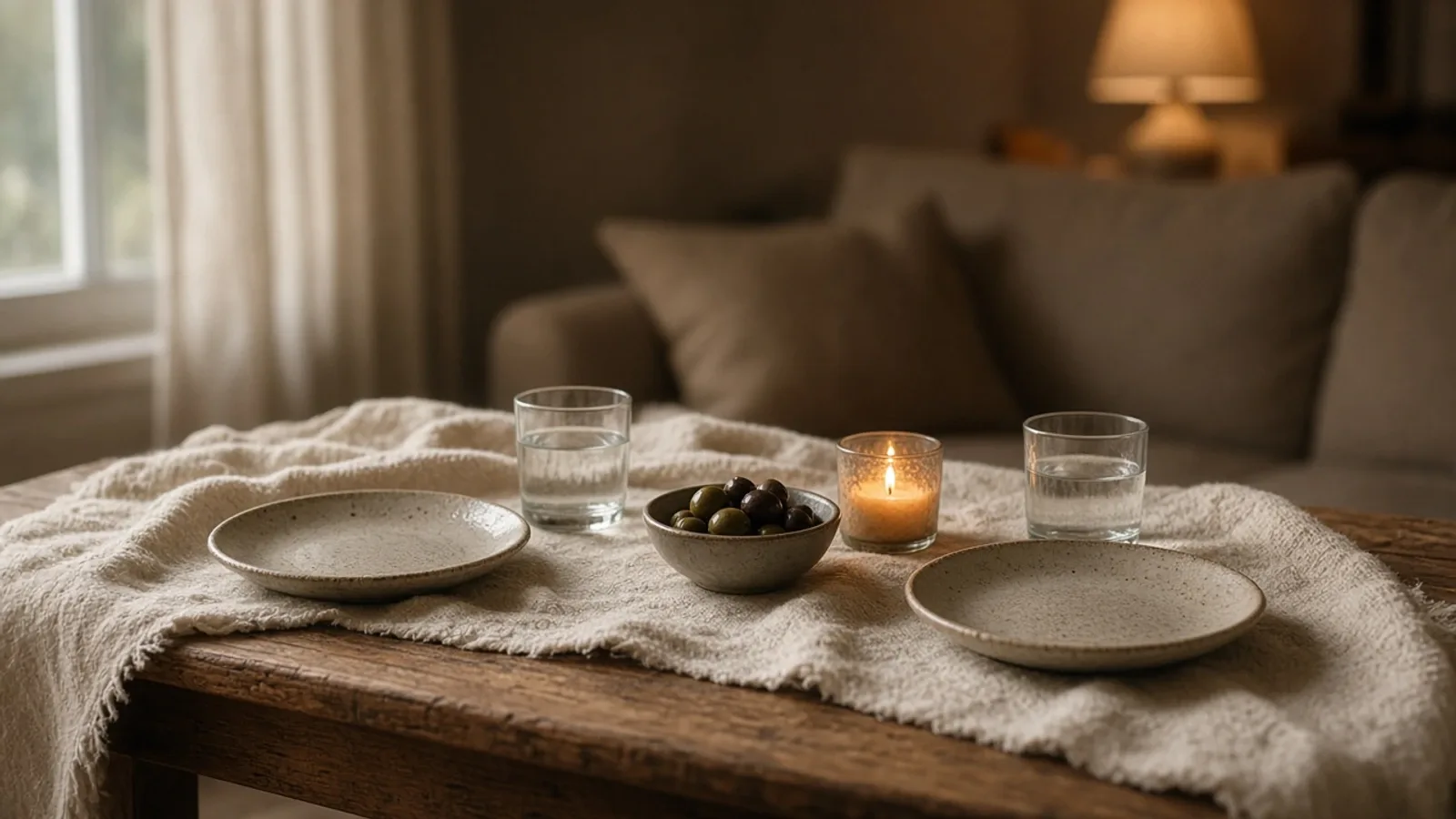
Staying in is not a downgrade. The difference between a date and another night on the couch is not the location; it is the plan.
Parallel screen time is not connection. A shared activity, a set time, and a little effort are.
Why at-home dates work
- They are affordable. No sitter, no restaurant minimum, no parking.
- They are repeatable. A Tuesday date is possible when it is in the living room.
- They lower the pressure. You can be tired and still show up.
- They are private. No crowd, no noise, no performance.
The APA’s relationships guidance emphasizes ongoing connection, not grand gestures. A small, regular ritual fits that better than an occasional big night out.
The seven formats
| Format | What it needs | Why it works |
|---|---|---|
| Cooking date | One dish neither of you has made | The activity is the date and the food is the bonus |
| Tasting | Three things to compare, tasted blind | Scoring gives you something to argue about |
| Throwback film | A film from the year you met, popcorn, phones elsewhere | Shared history does the talking |
| Game | Something short and competitive | Short enough that no one gets bored |
| Living-room picnic | A blanket, small plates, no table | The change of scene is the point |
| Conversation date | A question deck and twenty minutes | No screens and no logistics |
1. The cooking date
Choose one dish neither of you has made. Cook it together. Eat it at the table, not on the couch. The activity is the date; the food is the bonus.
2. The tasting
Pick three things to compare: chocolate, cheese, tea, sparkling water, olive oil. Taste them blind, score them, argue about the winner.
3. The throwback movie
Choose a film from the year you met, or one you both loved at 16. Make popcorn. Put the phones in another room.
4. The game
A card game, a board game, a two-player video game. Choose something short enough that no one gets bored and competitive enough that it is fun.
5. The living-room picnic
A blanket, a few small plates, a bottle of something. No table. The change of scene is the point.
6. The learn-something date
A short class, a language lesson, a craft kit, a dance video. Learn badly together.
7. The conversation date
Use a deck of questions or write your own. No screens, no logistics, no to-do list. Twenty minutes of actual conversation.
How to make it happen
- Put it on the calendar. A recurring day is better than “sometime.”
- Choose the activity in advance. The decision is the friction.
- Lower the food. Takeout, a simple pasta, or snacks. The cooking date is the exception.
- Put the phones away. A basket by the door.
- Set a loose end time. An hour is enough; longer is a bonus.
- Do not make it a test. If it is awkward, laugh and try another format.
The self-care on a budget guide applies the same logic: small and repeatable beats grand and rare.
A month of at-home dates
A rotation removes the planning decision:
- Week 1: cook one new dish.
- Week 2: game night.
- Week 3: living-room picnic and a film.
- Week 4: conversation date or a skill.
Repeat the month, or swap the order. The rotation is not a rule; it is a way to stop reinventing the evening every week.
One Tuesday that works
It is a Wednesday, you are both tired, and nobody has planned anything. This is the night the rotation earns its keep: week two is game night, so one of you finds the cards while the other makes tea and puts the phones in the basket by the door. You start at eight, play for forty minutes, and stop while it is still fun. The kitchen takes five minutes. Nothing about the evening is impressive, and that is the point. The format carried the decision, so the only effort left was showing up.
The same maintenance logic applies to friendship: a rhythm beats waiting for a free evening. The friendship maintenance guide covers the principle, and the Sunday reset is a good place to put the date on the calendar.
The end-of-night rule
A date that ends in a messy kitchen and a tired argument is not a ritual you will repeat.
- Clean up together for five minutes. Not a full reset; just the dishes and the table.
- End before you are exhausted. An hour is enough.
- Do not check your phones immediately. The transition matters.
- Say one thing you liked. A small close makes the next date easier.
The date is the shared attention, not the production. Protect the ending and the ritual survives. A date you can repeat is better than a date you have to recover from. Choose the repeatable version. Always choose it.
What not to do
- Do not call it a date if you are both scrolling. That is parallel time, not shared time.
- Do not over-plan. A production is harder to repeat.
- Do not use it to resolve a major conflict. A date is not a therapy session.
- Do not wait for a free evening. Make a small window.
- Do not compare it to going out. It is a different format, not a lesser one.
Who this is not for
If you live alone, the same formats work with a friend or as a solo ritual. If you and your partner prefer going out, go out; the point is shared attention, not staying home.
And if your relationship is in crisis, a date night is not a substitute for professional help. A couples therapist is the better next step.
Method and limits
This is a lifestyle guide derived from the CiciTrends self-care and routine principles. The relationship context is supported by the APA’s relationships guidance; the specific formats are editorial suggestions.
Sources
- American Psychological Association. Relationships.
Direct answers
Frequently asked questions
How do you have a date night at home?
Set a time, put the phones away, and choose one shared activity. The plan matters more than the food or the decor. A simple meal and a game can feel more like a date than a fancy dinner in front of separate screens.
What can you do at home that is not just watching TV?
Cook something new, do a tasting, play a game, have a living-room picnic, learn a skill together, or use a conversation deck. The point is a shared activity, not a passive one.
How do you keep date night from feeling like a chore?
Lower the production. Takeout is fine. A blanket on the floor is fine. The goal is connection, not a performance. Put it on the calendar and protect the time.
What if you have kids?
Use the time after bedtime, or trade childcare with another family. A at-home date does not require a sitter, but it does require a boundary around the time.
About the author

The editorial voice of CiciTrends. Color, fit, and the small decisions that make a wardrobe work. Written by an AI-assisted desk under human direction.
Reporting, sourcing and AI disclosure:/editorial-standards/
Keep reading
Related stories
The $50 Rule: Gifts That Read Expensive Because They Get Used
Most gifts under $50 fail because they're novelties. Spend the budget on one daily object — a better mug, a better cream — and skip what needs explaining.
Nov 5, 2026

Should you leave social media? A decision framework
The evidence on quitting is mixed, not moral. A platform-by-platform audit, a keep/limit/leave matrix, and how to leave without the dramatic return.
Jan 3, 2026

How to wash cashmere so it does not pill or stretch
A friction-point care method for winter knits: wash at 30C or cooler, dry flat, de-pill only when bone dry, and treat underarms, cuffs and strap line first.
Nov 11, 2026