Self-care on a budget: what actually helps
In short
Self-care is not a spending category. The free habits with the best evidence, the cheap versions worth paying for, and what to skip.
- Spend in this order: sleep, movement, daylight, food, people, and one stress tool, because all six can be free and the paid version is optional.
- A 20-minute walk outdoors counts as both movement and daylight, which makes it the cheapest single habit in the plan.
- If you buy one thing, buy comfortable walking shoes or a water bottle, and skip subscription boxes, detox teas, and skincare you will not use.
By Cici
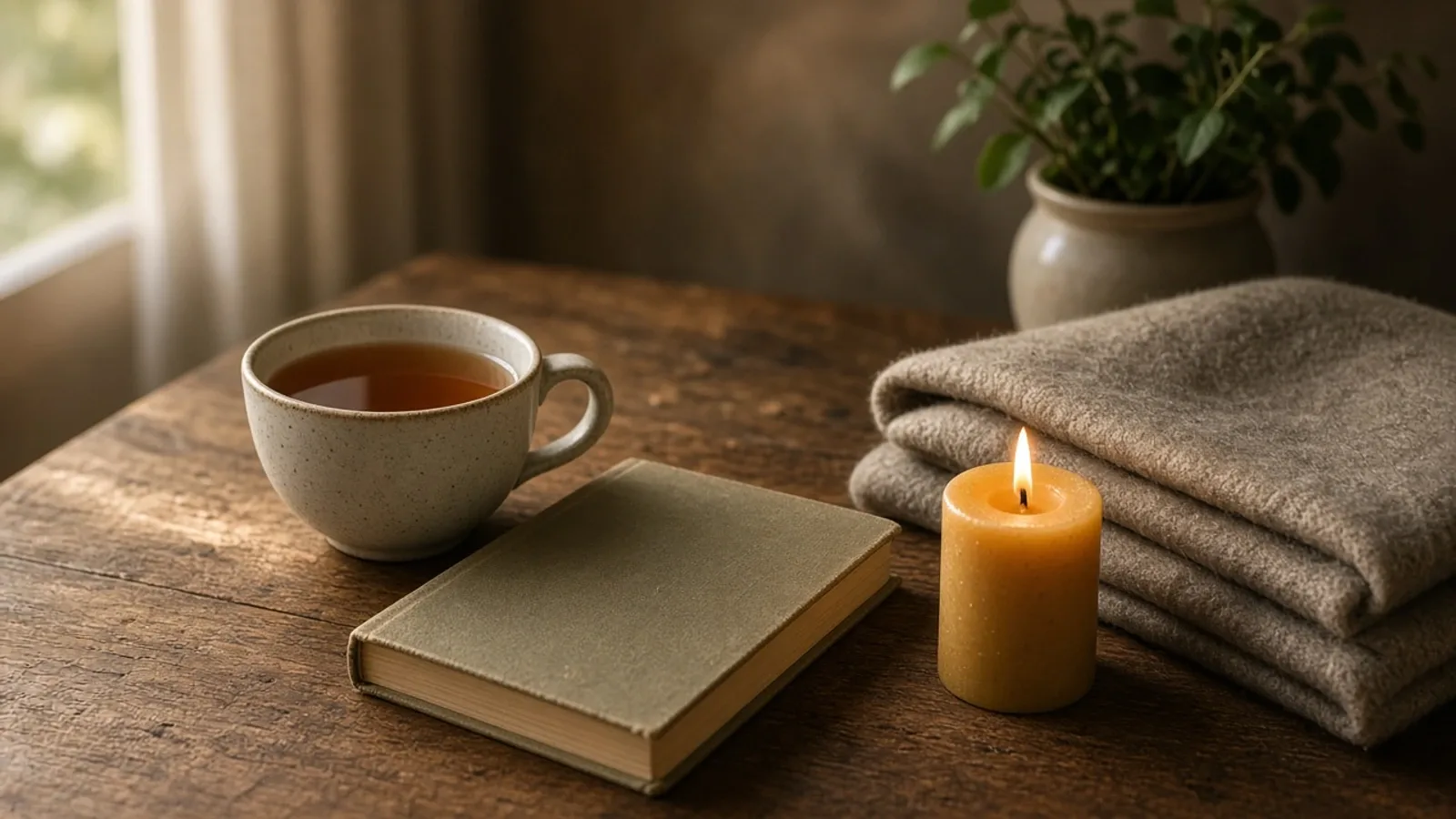
Self-care has been sold as a spending category: the candle, the serum, the retreat, the subscription box. Most of it is pleasant. Very little of it is the thing that actually helps.
The evidence-backed basics are unglamorous: sleep, movement, daylight, food, social connection, and a way to manage stress. All of them can be free. The paid version is optional.
The short answer
If you have a small budget and limited energy, spend it in this order:
- Sleep. A consistent bedtime and a dark, cool room.
- Movement. A walk counts.
- Daylight. Ten minutes outside in the morning.
- Food. Regular meals with protein and fibre.
- People. One real conversation.
- A stress tool. Breathing, journaling, prayer, or a hobby.
Everything else is a bonus. The APA’s self-care guidance and the NIMH’s mental health guidance both emphasize these foundations over products.
The free tier
| Habit | Cost | Why it earns the slot |
|---|---|---|
| 20-minute walk outdoors | Free | Counts as movement and daylight at once |
| Consistent wake time | Free | Does more for the week than a new night cream |
| Slow breathing, four counts in and six out | Free | Five minutes, no equipment, usable before bed |
| Library card | Free | Books, audiobooks, and often a quiet room |
| Comfortable walking shoes | One purchase | The best spend on a habit that stays free |
| Water bottle | One purchase | Hydration is boring and effective |
These cost nothing and have the best return:
- A 20-minute walk. Outdoors if possible. It counts as movement and daylight.
- A consistent wake time. More effective than a new night cream.
- Slow breathing. Four counts in, six counts out, for five minutes.
- A phone-free block. Thirty minutes without a feed.
- A library card. Books, audiobooks, and often a quiet room.
- A bath or a long shower. The ritual matters; the products do not.
- Stretching before bed. Five minutes, no mat required.
- A real conversation. Call someone instead of scrolling.
- A “done” list. Write down what you did, not what you failed to do.
- A Sunday reset. Ten minutes to plan the week. The Sunday reset guide has the structure.
The digital detox guide covers the phone-free block in more detail.
The cheap tier
If you want to spend a little, spend it on things you will use repeatedly:
- A good water bottle. Hydration is boring and effective.
- Comfortable walking shoes. The single best purchase for a free habit.
- A drugstore moisturizer with glycerin or ceramides. The budget beauty guide explains where to spend and where to save.
- A cheap yoga mat or resistance band. One piece of equipment, used often.
- A notebook. For journaling, lists, or planning.
- A library used-book sale. Cheap entertainment without a subscription.
- A park pass or a local museum membership. If you will actually go.
- Tea. The ritual is real, and it costs less than a candle.
What to skip
- Subscription boxes. They solve the problem of choosing, not the problem of needing.
- “Detox” products. The body does not need a detox tea.
- Expensive candles as a personality. A candle is nice; it is not a mental health intervention.
- Skincare you will not use. A ten-step routine you abandon is more expensive than a three-step routine you keep.
- Self-care that requires a new identity. If it only works when you are a different person with a different schedule, it is not self-care.
A seven-day plan
- Monday: walk for 20 minutes. No podcast, no phone.
- Tuesday: set a consistent bedtime. Phone outside the bedroom.
- Wednesday: one real conversation with a friend.
- Thursday: five minutes of slow breathing before bed.
- Friday: library or a park. Something free and offline.
- Saturday: a cheap treat you actually enjoy. Tea, a bath, a film.
- Sunday: ten-minute reset. Plan the week, then stop.
Repeat the week. The point is not novelty; it is repetition.
Why the free version is harder
Free self-care is harder than the paid version for three reasons.
- It requires a boundary, not a purchase. A walk means leaving the desk. Sleep means closing the laptop. A phone-free block means saying no to someone.
- It is not marketed. No one is running ads for “go to bed at the same time.” The paid version has a whole industry behind it.
- It works through repetition. One bath is pleasant. A consistent bedtime is what changes the week.
The barrier is usually not money. It is time, energy, and the belief that rest has to be earned. The seven-day plan is designed to be small enough to repeat, not impressive enough to post.
When self-care is not enough
Self-care is not a treatment for depression, anxiety, trauma, or burnout. If you feel persistently low, anxious, or unable to function, contact a clinician or a crisis line. The NIMH’s mental health guidance is a starting point.
If money is the source of the stress, a budgeting plan and a benefits check may help more than a bubble bath. That is not a failure of self-care; it is self-care aimed at the actual problem.
The honest summary
The cheapest self-care is the kind you can repeat: sleep, walk, daylight, food, people, and a small stress tool. Buy the shoes and the water bottle. Skip the subscription box.
Sources
- American Psychological Association. Self-care.
- National Institute of Mental Health. Caring for your mental health.
Direct answers
Frequently asked questions
What is the cheapest form of self-care?
Sleep, a walk, daylight, and a few minutes of slow breathing cost nothing and have better evidence than most paid self-care products. The cheapest effective version is a consistent bedtime and a daily walk.
Is a spa day self-care?
It can be, if it genuinely restores you and you can afford it. But it is not required for self-care, and it is not more effective than sleep, movement, or social connection.
What should I buy first on a small self-care budget?
Nothing, until you have covered sleep, movement, and a way to see people. If you want one purchase, a comfortable pair of walking shoes or a good water bottle will do more than a subscription box.
When is self-care not enough?
If you feel persistently low, anxious, or unable to function, self-care is not a substitute for professional help. Contact a clinician or a crisis line.
Filed under
About the author

The editorial voice of CiciTrends. Color, fit, and the small decisions that make a wardrobe work. Written by an AI-assisted desk under human direction.
Reporting, sourcing and AI disclosure:/editorial-standards/
Keep reading
Related stories
Holiday Party Recovery: One Late Night Costs Two Days
Holiday party recovery starts before you accept the invitation. Why one late night costs two days, and the ledger, anchors and caps that see you through.
Nov 9, 2026
The realistic digital detox: change the defaults, not your whole life
The evidence on total detoxes is mixed and short-lived. What actually helps is timing, friction, and replacement. A seven-day experiment that fits a real week.
Jan 8, 2026
Three Anchors, One Party Rule for Winter Hydration
Forget the litre target. Three anchors (kettle, car door, bedside), one heated-room adjustment and one glass-per-drink party rule for a genuinely dry November.
Nov 8, 2026