Three Anchors, One Party Rule for Winter Hydration
In short
Forget the litre target. Three anchors (kettle, car door, bedside), one heated-room adjustment and one glass-per-drink party rule for a genuinely dry November.
- Place three glasses instead of setting an alarm: one beside the kettle you boil three to five times a day, one in the car door or desk drawer, and one by the bed.
- Pair every alcoholic drink with a glass of water ordered at the same time, so the water arrives with the wine instead of after it, and put something salty on the plate at dinner.
- Read urine colour instead of counting litres: pale straw is the target, B vitamins turn it bright yellow for about an hour, and a colour that stays dark despite drinking needs a doctor.
By Cici
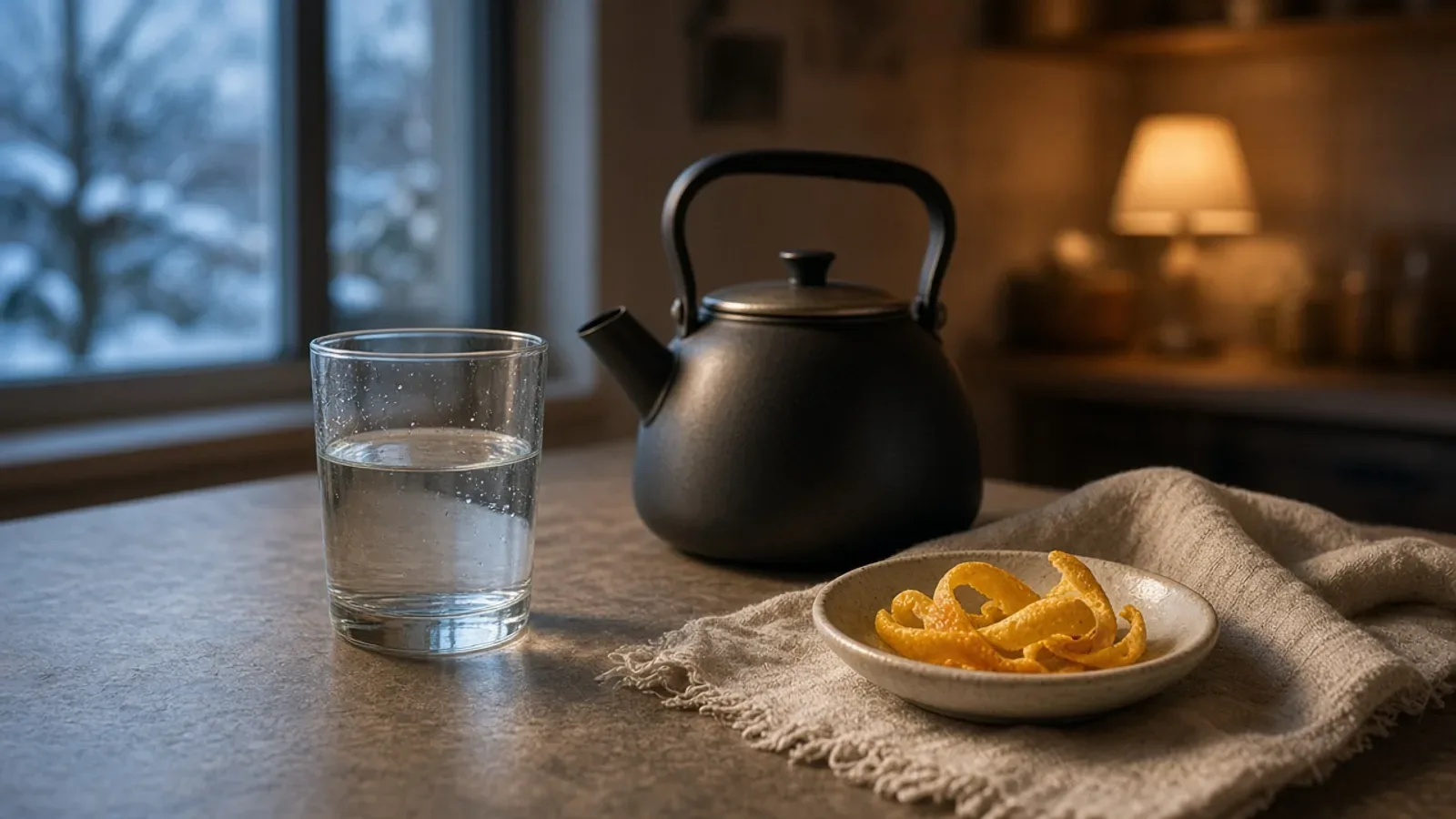
Thirst arrives late. By the time you notice it, you have usually blamed the wrong thing.
You are at your desk at 4:10 on a Tuesday. The heating has been on since seven. There is a dull band across your forehead, your mouth tastes of the second coffee, and you are deciding between a glass of water and a biscuit. You choose the biscuit.
The litre target is the least useful part of hydration. What actually works in November is placement, one adjustment for the heated air, and one rule for the parties that fill the calendar between now and New Year.
The number is the wrong target
The commonly quoted guide is about 11.5 cups (2.7 litres) of fluid a day for women and 15.5 cups (3.7 litres) for men, and roughly 20 percent of that usually arrives in food, according to the Mayo Clinic. That is a population range. It is not a verdict on you at 4pm in a radiator-warm room.
Your real need moves with body size, how much you walk and lift, how hot the room is, what you ate, and whether you are pregnant, breastfeeding, or taking medication that changes fluid balance.
The app fails for a boring reason. A ping is a request; a glass already in the room is a default. The alarm goes off at 10:40 while you are mid-sentence in a meeting, you swipe it away with the same thumb you use for email, and by lunch you have decided you are bad at water. You are not bad at water. You are bad at remembering a thing that lives in a cupboard.
Why a heated house dries you out faster than July sun
Cold air outside holds very little moisture. Heat it for the sitting room and you raise the temperature without putting any water back, so indoor humidity falls in the same week the radiators come on. The American Academy of Dermatology names cold outdoor air and dry indoor heating as the pair behind winter skin, and its guidance starts there rather than with a bottle.
Dehydration in winter is quiet. There is no sun to blame, no visible damp on your back. Just the radiator ticking at 6:30, the static in your hair when you pull off a cardigan, and the split on your right knuckle that opens in the same week every year.
Skin notices first, so the fixes arrive from two directions at once. The AAD recommends lukewarm showers of five to ten minutes rather than hot ones, a humidifier in the room you use most, and a thicker cream or ointment applied while skin is still damp (AAD). None of that replaces drinking, and drinking does not replace it. If your body care has quietly become a ten-step project, a shorter body care routine is the better winter investment than a new serum.
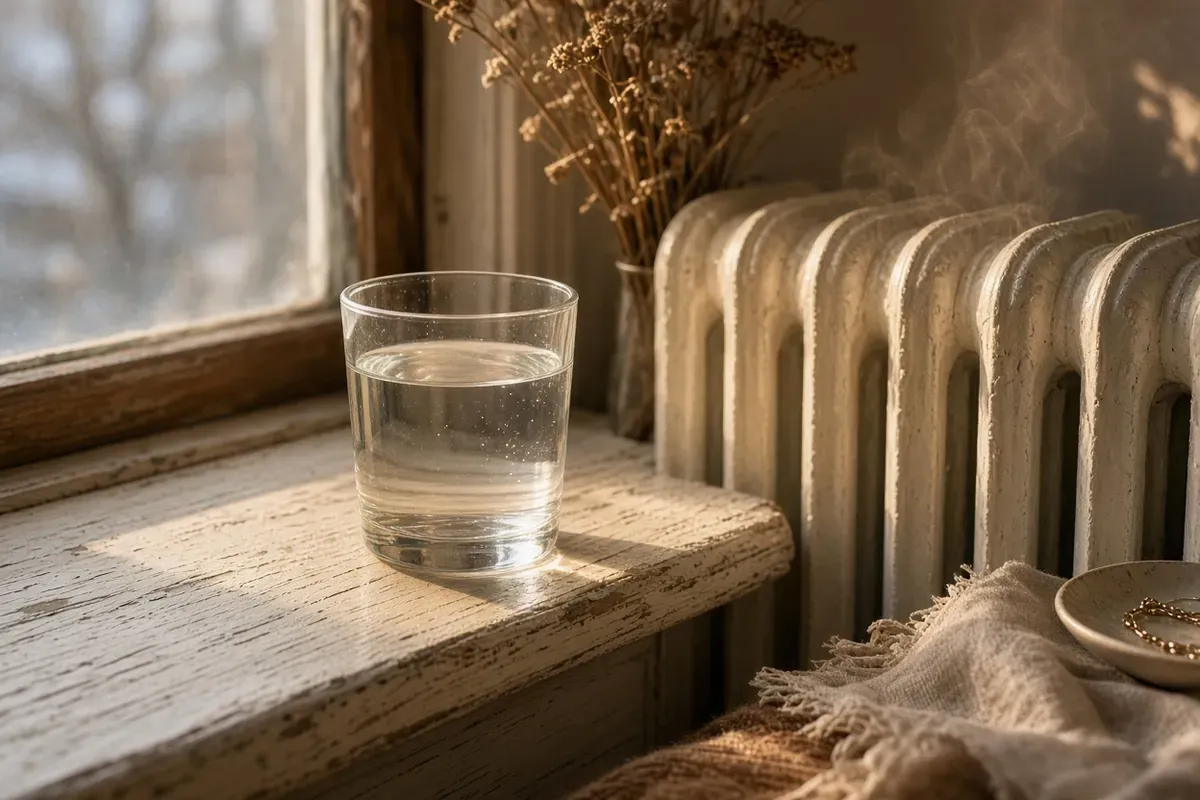
The radiator does not add moisture, it only moves it around
Three checks that beat a litre count
Thirst is a lagging signal, so you can be behind before you are interested. The Cleveland Clinic lists thirst, dark urine, tiredness and headache among the signs of dehydration, and urine colour is the fastest of those to read.
Check one: colour. Pale straw is the target. Two caveats, because they cause most of the false alarms. B vitamins turn urine bright yellow within an hour of the capsule, as the Mayo Clinic’s guidance on urine colour notes, and some medications and foods change it too. If it stays consistently dark despite drinking, that is a conversation with a doctor, not a bigger bottle.
Check two: mouth. Not desert dry, just the small furry feeling at 3pm that makes you reach for mints.
Check three: the 4pm headache. You stand at the fridge and ask yourself whether you are hungry. You are not. You are dry, and slightly bored, and the biscuit will fix neither.
The three anchors: kettle, car door, bedside
| Anchor | Trigger it uses | What sits there |
|---|---|---|
| Kettle | The three to five boils you already do each day | A glass that gets filled while the water heats |
| Car door or desk drawer | The seat you use every day | One bottle within reach, about four feet closer than the cupboard |
| Bedside, morning | Seven or eight hours of drinking nothing | A full glass, drunk before you leave the room |
| Bedside, evening | Getting into bed at 11:20 | A glass that doubles as the wind-down cue |
| Party table | Each alcoholic drink as it is ordered | A water alongside it, requested at the same time |
Placement is the whole trick. Three positions, chosen because you already stand in them.
The kettle. You boil it three to five times a day without thinking. Put a glass beside it and fill the glass while the water heats. This costs you no memory, because the trigger is already in your hands. No purchase, no subscription, which matters in a season that is already asking for your money.
The car door, or the desk drawer. One bottle lives where you sit, not in the kitchen cupboard. A bottle in a cupboard is a bottle you own. A bottle in the cup holder is a bottle you drink. Same object, different outcome, and the difference is about four feet.
The bedside. One glass when you wake, one before you sleep. You get into bed at 11:20, realise you have had two cups of tea since six, and drink a glass standing in the dark kitchen with the fridge humming. That is the moment this anchor is for. The morning glass earns its place because you have just spent seven or eight hours drinking nothing at all, and a glass already within reach gets drunk. The evening one doubles as a wind-down cue, so it slots into an evening routine that is already working on your sleep and your skin.
Three anchors, no app, no litre count. If you do nothing else this week, do the kettle, and keep the habit cheap, in the spirit of self-care on a budget.

One glass within reach at 11:20pm
One rule for parties, and the food that counts
December is a month of dinners. Alcohol has a diuretic effect, which the National Institute on Alcohol Abuse and Alcoholism lists among the reasons a heavy night ends in a dry mouth and a headache by morning. The rule I would keep: one glass of water alongside each alcoholic drink, ordered at the same time so it arrives with the wine instead of as an afterthought. Not a punishment and not a chase. A pair.
Put something salty on the plate with dinner. It makes you drink, and it makes the second glass of water taste like a good idea rather than a chore.
A real share of your day is food. Soup, yogurt, citrus, cooked vegetables, the pear eaten standing at the sink. That share is not a technicality: it is the reason a day with soup at lunch asks less of the bottle than a day of crackers.
If you are reading this somewhere warm, or in the southern hemisphere heading into late spring, drop the heated-room layer entirely. Keep the kettle anchor, or the bottle in the bag, and keep the party rule, because heat and early-summer socialising do the same job the radiator does here. In a hot car, the bottle in the door pocket is the whole system.
Tonight, before anything else, carry one glass to the room where you will sit for the next hour. Fill it. That is the entire beginning, and it takes nine seconds.
Direct answers
Frequently asked questions
How much water should I drink in winter?
There is no single number that fits you. A general population guide is about 11.5 cups of fluid a day for women, with roughly a fifth of that arriving in food, but body size, activity, room heat and what you eat all move it. Three placement anchors and a urine-colour check serve you better.
Why do I feel dehydrated indoors when it is cold outside?
Cold outdoor air holds very little moisture, and heating it raises the temperature without adding water back, so indoor humidity drops in the same week the radiators come on. You lose water through skin and breath all day without feeling sweaty, which is why the dry mouth arrives unannounced.
Does alcohol really dehydrate you?
Alcohol has a diuretic effect, and the National Institute on Alcohol Abuse and Alcoholism lists it among the reasons a night of drinking ends in a dry mouth and a morning headache. Pairing each drink with a glass of water and eating something salty at dinner is the simplest counterweight.
Will drinking more water fix dry winter skin?
It is one input, not the whole answer. The American Academy of Dermatology points to lukewarm showers of five to ten minutes, a humidifier in your main room, and a thicker cream applied to damp skin. Hydration habits and skincare address the same dry-air problem from two directions.
About the author

The editorial voice of CiciTrends. Color, fit, and the small decisions that make a wardrobe work. Written by an AI-assisted desk under human direction.
Reporting, sourcing and AI disclosure:/editorial-standards/
Keep reading
Related stories

The Sunday reset: a 90-minute system for the week ahead
Not a whole-day clean, not a productivity performance. A 90-minute Sunday system built on habit research, with an if-then plan that survives Monday.
Jan 3, 2026

The resentment inventory: a journaling framework
Resentment is data about an unmet need or a boundary that keeps moving. A six-step inventory, what to do with it, and what not to do.
Jan 3, 2026
Overthinking at Night: The Two-Question Exit
Racing thoughts before bed do not need a bigger journal. The two-question exit sorts the night: one action for tomorrow, one thing you cannot change.
Nov 9, 2026